Raja Ratnam
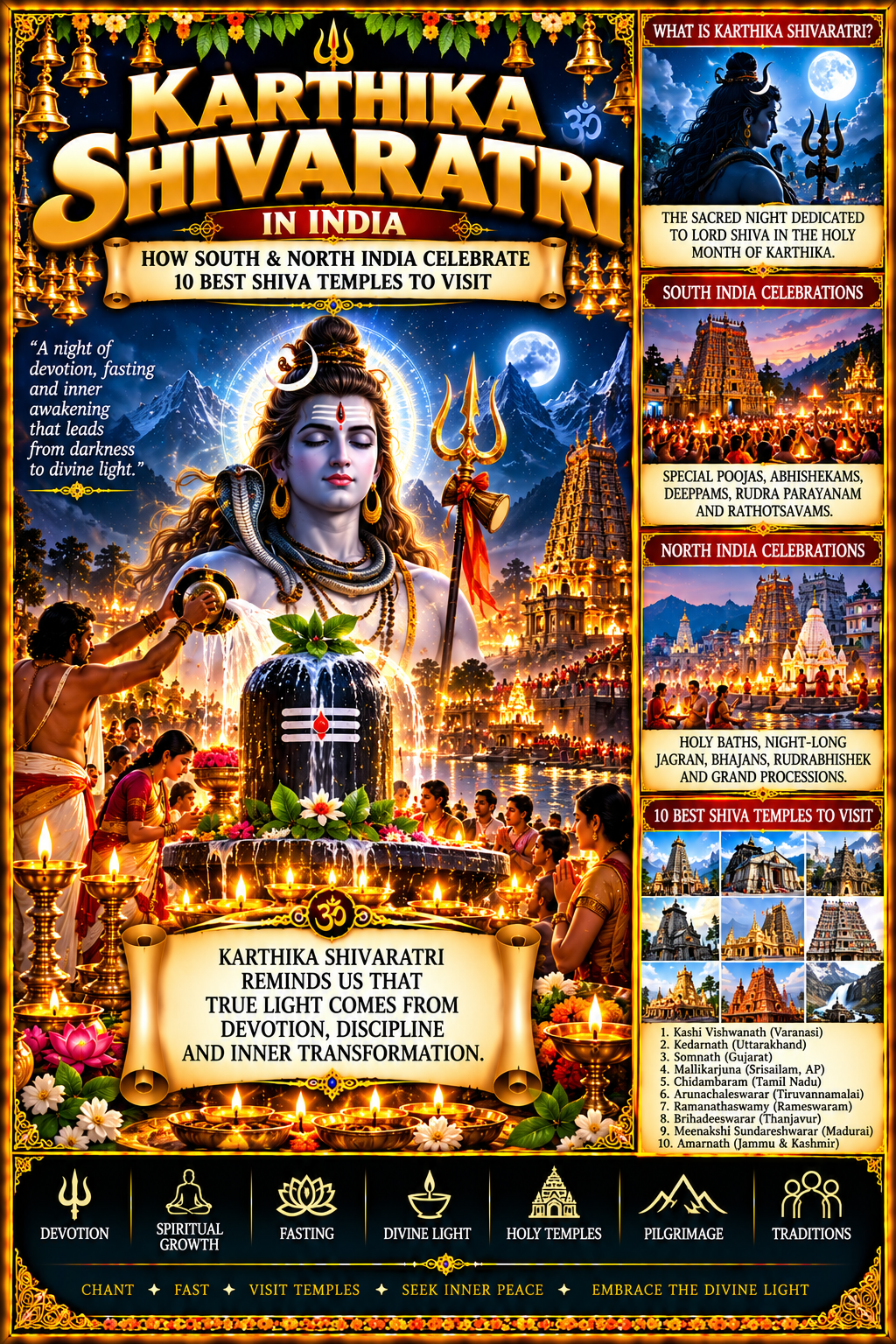
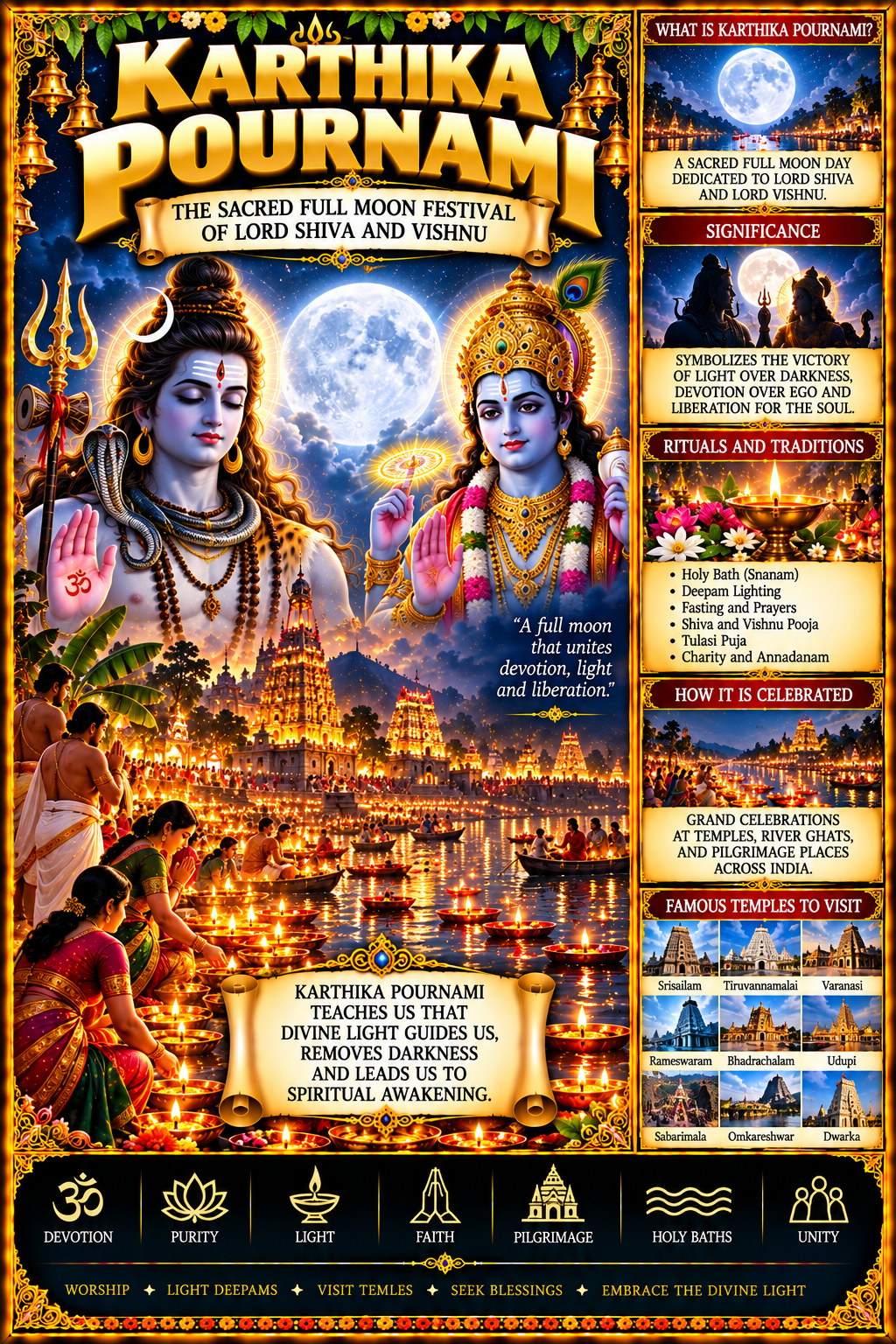
Celebrating Karthika Shivaratri in India is one of the most spiritually electrifying experiences in Sanatana Dharma.
Observed during the holy month of Karthika on Krishna Paksha Chaturdashi, this festival bridges regional cultures.
Across every state, millions of devotees worship Lord Shiva with Abhishekam, Bilva leaves, oil lamps, fasting, bhajans, and midnight prayers.
Moreover, understanding how it unfolds reveals a tapestry of localized traditions, temple rites, and ancient pilgrimage paths.
South Indian states immerse themselves in month-long temple deepams, sacred hill circumambulations (Girivalam), and Pancha Bhoota rituals.
Additionally, whether your heart longs for Srisailam’s misty forests or Varanasi’s riverfront ghats, Karthika Shivaratri in India offers a pilgrimage.
How South India Celebrates Karthika Shivaratri: State-by-State Traditions
In the southern peninsula, the month of Karthika (Karthika Masam) is a pinnacle of Shaivite spiritual practice.
Unlike isolated one-day observances, the entire month forms an extended tapasya.
It culminates with Karthika Shivaratri, as noted throughout the canonical Hindu festival calendar.
1. Andhra Pradesh & Telangana: Daily Deepams and Vanabhojanam
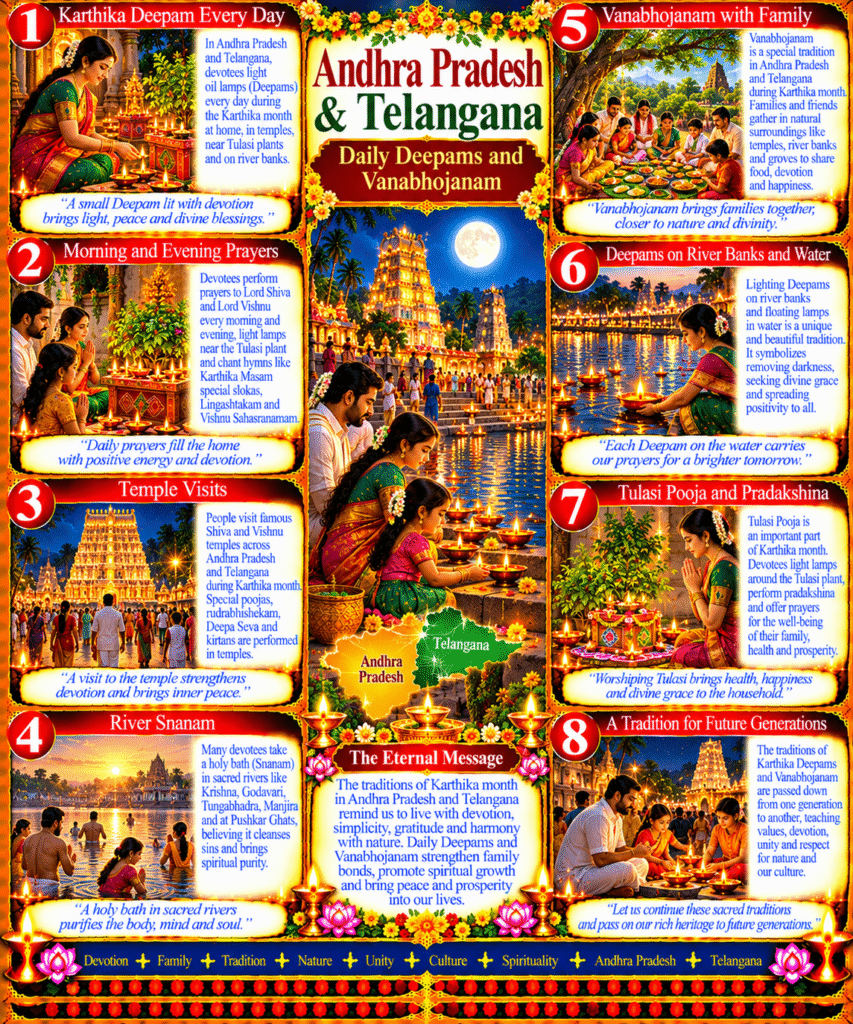
In the Telugu states, Karthika Masam is intimately intertwined with household rituals and community fellowship. Families light earthen oil lamps twice daily at household thresholds and around the Tulsi planter. On Karthika Shivaratri, temples organize continuous Rudrabhishekam with holy water, cow’s milk, panchamrit, and unbroken Bilva leaves.
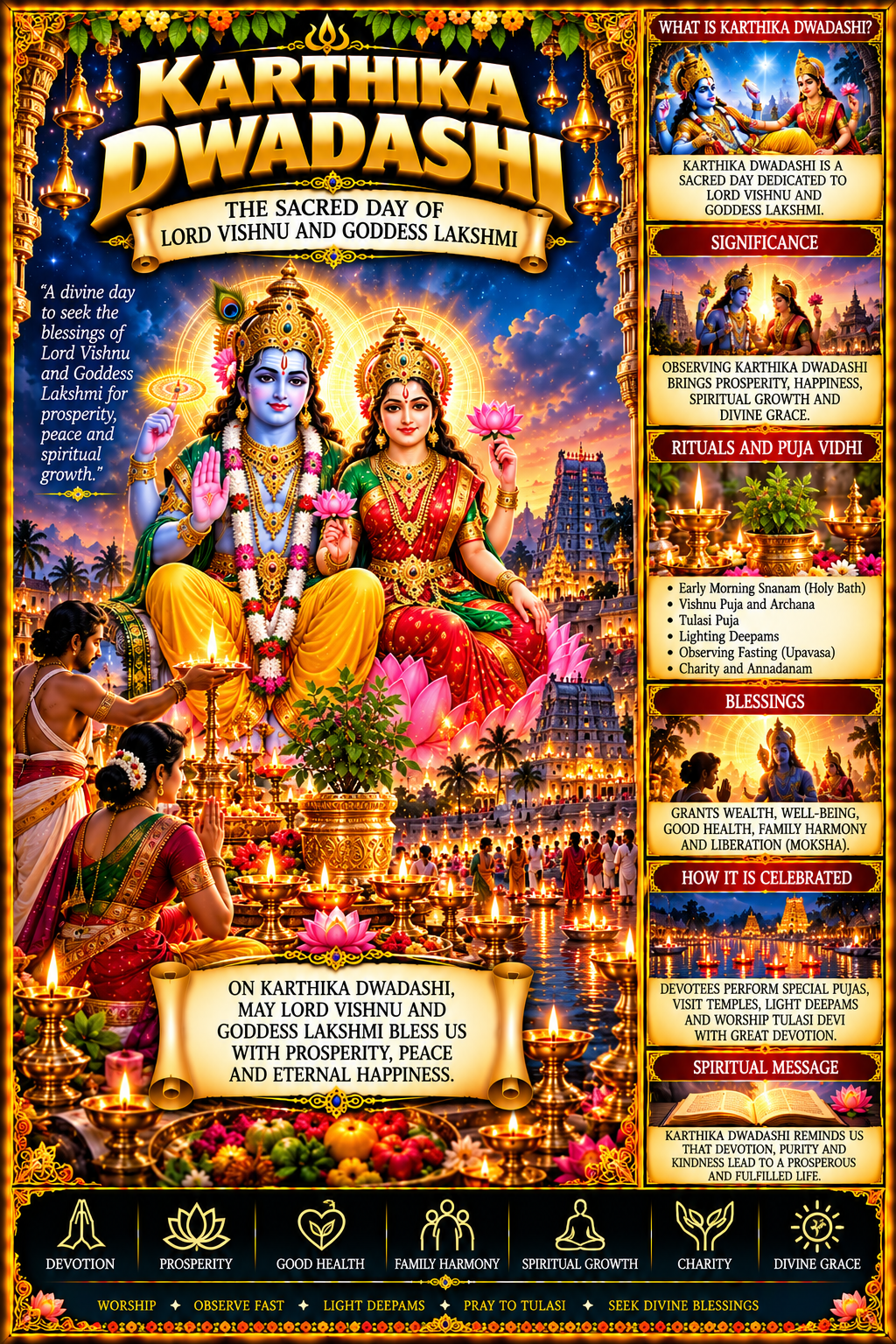
A signature custom in Andhra and Telangana is Vanabhojanam—communal spiritual picnics held under Indian gooseberry (Usiri / Amla) trees. Sharing sanctified meals beneath medicinal trees fosters community brotherhood, physical health, and ecological gratitude, values deeply aligned with the teachings explored in Karthika Dwadashi and Tulsi Vivah.
Sacred Micro-Rituals: The Usiri Deepam and Pradosha Fasting
Devotees observe continuous day-long fasting, preparing specialized lamps crafted directly from medicinal nature to sanctify household thresholds before departing for evening temple pujas.
Crafting the Consecrated Amla Base Lamp (Usiri Deepam)
Carefully carving a small hollow into the crown of an Indian gooseberry (Amla), devotees fill it with pure cow ghee and insert a hand-spun cotton wick. Lighting this lamp before Lord Shiva harnesses potent bio-magnetic and spiritual frequencies.
Vedic Shiva Shanti Invocation
While kindling the amla lamp, devotees chant: “Om Namaste Astu Bhagavan Vishveshvaraya Mahadevaya Trayambakaya Tripurantakaya Trikagni-Kalaya Kalagni-Rudraya Nilakanthaya Mrityunjayaya Sarveshvaraya Sadashivaya Shriman Mahadevaya Namah.”
2. Tamil Nadu: The Ferver of Thevaram Hymns and Girivalam
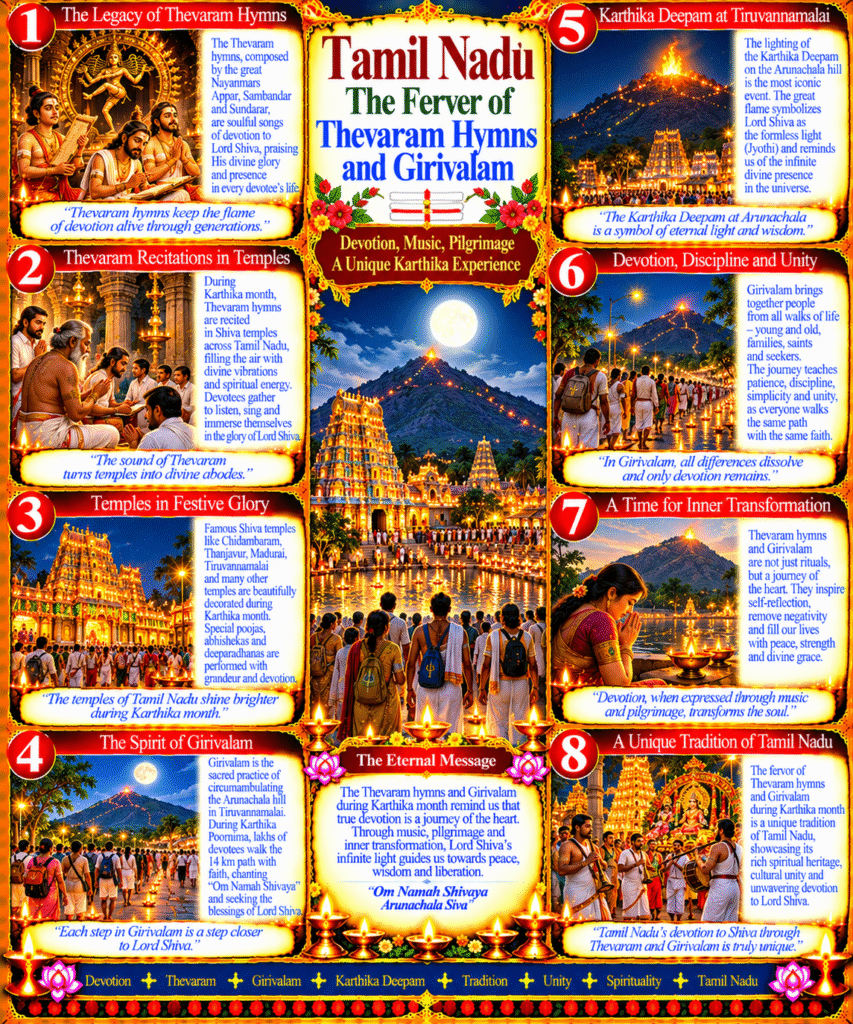
Tamil Nadu possesses one of the world’s richest traditions of Shiva-bhakti, immortalized by the 63 Nayanmar saints. During Karthika, ancient stone temples resound with the soulful recitation of Thevaram and Thiruvasagam hymns. In Tiruvannamalai, millions perform the 14-kilometer Girivalam, barefoot circumambulation of the Arunachala hill. Moreover, they meditate on Shiva as the infinite cosmic fire (Agni Lingam), echoing Karthika Pournami and Karthigai Deepam.
3. Karnataka and Kerala: Deepa-Pradakshina and Ancient Shrines
In Karnataka, devotees flock to coastal and inland shrines such as Murudeshwar, Gokarna, and Kotilingeshwara.
Additionally, they perform milk Abhishekam and observe night-long fasts.
Meanwhile, in Kerala, traditional temples like Vadakkunnathan in Thrissur illuminate thousands of oil wick lamps.
These lamps are mounted on outer brass lattices (Vilakkumadam), creating a mesmerizing golden ambiance during twilight prayers.
How North and Western India Celebrate Karthika Shivaratri
Traveling across Northern and Western India, Karthika Shivaratri in India transforms into a monumental confluence of riverine devotion, Jyotirlinga yatras, and night vigils.
1. Varanasi (Kashi): The Riverfront of Cosmic Liberation
Nowhere on Earth is Shiva devotion more vivid than in Kashi. Connected inextricably with the sacred River Ganga, the Kashi Vishwanath Jyotirlinga temple hums with intense devotional energy from dawn to midnight. Devotees take pre-dawn dips at Manikarnika or Dashashwamedh Ghats before queuing for darshan, culminating in the world-famous evening Ganga Aarti where bronze lamps swirl in synchronized worship.
2. Ujjain (Madhya Pradesh): The Land of Mahakal
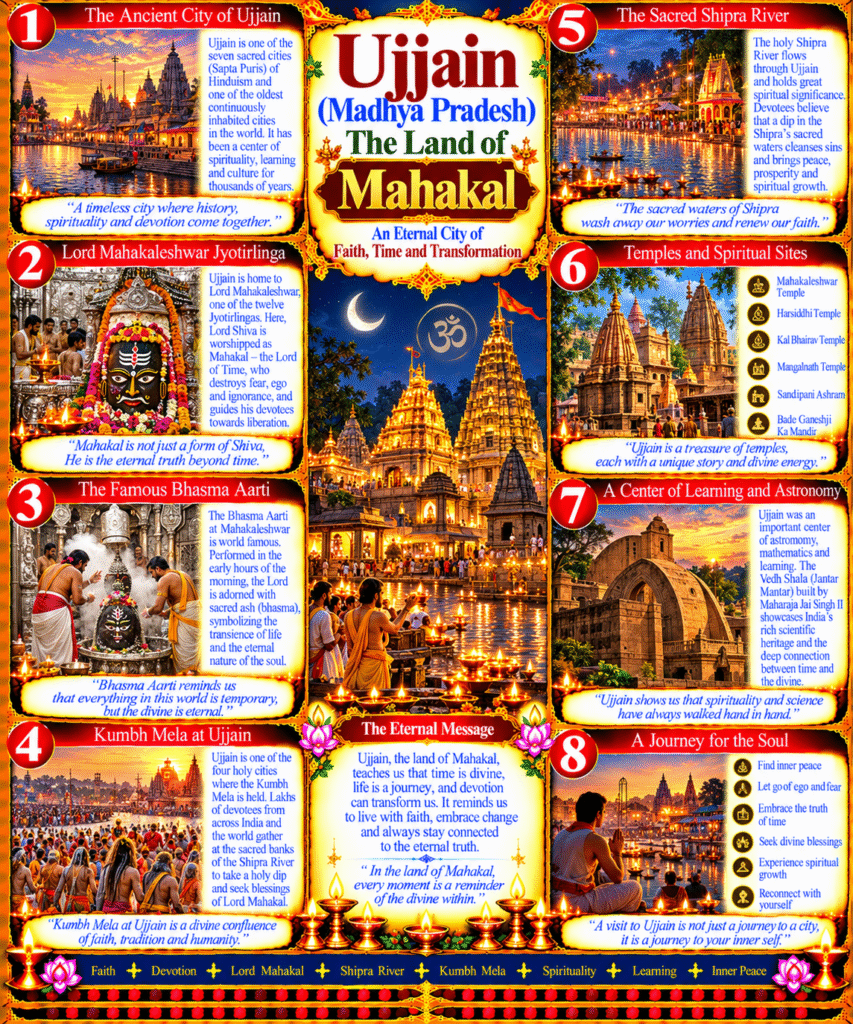
At Shri Mahakaleshwar, the only south-facing (Dakshinavarthi) Jyotirlinga, Karthika Shivaratri is marked by the mystical Bhasma Aarti, performed with sanctified ash before dawn. Thousands gather at the newly inaugurated Mahakal Lok corridor, experiencing a vivid visual journey through classical Shiva mythology.
3. Gujarat & Maharashtra: Coastal Splendor and Sahyadri Peaks
At Prabhas Patan along the Arabian Sea, the historic Somnath Temple—the first among the twelve Jyotirlingas—stands against crashing ocean waves, radiating majestic tranquility. In Maharashtra, pilgrims hike through misty Sahyadri forests to seek blessings at Bhimashankar and Trimbakeshwar, conducting nocturnal abhishekams amidst dense natural beauty.
Top 5 Shiva Temples in South India: Timings, Tickets & Pilgrim Logistics
Planning a pilgrimage during Karthika Shivaratri in India requires practical logistics. Here is a comprehensive reference table for the top 5 South Indian shrines:
| Temple Name | Location | Normal Darshan Timings* | Entry / Darshan Tickets | Food (Annadanam) & Stay |
|---|---|---|---|---|
| Shri Mallikarjuna Jyotirlinga | Srisailam, Andhra Pradesh | 06:00 AM – 03:30 PM & 06:00 PM – 10:00 PM | General Free; Seeghra Darshan ₹150 | Free Nitya Annadanam + Devasthanam Cottages |
| Srikalahasteeswara Temple | Srikalahasti, Andhra Pradesh | 05:30 AM – 09:30 PM | General Free; Special Entry ₹50 & ₹200 | Daily Annadanam + Town Lodges |
| Arunachaleswarar Temple | Tiruvannamalai, Tamil Nadu | 05:30 AM – 08:00 PM | General Free; Special Entry ~₹50 | Ashrams, Hotels & Pilgrimage Choultries |
| Sri Ramanathaswamy Temple | Rameswaram, Tamil Nadu | 04:00 AM – 01:00 PM & 03:00 PM – 08:00 PM | General Free; Special Queue Varies | Wide range of Pilgrim Hotels & Dharamshalas |
| Thillai Nataraja Temple | Chidambaram, Tamil Nadu | 06:00 AM – 12:00 PM & 05:00 PM – 10:00 PM | General Free Access | Town Lodges, Hotels & Traditional Messes |
1. Srisailam Mallikarjuna Swamy Temple (Andhra Pradesh)
Nestled in the lush Nallamala forests atop the Srisailam hills, this ancient sanctuary is uniquely revered as both a Jyotirlinga and a Maha Shakti Peetha (Goddess Bhramaramba). The temple administration operates advanced online bookings for darshan and accommodation via the official Srisailam Devasthanam portal. Free, hygienic Anna Prasadam is served daily to all visitors.
Best For: Families traveling from Hyderabad, Kurnool, Vijayawada, and Bengaluru seeking a forest pilgrimage combined with powerful Jyotirlinga blessings.
2. Srikalahasti Temple (Andhra Pradesh)
Representing the air element (Vayu Lingam) of the Pancha Bhoota Sthalams, the sanctum flame at Srikalahasti flickers continuously despite absence of external breeze. Renowned for mitigating Rahu-Ketu and Sarpa Doshas, the temple offers both free darshan and subsidized special entry lines.
Best For: Pilgrims traveling from Tirupati (just 38 km away), Chennai, Nellore, and Bengaluru.
3. Arunachaleswarar Temple, Tiruvannamalai (Tamil Nadu)
Spread across 25 acres with colossal gopurams reaching toward the sky, Tiruvannamalai embodies the Agni (fire) element. Undertaking the sacred Girivalam on Karthika Shivaratri night while the full moon transitions toward the dark phase brings profound mental stillness.
Best For: Devotees seeking silent meditation, spiritual introspection, and sacred mountain walking.
4. Ramanathaswamy Temple, Rameswaram (Tamil Nadu)
Consecrated by Maryada Purushottama Lord Rama following his victory in Lanka, Rameswaram features the world’s longest sculpted pillared corridors and 22 sacred water wells (Theerthams). Bathing in these theerthams washes away past karmas before beholding the Ramanathaswamy Jyotirlinga.
Best For: Devotees combining Shiva worship with the sacred Ramayana pilgrimage route detailed in our chronicle of Lord Rama’s forest journey.
5. Thillai Nataraja Temple, Chidambaram (Tamil Nadu)
Chidambaram represents the Akasha (space/ether) element, where Shiva performs the eternal cosmic dance of creation and dissolution (Ananda Tandavam). The sanctum features the formless “Chidambara Rahasyam”, reminding seekers that God exists beyond physical forms as pure consciousness.
Best For: Devotees passionate about classical temple architecture, Bharatanatyam heritage, and Shaiva Siddhanta philosophy.
Top 5 Shiva Temples Outside South India: Logistics and Tariffs
For pilgrims exploring northern, central, and western horizons during Karthika Shivaratri in India, here is an essential comparison table:
| Temple Name | State | Normal Darshan Timings* | Darshan / Seva Tariffs | Accommodation Details |
|---|---|---|---|---|
| Shri Kashi Vishwanath | Varanasi, Uttar Pradesh | ~02:30 AM – 11:00 PM | Sugam Darshan ₹250; Aartis ₹300–₹500 | Vast selection of Dharamshalas & Hotels |
| Shri Mahakaleshwar | Ujjain, Madhya Pradesh | Varies by Bhasma & Daily Aartis | Special Sevas paid; General Free | Trust Guest Houses (~₹1,500+) & Hotels |
| Shree Somnath Temple | Prabhas Patan, Gujarat | 06:00 AM – 10:00 PM | Entrance Free; Special Pujas Paid | Somnath Trust Guest Houses & Hotels |
| Shri Kedarnath Dham | Rudraprayag, Uttarakhand | Seasonal Himalayan Schedule | Biometric Yatra Registration Required | GMVN Tents, Cottages & Local Lodges |
| Bhimashankar Jyotirlinga | Pune District, Maharashtra | 04:30 AM – 09:30 PM | General Darshan Free | Local forest lodges, homestays & Dharamshalas |
1. Kashi Vishwanath – Varanasi (Uttar Pradesh)
The magnificent Kashi Vishwanath Dham corridor connects the temple directly with the holy Ganga river. The temple portal features official services including:
- Sugam Darshan (Priority Entry): ₹250 per person
- Mangala Aarti (Pre-Dawn 03:00 AM): ₹500 per devotee
- Bhog / Saptarishi / Night Shringar Aarti: ₹300 per ticket
Don’t Miss: Savoring hot Banarasi chai, attending the sunset Ganga Aarti at Dashashwamedh Ghat, and floating clay lamps upon the river.
2. Mahakaleshwar – Ujjain (Madhya Pradesh)
Ujjain is revered as the navel of the Earth (Avanti). Experiencing the thunderous drum beats during the Bhasma Aarti leaves an indelible mark on the soul. Temple guest houses offer comfortable, budget-friendly accommodation starting around ₹1,500 for double rooms.
Best For: Seekers drawn to intense Tantric and Vedic rituals, paired with leisurely strolls through the Mahakal Lok corridor.
3. Somnath – Gujarat (First Among Jyotirlingas)
Reconstructed after historical invasions as an enduring symbol of India’s resilience, Somnath commands a breathtaking view of the sea. General entry is free, with morning aarti at 07:00 AM, noon aarti at 12:00 PM, and evening aarti at 07:00 PM, complemented by an evening sound-and-light laser show.
Best For: Multi-generational families seeking clean coastal breezes, organized temple queues, and seaside promenade relaxation.
4. Kedarnath Dham – High Garhwal Himalayas (Uttarakhand)
Perched at 3,584 meters amidst snow-capped peaks, Kedarnath is the highest among the twelve Jyotirlingas. Pilgrims must note that Kedarnath is seasonal: the temple doors (Kapat) generally close in November following Bhai Dooj and Karthika celebrations due to heavy winter snow, reopening in late April or May. Always check official Char Dham Yatra guidelines before travel.
Best For: Trekkers and seasoned spiritual seekers seeking a rugged Himalayan pilgrimage.
5. Bhimashankar – Sahyadri Wildlife Sanctuary (Maharashtra)
Located near Pune amidst the dense greenery of the Western Ghats, Bhimashankar is the source of the Bhima River. The daily schedule begins with Prakshal Puja at 04:30 AM, followed by continuous Bilva archana and darshan through the day.
Best For: Travelers combining Jyotirlinga devotion with eco-tourism, waterfalls, and nature walks.
Annadanam & Prasad Traditions: Sacred Meals Across Shrines
In Sanatana Dharma, sharing sanctified food (Annadanam) is considered the highest form of charity (Dana). Most prominent Shiva shrines maintain generous dining halls:
Srisailam Devasthanam: Offers continuous, free hygienic Anna Prasadam (rice, sambar, rasam, and sweet payasam) to thousands of pilgrims daily at the Annapoorna dining complex.
Srikalahasti & Tiruvannamalai: Traditional charitable choultries and temple trust halls serve hot, nourishing noon and night meals to all queueing devotees.
North Indian Shrines: In Varanasi and Ujjain, community langars, trust kitchens, and local dharamshalas provide wholesome vegetarian thalis at nominal or subsidized rates.
Essential Accommodation & Travel Planning Tips for Karthika Shivaratri
Because festival weekends experience heavy surges in pilgrim footfall, advance preparation ensures a serene journey:
- Book 30–60 Days Ahead: Devasthanam guest rooms in Srisailam, temple trusts in Somnath, and dharamshalas in Ujjain fill rapidly. Book online well ahead of Karthika week.
- Dress Modestly: Most South Indian shrines enforce traditional dress codes (Dhotis/Kurta for men; Sarees/Salwar for women). Leather items are prohibited inside temple inner sanctums.
- Plan for Night Jagaran: If observing the night vigil, carry warm shawls (especially for North Indian shrines like Varanasi and Ujjain, where winter temperatures drop sharply).
- Hydration & Sattvic Snacks: Keep dry fruits, nuts, and clean drinking water handy while navigating festive queues.
Which Shiva Temple Should You Choose for Karthika Shivaratri?
To help you select the ideal spiritual destination for Karthika Shivaratri in India, consider these tailored recommendations:
- For Telangana & Andhra Pradesh Residents: Srisailam or Srikalahasti (convenient road/rail transit).
- For Tamil Nadu & Karnataka Seekers: Tiruvannamalai for Girivalam, or Rameswaram for coastal Ramayana sanctity.
- For the Quintessential Shiva + Ganga Experience: Kashi Vishwanath in Varanasi.
- For Majestic Coastal Peace: Somnath Temple in Gujarat.
- For Powerful Tantric & Vedic Night Vigils: Mahakaleshwar in Ujjain.
- For Nature & Forest Retreats: Bhimashankar in the Western Ghats.
According to encyclopedic pilgrimage studies preserved in historical records of the 12 Jyotirlingas of India (Wikipedia), visiting any of these sanctuaries on holy nights aligns the seeker’s consciousness with eternal universal harmony, completing the inner awakening explored in Karthika Shivaratri soul awakening.
Frequently Asked Questions About Karthika Shivaratri in India (20 FAQs)
1. What makes Karthika Shivaratri in India uniquely sacred compared to other Shivaratris?
Karthika Shivaratri occurs during the holiest lunar month of Karthika, which is jointly energized by Lord Shiva and Lord Vishnu. Prayers, fasting, and temple visits on this night yield thousands of times greater spiritual merit than ordinary monthly Shivaratris.
2. When will Karthika Shivaratri be observed across India in 2026?
In 2026, Karthika Shivaratri will be observed on Monday, December 7, 2026, with midnight Nishita Kaal pujas conducted across major temples between 11:46 PM and 12:40 AM.
3. Why is Srisailam one of the most prominent temples to visit during Karthika?
Srisailam is uniquely sacred as both a Jyotirlinga (Lord Mallikarjuna) and a Maha Shakti Peetha (Goddess Bhramaramba). Deepam lighting and Rudrabhishekam in its Nallamala forest surroundings create an unforgettable spiritual atmosphere.
4. Can devotees book darshan and accommodation online for Srisailam?
Yes, the official Srisailam Devasthanam website provides online booking for Seeghra Darshan (₹150), Sparsha Darshan, Rudrabhishekam sevas, and various categories of pilgrim cottages.
5. What is the significance of Srikalahasti Temple on this night?
Srikalahasti represents the Vayu (Air) element of the Pancha Bhoota Sthalams. Devotees visit to seek peace from Rahu-Ketu doshas and witness the miraculous perpetually flickering sanctum lamp.
6. What is Girivalam in Tiruvannamalai and why is it performed?
Girivalam is the barefoot 14-kilometer circumambulation of the sacred Arunachala hill. Performing it on Karthika nights dissolves worldly ego and draws the cooling pranic vibrations of the Agni Lingam.
7. What are the 22 Theerthams of Rameswaram?
The 22 Theerthams are sacred freshwater wells located inside the Ramanathaswamy Temple complex. Pilgrims bathe in sequence with water from all 22 wells to cleanse sins of past lives before taking Jyotirlinga darshan.
8. What is Chidambara Rahasyam at the Nataraja Temple?
Chidambara Rahasyam represents the secret of cosmic ether (Akasha). When the curtain in the sanctum is parted, only a garland of golden vilva leaves against an empty space is visible, symbolizing God’s formless, omnipresent reality.
9. What are the ticket charges for Sugam Darshan at Kashi Vishwanath in Varanasi?
The official Kashi Vishwanath portal lists Sugam Darshan (priority line) at ₹250 per devotee, while morning Mangala Aarti tickets are ₹500, and afternoon/evening aartis are ₹300.
10. What is the Bhasma Aarti at Mahakaleshwar in Ujjain?
Bhasma Aarti is a world-famous pre-dawn ritual where the Mahakaleshwar Jyotirlinga is bathed and adorned with sacred consecrated ash, symbolizing the eternal reality of Shiva beyond physical death.
11. Is entry to the Somnath Temple free of charge?
Yes, general entry to the Shree Somnath Temple is completely free. Special pujas, abhishekams, and the evening sound-and-light laser show carry separate modest fees managed by the Trust.
12. Is Kedarnath accessible during Karthika Shivaratri in December?
Usually no. The portals of Kedarnath close shortly after Bhai Dooj in November due to severe Himalayan winter snowfall, and the deity shifts to Ukhimath (Omkareshwar Temple) for winter worship.
13. What is unique about the Bhimashankar Jyotirlinga in Maharashtra?
Bhimashankar is situated within a dense biodiversity wildlife sanctuary in the Sahyadri mountains, offering a unique combination of ancient Nagara-style stone architecture and serene natural surroundings.
14. What is Annadanam and is it provided free at these temples?
Annadanam is the sacred distribution of sanctified food. Major temples like Srisailam, Srikalahasti, and Tiruvannamalai provide free, hot, hygienic meals to all visiting devotees daily.
15. What dress code is enforced in South Indian Shiva temples?
Men must wear traditional dhotis or pyjamas with upper cloth/shirt removed or unstitched; women should wear traditional sarees, half-sarees, or salwar-kameez with dupattas. Western jeans, shorts, and skirts are prohibited.
16. What is Vanabhojanam in Andhra and Telangana?
Vanabhojanam is a community meal prepared and consumed under the shade of an Indian gooseberry (Amla) or Bilva tree during Karthika Masam to celebrate ecological vitality and mutual fellowship.
17. What should devotees carry for the night-long Jagaran vigil?
Carry a meditation asana (mat), warm woollen shawl, Rudraksha rosary for chanting “Om Namah Shivaya”, and light sattvic snacks or dry fruits for sustenance.
18. Can we perform milk Abhishekam personally at these temples?
At temples like Srisailam, devotees can book Sparsha Darshan to touch the Lingam during specific morning hours. At Kashi Vishwanath and Mahakaleshwar, designated Jalabhishek lines permit pouring water/milk upon the Lingam.
19. How do temple authorities handle festival crowd surges?
Administrations deploy barricaded zigzag queues, digital token systems, continuous Anna Prasadam, round-the-clock medical dispensaries, and enhanced security monitoring.
20. What is the ultimate spiritual fruit of undertaking a Karthika Shivaratri pilgrimage?
Undertaking a pilgrimage on Karthika Shivaratri helps the seeker slow down, shed accumulated mental anxieties, immerse in sacred divine sound vibrations, and realize the serene, deathless presence of Lord Shiva residing within their own heart.