Raja Ratnam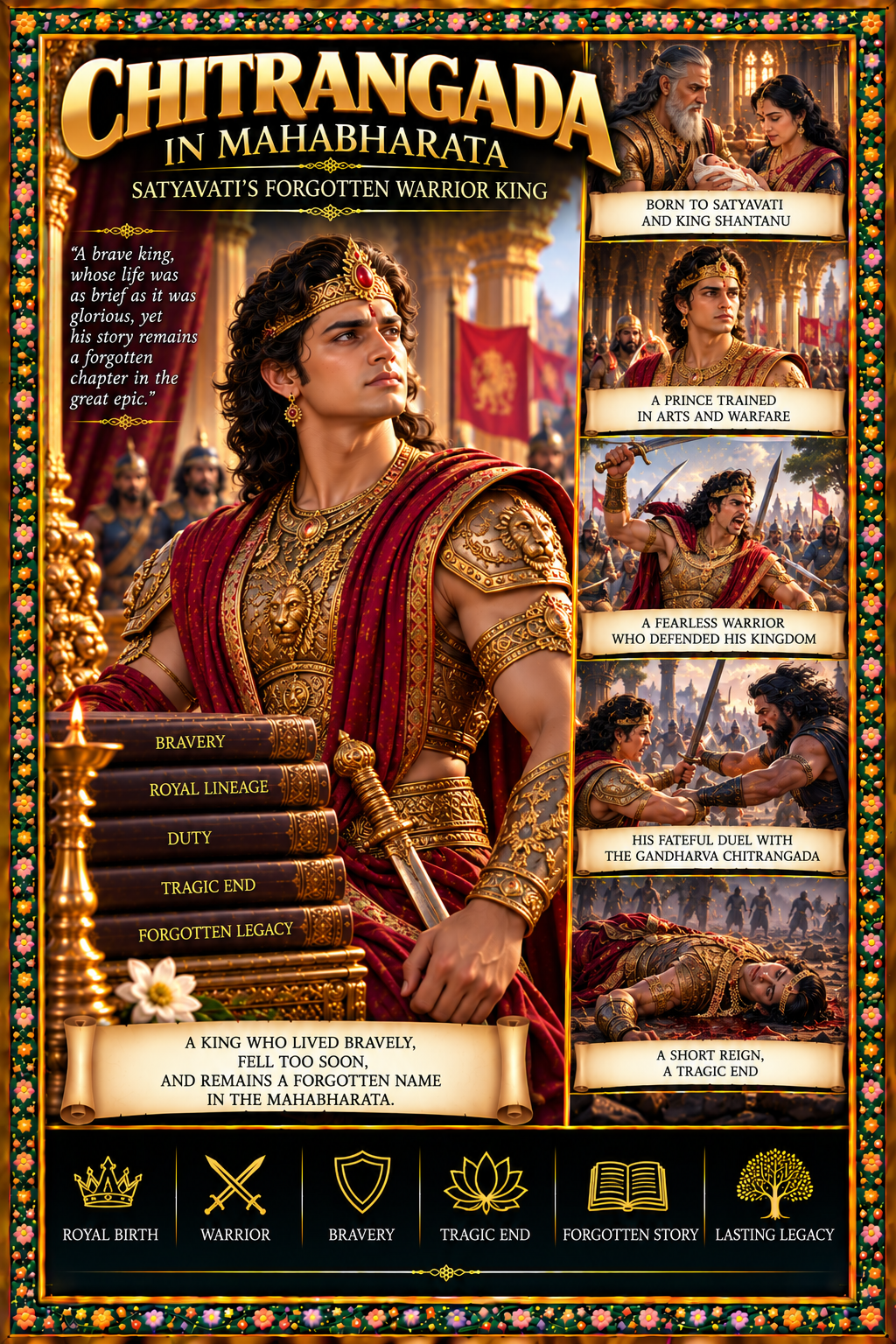
Chitrangada in the Mahabharata – The Forgotten Kuru King
When King Shantanu passed away, the first son of Queen Satyavati to ascend the golden throne of Hastinapur was young Chitrangada. Brave, fiery, and fiercely proud of his royal lineage, he was a formidable warrior who defeated rival kings far and wide. Yet his reign ended abruptly during an epic three-year duel on the banks of the Saraswati river against a Gandharva king of the same name. His short, dramatic life was an early warning of how pride can cut short even the most promising rulers.
One such figure is Chitrangada – the elder son of Satyavati and Shantanu.
Though his life was short, his story carries deep lessons about pride, destiny, and the fragile nature of power.
Birth and Royal Lineage of Chitrangada

Son of a Legendary Queen
Chitrangada was born into the royal Kuru dynasty, one of the most powerful lineages in ancient India. His mother, Satyavati, was a woman of remarkable destiny who rose from humble beginnings to become the queen of Hastinapura.
His father, Shantanu, was a noble and respected ruler. Through this union, Chitrangada inherited both royal authority and immense responsibility.
Brother of Vichitravirya
Chitrangada had a younger brother, Vichitravirya. After the death of King Shantanu, it was Chitrangada who ascended the throne, while Vichitravirya was still too young to rule.
For official cultural and historical archives, visit the Ministry of Culture, Government of India.
Chitrangada Becomes King of Hastinapura
A Young and Powerful Ruler
After Shantanu’s death, Chitrangada took charge of the vast Kuru kingdom. His reign was marked by strength, courage, and ambition. He was known as a fierce warrior who could defeat enemies in battle.
Under his rule, Hastinapura remained powerful and secure.
Influence of Bhishma
A key figure during Chitrangada’s reign was Bhishma, his half-brother. Bhishma had taken a vow of lifelong celibacy and renounced the throne, but he continued to guide and protect the kingdom.
Bhishma played a crucial role in supporting Chitrangada’s rule and maintaining stability in Hastinapura.
A King Named Chitrangada
As Chitrangada’s fame spread across the land, his confidence grew stronger. However, destiny had a unique twist waiting for him.
There existed another powerful being named Chitrangada – a celestial Gandharva king.
Both shared the same name, and this coincidence became the seed of a deadly conflict.
Clash of Pride
The Gandharva king challenged Chitrangada, declaring that no mortal king had the right to share his name and glory.
What began as a dispute of identity soon escalated into a fierce and prolonged battle.
The Epic Battle with the Gandharva King
A Battle That Lasted Years
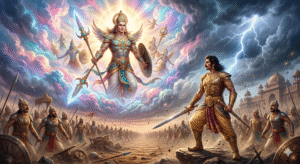
The war between Chitrangada and the Gandharva king was not a brief encounter. According to the Mahabharata, the battle lasted for several years.
Both warriors were equally skilled and powerful, making the conflict intense and evenly matched.
The Final Defeat
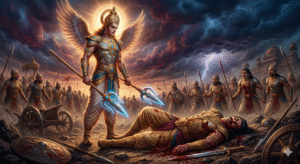
Despite his bravery and strength, Chitrangada ultimately fell in battle. The Gandharva king defeated and killed him, bringing an abrupt end to his reign.
His death shocked the Kuru kingdom and left Hastinapura without a strong ruler.
Aftermath of Chitrangada’s Death
Vichitravirya Ascends the Throne
After Chitrangada’s death, his younger brother Vichitravirya became the king of Hastinapura.
However, he lacked the strength and leadership qualities of his elder brother.
Bhishma’s Continued Role
Once again, Bhishma stepped in to guide the kingdom. His wisdom and strength kept the Kuru dynasty intact during this vulnerable period.
Symbolism and Lessons from Chitrangada’s Story
The Danger of Pride
Chitrangada’s story highlights how pride can lead to downfall. His desire to defend his name and honor ultimately led him into a deadly conflict.
The Role of Destiny
The Mahabharata often emphasizes destiny, and Chitrangada’s life is a clear example. Despite being born into power, his fate was short-lived.
Forgotten Yet Important
Though often overshadowed by other characters, Chitrangada’s death played a crucial role in shaping the future of the Kuru dynasty.
Without his demise, the chain of events leading to the Kurukshetra war might have been very different.
Chitrangada’s Place in the Mahabharata Timeline
Before the Birth of Pandavas and Kauravas
Chitrangada lived in a time before the birth of major characters like the Pandavas and Kauravas.
His story belongs to the earlier generation of the Mahabharata timeline.
Foundation of Future Conflicts
The instability caused by his death and the weak rule of Vichitravirya eventually led to complex succession issues.
These issues later gave rise to the birth of Dhritarashtra, Pandu, and Vidura – key figures in the epic.
The importance of Chitrangada’s story today
A Lesson in Leadership
Chitrangada’s life reminds us that leadership requires not just strength, but wisdom and restraint.
The Fragility of Power
Even the most powerful rulers can fall unexpectedly. His story reflects the temporary nature of power and fame.
Relevance in Modern Life
In today’s world, where ego and competition often dominate, Chitrangada’s story serves as a timeless warning about the consequences of unchecked pride.
Conclusion
Chitrangada may not be the most famous character in the Mahabharata, but his story is deeply meaningful.
As the son of Satyavati and Shantanu, he carried the legacy of a great dynasty. As a warrior, he showed immense courage. And as a king, he ruled with strength.
Yet, his tragic end reminds us that even the greatest lives can be cut short by destiny.
His story is not just about a battle – it is about identity, pride, and the inevitable power of fate.
FAQs
1. Who was Chitrangada in the Mahabharata?
Chitrangada was the elder son of Satyavati and King Shantanu, and a ruler of Hastinapura.
2. Who were Chitrangada’s parents?
His parents were Satyavati and King Shantanu.
H3: 3. Who was Chitrangada’s brother?
His younger brother was Vichitravirya.
4. Who ruled after Chitrangada’s death?
Vichitravirya became king after him.
5. How did Chitrangada die?
He died in a battle with a Gandharva king named Chitrangada.
6. Why did Chitrangada fight the Gandharva king?
The conflict arose due to both sharing the same name and pride.
7. Was Chitrangada a powerful king?
Yes, he was known for his strength and warrior skills.
8. Who supported Chitrangada during his reign?
Bhishma supported and guided him.
9. Where did Chitrangada rule?
He ruled the kingdom of Hastinapura.
10. What is the significance of Chitrangada’s story?
It highlights themes of pride, destiny, and leadership.
11. Did Chitrangada have children?
No significant mention of his children is found in the Mahabharata.
12. Is Chitrangada a major character in the Mahabharata?
He is a minor but important character in the early timeline.
13. How long did his battle last?
The battle lasted several years.
14. What role did Bhishma play after his death?
Bhishma helped stabilize the kingdom.
15. Was the Gandharva king stronger than Chitrangada?
Yes, he ultimately defeated Chitrangada.
16. What does Chitrangada symbolize?
He symbolizes pride and the unpredictability of fate.
17. When did Chitrangada live?
He lived in the early period of the Mahabharata timeline.
18. Why is Chitrangada not widely known?
His story is brief compared to major characters.
19. How did his death impact the Kuru dynasty?
It led to succession issues and future conflicts.
20. What can we learn from his life?
We learn the importance of humility, wisdom, and understanding destiny.