Raja Ratnam
Introduction
Maa Brahmacharini (Navratri Day 2 ) : The second day of Navratri is dedicated to Maa Brahmacharini, the goddess of penance, austerity, and devotion. She represents Tapas (spiritual practice) and symbolizes patience, wisdom, and inner strength. Her worship on Navratri Day 2 inspires devotees to embrace discipline and devotion in their lives.
The word Brahmacharini is a combination of Brahma (supreme knowledge or tapas) and Charini (one who practices). Thus, she is the goddess who practiced deep penance to please Lord Shiva. Worshipping her brings courage, self-control, and prosperity.
Who is Maa Brahmacharini (Navratri Day 2 )?
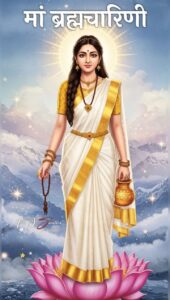
According to Hindu scriptures, Maa Brahmacharini is the unmarried form of Goddess Parvati. After her rebirth as the daughter of Himavan, she performed severe penance for thousands of years to win Lord Shiva as her husband. She accepted an ascetic lifestyle, living on fruits, flowers, and later surviving only on air and water.
Her dedication and penance earned her the name Brahmacharini, the goddess who embodies devotion and austerity.
Iconography of Maa Brahmacharini (Navratri Day 2 )
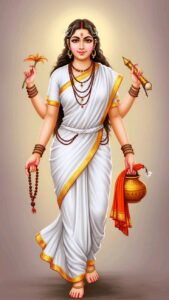
- Mount: She walks barefoot, symbolizing simplicity and sacrifice.
- Appearance: Calm, serene, dressed in white attire.
- Hands: Holds a rosary (japamala) in her right hand and a kamandalu (water pot) in her left.
- Symbolism: The rosary represents meditation, while the kamandalu represents discipline and self-control.
Maa Brahmacharini (Navratri Day 2 )Puja Vidhi (Step-by-Step)
Morning Rituals
- Wake up early, bathe, and wear white clothes (the auspicious color of Day 2).
- Clean and decorate the puja altar with white flowers.
- Kalash and Idol Installation
Kalash and Idol Installation
- If Ghatasthapana is already done on Day 1, continue offering daily rituals to the Kalash.
- Place Maa Brahmacharini’s idol or picture on the altar.
Invocation
- Apply kumkum, turmeric, and sandalwood paste.
- Offer white flowers, rice, and incense.
Mantra Chanting
Recite:
“Om Devi Brahmacharinyai Namah” (108 times if possible).
Offerings (Naivedyam & Bhog)
- Offer sugar, fruits, milk, and sweets made with jaggery.
- Light a ghee lamp and pray for patience and devotion.
Aarti
- Perform aarti with bells and incense while chanting hymns like “Durga Chalisa” or “Navadurga Stotra.”
Significance of Maa Brahmacharini (Navratri Day 2 ) Worship
- Represents devotion, tapas, and inner strength.
- Encourages patience, discipline, and focus on spiritual goals.
- Helps devotees overcome difficulties and life challenges.
- Blesses with wisdom, prosperity, and peace of mind.
Benefits of Worshipping Maa Brahmacharini (Navratri Day 2 )
- Enhances self-control and determination.
- Removes laziness and negative influences.
- Grants prosperity, strength, and marital harmony.
- Inspires a balanced life with devotion and discipline.
Legends of Maa Brahmacharini (Navratri Day 2 )
- Penance for Lord Shiva: Maa Parvati in her Brahmacharini form performed extreme austerities for thousands of years to marry Lord Shiva.
- Symbol of Tapas: She is revered as the embodiment of meditation and discipline, teaching devotees the importance of perseverance.
Regional Worship Traditions
- In Tamil Nadu, devotees prepare special sweets and chant Durga stotras.
- In North India, fasting is observed with fruits and milk, symbolizing simplicity.
- In West Bengal, she is worshipped as part of Durga Puja rituals, focusing on her ascetic form.
Maa Brahmacharini (Navratri Day 2 ) Mantra & Stotra
- Beej Mantra: “Om Hreem Shreem Brahmacharinyai Namah”
- Navratri Day 2 Chant: “Om Devi Brahmacharinyai Namah”
20 FAQs About Maa Brahmacharini (Navratri Day 2 )
Q1. Who is Maa Brahmacharini?
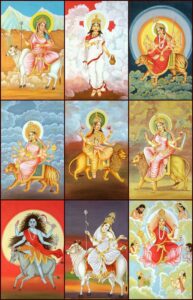
A1. She is the second form of Navadurga, symbolizing penance, discipline, and devotion.
Q2. Why is she called Brahmacharini?
A2. Because she performed deep penance (Brahmacharya) to please Lord Shiva.
Q3. What does Maa Brahmacharini hold in her hands?
A3. A rosary (japamala) and a kamandalu (water pot).
Q4. What is the color of Navratri Day 2?
A4. White, symbolizing purity and peace.
Q5. What food is offered to Maa Brahmacharini?
A5. Sugar, milk, and fruits are considered auspicious offerings.
Q6. What is the mantra of Maa Brahmacharini?
A6. “Om Devi Brahmacharinyai Namah.”
Q7. Can fasting devotees eat grains on Day 2?
A7. Traditionally, grains are avoided; fruits, milk, and vrat-friendly foods are eaten.
Q8. What qualities does Maa Brahmacharini bless devotees with?
A8. Patience, strength, devotion, and prosperity.
Q9. Why is she shown barefoot?
A9. To symbolize simplicity, sacrifice, and austerity.
Q10. Which flower is offered to Maa Brahmacharini?
A10. Jasmine and white flowers are preferred.
Q11. What does the rosary (mala) symbolize?
A11. Constant meditation and devotion.
Q12. What does the kamandalu symbolize?
A12. Self-control and purity of mind.
Q13. What is the significance of her worship on Day 2?
A13. It inspires discipline and helps devotees overcome obstacles.
Q14. What happens if one sincerely worships Maa Brahmacharini?
A14. The person gains courage, wisdom, and success in spiritual goals.
Q15. Is fasting compulsory on Day 2?
A15. No, but fasting strengthens devotion and spiritual discipline.
Q16. Can women worship Maa Brahmacharini for marital harmony?
A16. Yes, her worship is considered very auspicious for marriage blessings.
Q17. What is the story behind her penance?
A17. She performed severe penance for thousands of years to marry Lord Shiva.
Q18. Can Maa Brahmacharini be worshipped at home?
A18. Yes, with simple offerings, mantra chanting, and devotion.
Q19. What is the best time for Brahmacharini puja?
A19. Early morning after sunrise is ideal.
Q20. What is the ultimate blessing of Maa Brahmacharini?
A20. She grants the strength of devotion, perseverance, and spiritual progress.
Related Sacred Topics & Cultural Heritage: For further spiritual exploration, read about Lord Rama’s ideal life story. For further spiritual exploration, read about the 14-year exile of Lord Rama. For further spiritual exploration, read about Ravana’s story in the Ramayana.
Conclusion : Maa Brahmacharini (Navratri Day 2 )
Maa Brahmacharini, the second form of Navadurga, inspires us to embrace discipline, patience, and unwavering devotion. By worshipping her on Day 2 of Navratri, devotees gain strength to overcome life’s struggles and remain focused on their spiritual journey.
🌼 May Maa Brahmacharini bless you with wisdom, peace, and perseverance this Navratri! 🌼