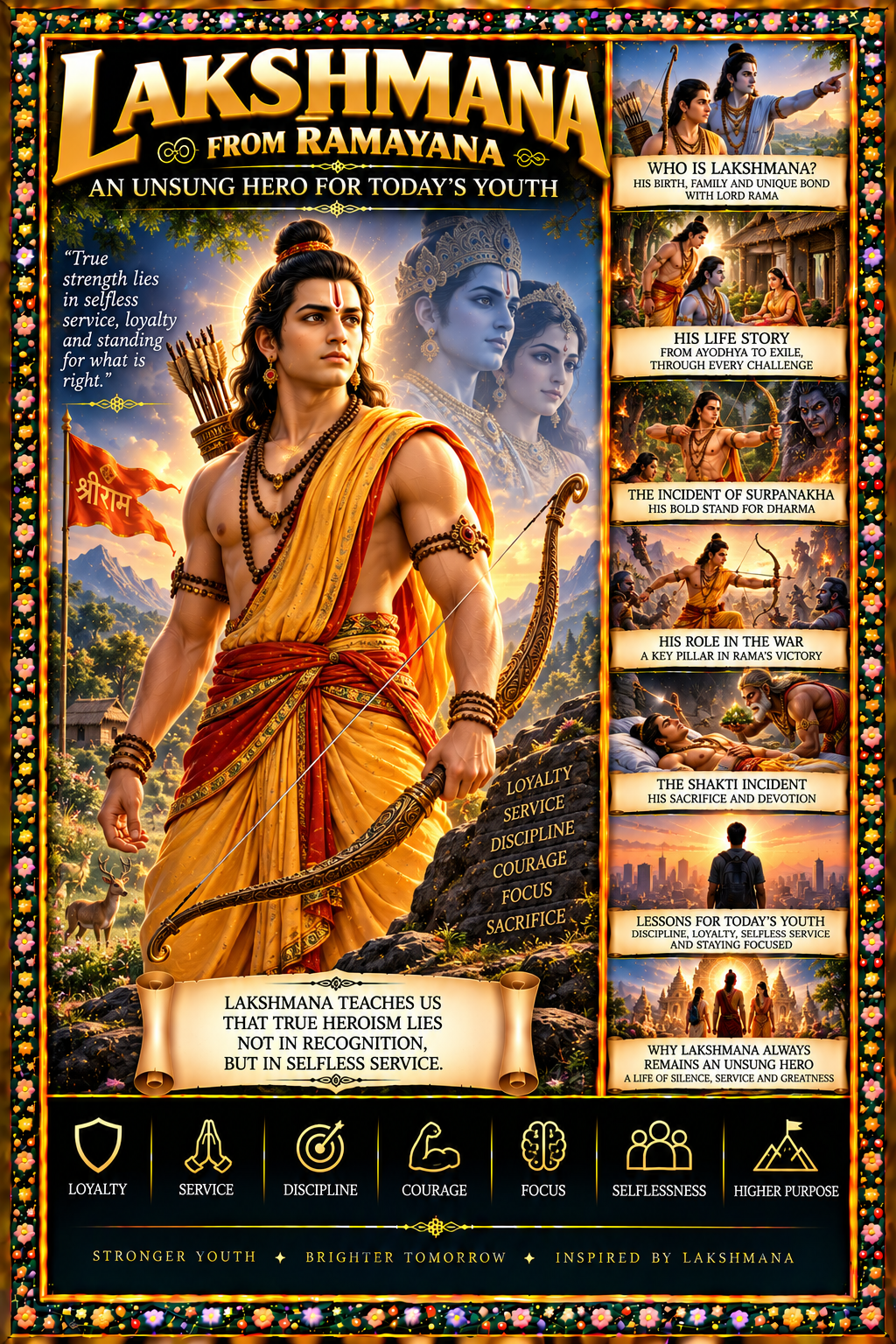
Lakshmana from Ramayana: An Unsung Hero for Today’s Youth

Lakshmana from Ramayana: In the timeless epic of the Ramayana, Lakshmana, the devoted younger brother of Lord Rama, stands not merely as a supporting figure but as a shining example of unwavering loyalty and selfless dedication, and courageous devotion. While Rama represents ideal kingship and dharma, Lakshmana represents ideal brotherhood and dedication. But how relevant is Lakshmana to today’s world, especially for the younger generation? Let’s explore.

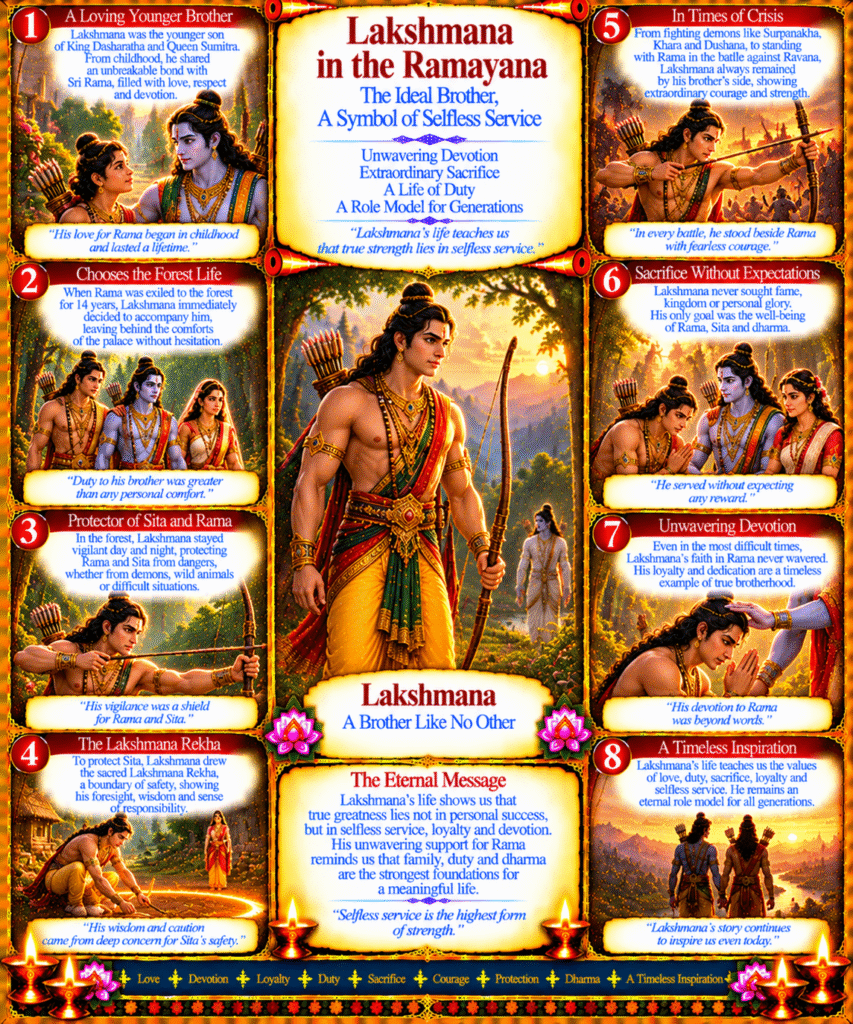
When Lord Rama was exiled for 14 years, Lakshmana voluntarily chose to go with him, leaving behind the luxuries of the palace.

Inspiration:** Teaches us about selfless love, standing by our loved ones during difficult times, not just in good times.

A forest home is built by Lakshmana from Ramayana
Lakshmana from Ramayana

In the forest, Lakshmana built a hut (Parnasala) for Rama and Sita with his own hands, serving them like a devoted son and brother.

Inspiration:** Shows the dignity of labor, and how even princes can be humble when driven by love and duty.

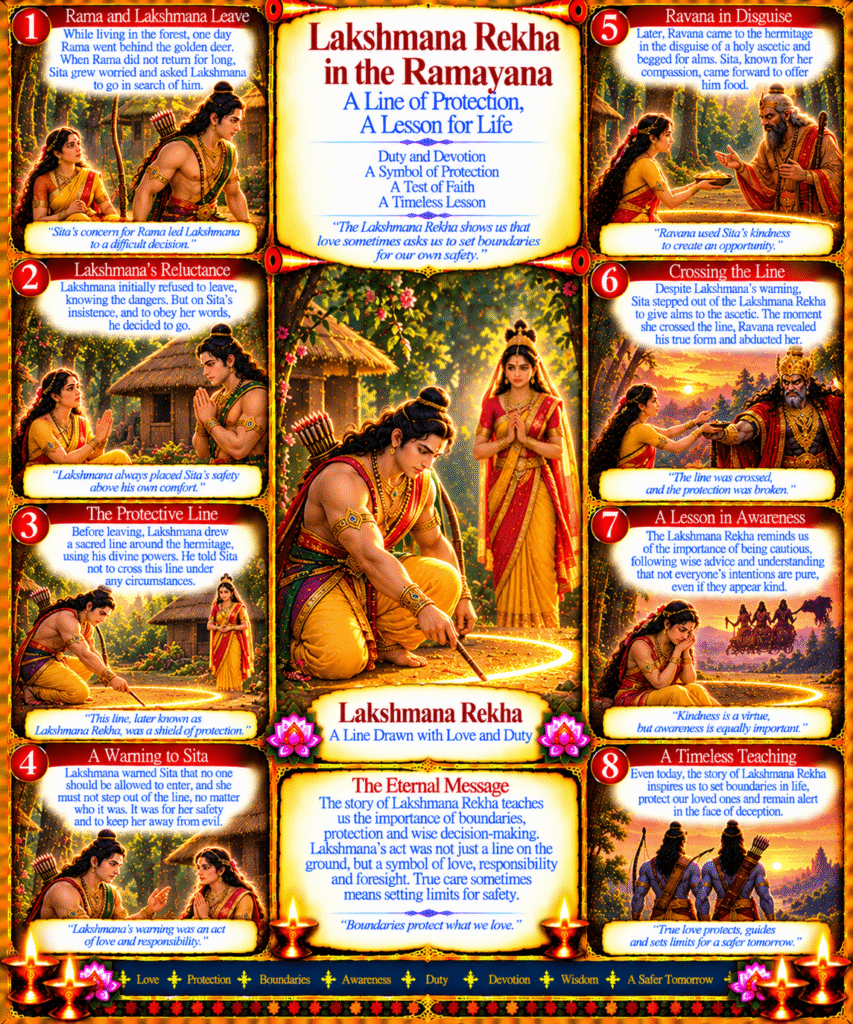
Drawing the Lakshmana Rekha
Lakshmana from Ramayana: Drawing the Lakshmana Rekha

Before leaving to look for Rama, Lakshmana drew a protective line (Lakshmana Rekha) around their home and warned Sita not to cross it. some changes now

Inspiration:** A powerful metaphor for setting personal boundaries and safety limits, especially in today’s digital and emotional spaces.

Fighting and Defeating Indrajit

Lakshmana took on Indrajit (Meghanada), Ravana’s super-powerful son and one of Lanka’s strongest fighters. Even though he got hurt many times during the battle, Lakshmana didn’t give up. With divine blessings and his sharp strategy, he finally defeated Indrajit.

Inspiration:** Symbol of courage, resilience, and strategic thinking, even against powerful odds.

Staying Awake for 14 Years

Lakshmana took a vow not to sleep during the entire 14 years of exile so that he could protect Rama and Sita during the night.

Inspiration: This act of sacrifice and dedication teaches the value of alertness, commitment, and discipline in fulfilling responsibilities.

Respect Towards Sita

Throughout the journey, Lakshmana always addressed Sita Devi with utmost respect, treating her like a mother. He never even looked at her directly.

Inspiration: Highlights gender respect, moral restraint, and ethical behaviour — qualities very relevant in today’s world.

Silently Bearing Pain and Insults

In later parts of the Ramayana, Lakshmana was unfairly insulted and forced to leave when he disturbed Rama’s meditation. Yet, he accepted it silently and left, showing obedience to dharma.

Inspiration: Teaches emotional maturity, humility, and the ability to follow duty without ego.

Final Message

Lakshmana’s life is filled with silent strength, untold sacrifice, and loyal support.

Conclusion

Lakshmana from the Ramayana isn’t just a mythological character — his life is like a guide on how to live right. His loyalty, sacrifice, courage, and humility never go out of style. In today’s fast and confusing world, Lakshmana stands as a calm, steady role model. If we can carry even a little bit of his spirit in us — living with purpose, protecting with love, and serving with honesty — we’d be doing pretty great.

Lakshmana in the Ramayana is full of inspiring moments that reflect his bravery, loyalty, sacrifice, and moral strength.

Answer:

Answer:

King Dasharatha and Queen Sumitra had a son, Lakshmana.

    Which powerful warrior did Lakshmana defeat in the war against Lanka?

Answer:

Lakshmana defeated Ravana’s son, Indrajit (Meghanada), a mighty and skilled warrior.

Answer:

In Rama and Sita‘s exile, Lakshmana guarded and served them without sleeping for 14 years.

    How did Lakshmana treat Sita Devi during exile?

Answer:

He treated Sita Devi with utmost respect and regarded her as a mother, never even looking at her directly.

Answer:

Lakshmana represents **loyalty, selfless service, discipline, bravery, and humility.

Answer:

Lakshmana was angry and hurt, but remained calm. He decided to leave all luxuries behind and support Rama and Sita in their journey.

Answer:

According to later versions of the Ramayana, Lakshmana eventually sacrificed his life when he was unjustly asked to leave Rama’s presence, upholding dharma till the end.

  • Raja Ratnam

    Hi, I'm Raja Ratnam, based in Hyderabad, Telangana. I'm a researcher and writer with a deep passion for Indian mythology and Hindu festivals, and I created Ratnam Strategy to make the timeless stories of the Ramayana and Mahabharata accessible to modern readers. On this site you'll find detailed guides to epic characters, festival traditions, puja vidhanams, and vrat kathas, written in both English and Telugu wherever it helps readers connect more deeply with the material. Feel free to browse my latest posts, or reach out at ratnampasalapudi@gmail.com.

    Related Posts

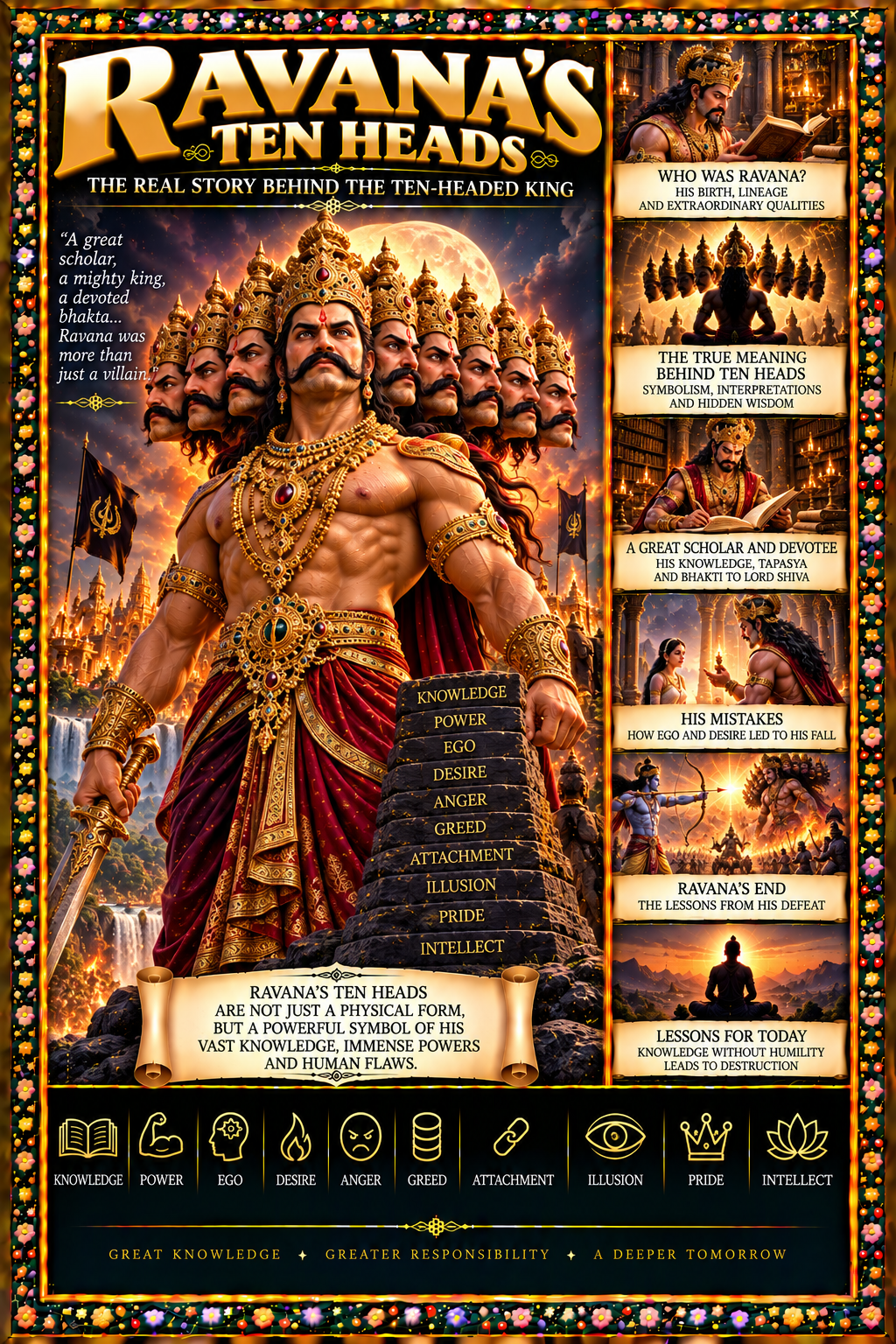
    Ravana’s Ten Heads: The Real Story Behind the Ten-Headed King

    The legend of Ravana’s Ten Heads (known in Sanskrit as Dashanana or Dashagriva) is one of the most intriguing, multi-layered stories in Hindu mythology. Ravana, the king of Lanka in the epic Ramayana, is widely depicted in temple sculptures, classical paintings, and Ramlila plays as a towering demon king with ten heads and twenty arms. Was Ravana literally born with ten biological heads, or did He manifest them through divine boons and illusive powers? Or does the imagery of Ravana’s Ten Heads carry a deep psychological, philosophical, and astrological symbolism representing human emotions, intellect, and spiritual vices? In this comprehensive guide, we uncover the real story, scriptural origins, 4 sacred images, and profound spiritual symbolism behind Ravana’s Ten Heads. The Mythological Origin of Ravana’s Ten Heads To understand the story of Ravana’s Ten Heads, one must explore his unique lineage and his extreme penance to Lord Brahma. The Divine Lineage of Ravana Ravana was not a typical demon. He was the son of Sage Vishrava (a revered Vedic Rishi and grandson of Lord Brahma) and Princess Kaikesi (an Asura princess). This unique lineage made Ravana half-Brahmin and half-Rakshasa. From his father, he inherited immense intellectual capacity, Vedic wisdom, and mastery…

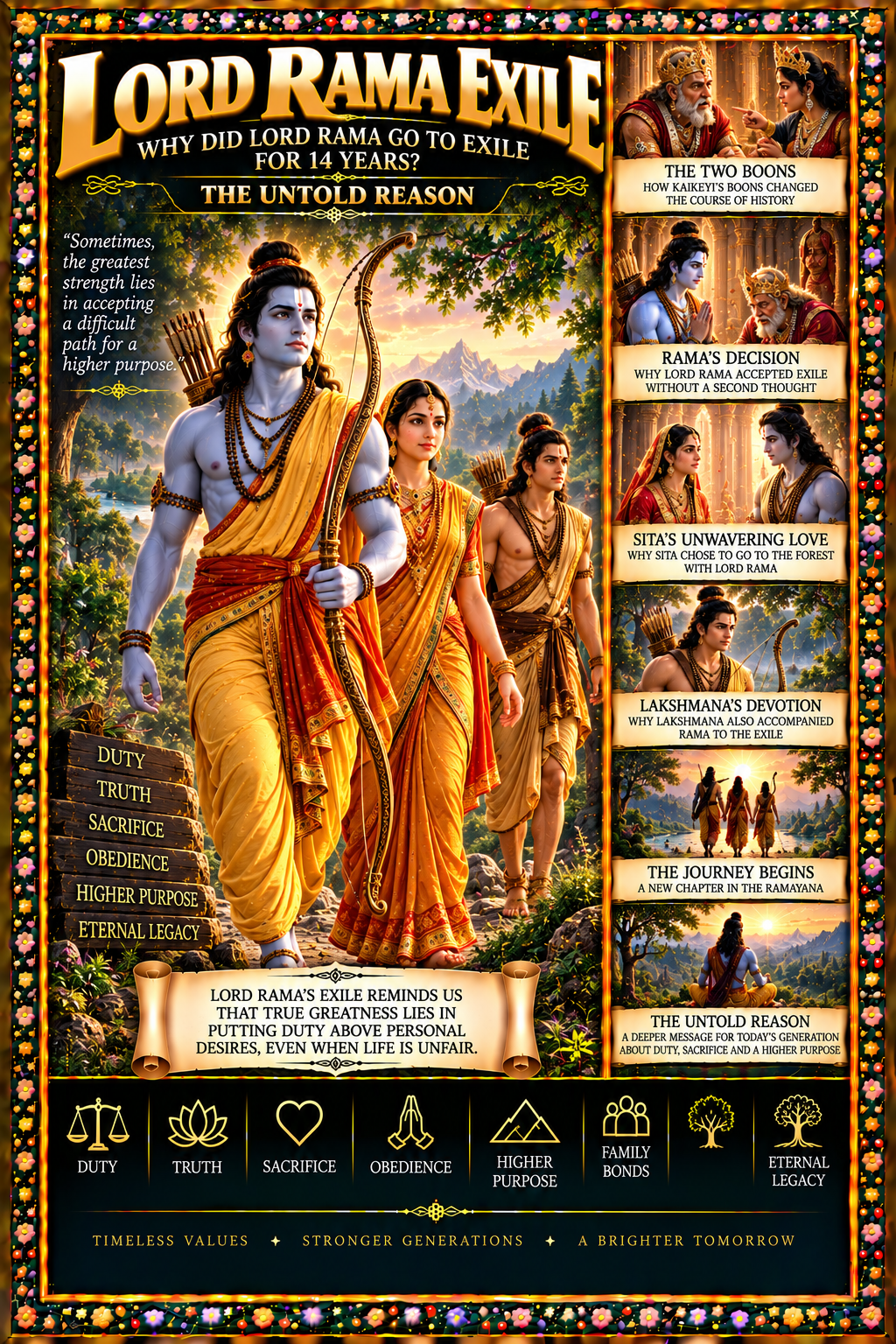
    Lord Rama Exile: Why Did Lord Rama Go to Exile for 14 Years? The Untold Reason

    The story of Lord Rama Exile is one of the most pivotal turning points in the epic Ramayana. On the very eve of Crown Prince Rama’s grand coronation as King of Ayodhya, He was suddenly banished to the dangerous Dandaka forest for 14 years. While most readers are familiar with the surface political drama involving Queen Kaikeyi’s two boons and the wicked instigation of the maid Manthara, ancient Vedic scriptures, Puranas, and astrological treatises reveal far deeper, cosmic, legal, and karmic reasons behind this divine Lord Rama Exile. Why was Lord Rama exiled? Why did He accept it without a single word of protest? And why was the duration of Lord Rama Exile set precisely to 14 years instead of 10 or 20? In this article, we uncover the untold cosmic secrets, ancient legal statutes, and divine curses that ordained the 14-year Lord Rama Exile. The Surface Story of Lord Rama Exile: Kaikeyi’s Boons To understand the deeper secret reasons, one must first recall the narrative context established in the Ayodhya Kanda of Valmiki Ramayana regarding Lord Rama Exile. The Battle Boon Given to Queen Kaikeyi Years before the coronation, King Dasharatha fought alongside the Devas against the demon Sambasura…

    One thought on “Lakshmana from Ramayana: An Unsung Hero for Today’s Youth”

    Leave a Reply

    Your email address will not be published. Required fields are marked *

    You Missed

    Ravana’s Ten Heads: The Real Story Behind the Ten-Headed King

    Ravana’s Ten Heads: The Real Story Behind the Ten-Headed King

    Lord Rama Exile: Why Did Lord Rama Go to Exile for 14 Years? The Untold Reason

    Lord Rama Exile: Why Did Lord Rama Go to Exile for 14 Years? The Untold Reason

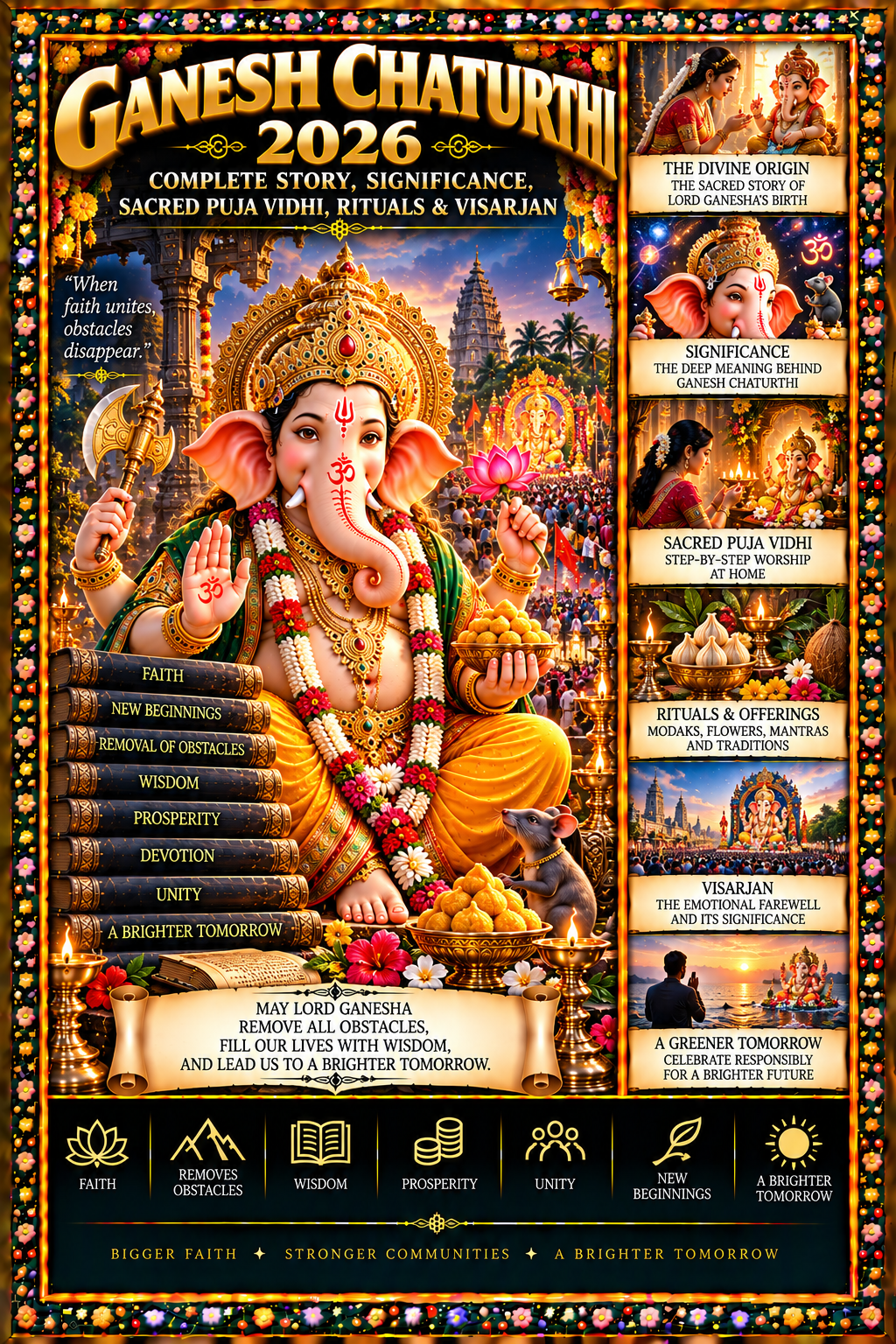
    Ganesh Chaturthi 2026: Complete Story, Significance, Sacred Puja Vidhi, Rituals & Visarjan

    Ganesh Chaturthi 2026: Complete Story, Significance, Sacred Puja Vidhi, Rituals & Visarjan

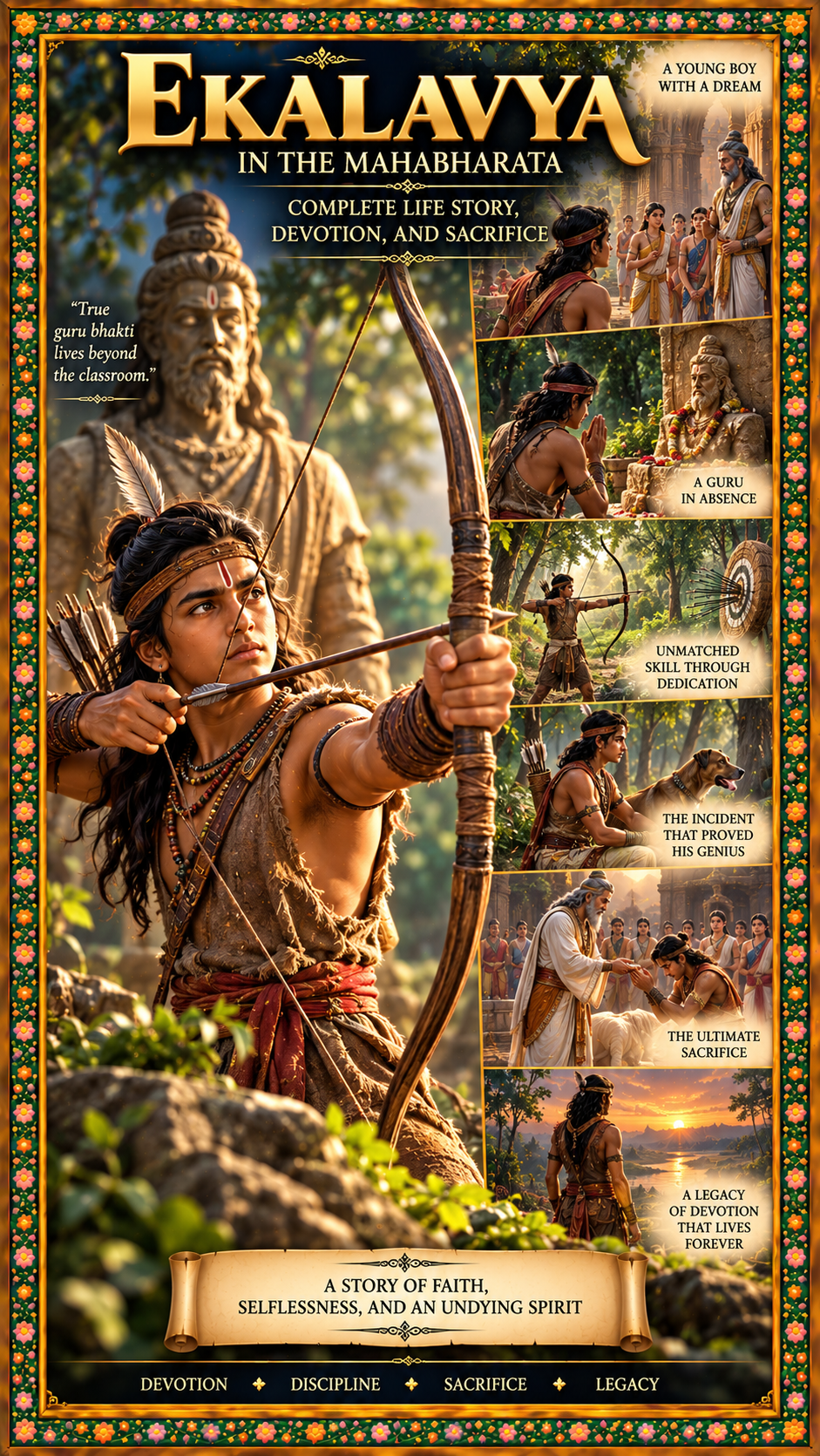
    Ekalavya in the Mahabharata: Complete Life Story, Devotion, and Sacrifice

    Ekalavya in the Mahabharata: Complete Life Story, Devotion, and Sacrifice

    Varaha Jayanti 2026: Complete Story, Significance, Sacred Puja Vidhi & Powerful Mantras

    Varaha Jayanti 2026: Complete Story, Significance, Sacred Puja Vidhi & Powerful Mantras

    Kripacharya in the Mahabharata: Complete Life Story, Teachings, and Legacy

    Kripacharya in the Mahabharata: Complete Life Story, Teachings, and Legacy
    Translate »