Raja Ratnam

As the grand five-day festival of Deepavali culminates, millions across India prepare to celebrate Yama Vidiya 2026, also revered across linguistic regions as Bhai Dooj, Bhau Beej, Bhai Phonta, or Bhatru Dwitiya. Observed on the second lunar day (Dwitiya / Vidiya) of the bright fortnight (Shukla Paksha) in the sacred month of Kartika, Yama Vidiya 2026 commemorates the eternal bond between Lord Yama, the god of death and cosmic justice, and his beloved twin sister, the river goddess Yamuna.
Unlike ordinary social gatherings, observing Yama Vidiya 2026 offers profound spiritual immunity against untimely death, karmic afflictions, and familial discord. Furthermore, following authentic scriptural traditions—from the sacred Yamuna Snan to the protective tilak vidhi—ensures longevity for brothers and perennial auspiciousness for sisters.
Yama Vidiya 2026 Date, Tithi Timings, and Shubh Muhurat
According to Vedic astronomical calculations documented in the Hindu festival calendar guide, Yama Vidiya 2026 will be celebrated on Wednesday, November 11, 2026. Aligning sibling rituals with the exact Aparahna Kaal yields the highest spiritual merit:
- Kartika Shukla Dwitiya (Vidiya) Tithi Begins: November 10, 2026, at 02:48 PM
- Kartika Shukla Dwitiya (Vidiya) Tithi Ends: November 11, 2026, at 01:15 PM
- Auspicious Yama Vidiya Aparahna Muhurat (Tilak Timing): 01:12 PM to 03:24 PM (Duration: 2 Hours 12 Minutes)
- Yamuna Snan Shubh Muhurat (Holy Bath): 05:08 AM to 06:42 AM (Pratahkala / Brahma Muhurta)
- Vijaya Muhurat (Favorable Endeavors): 01:54 PM to 02:38 PM
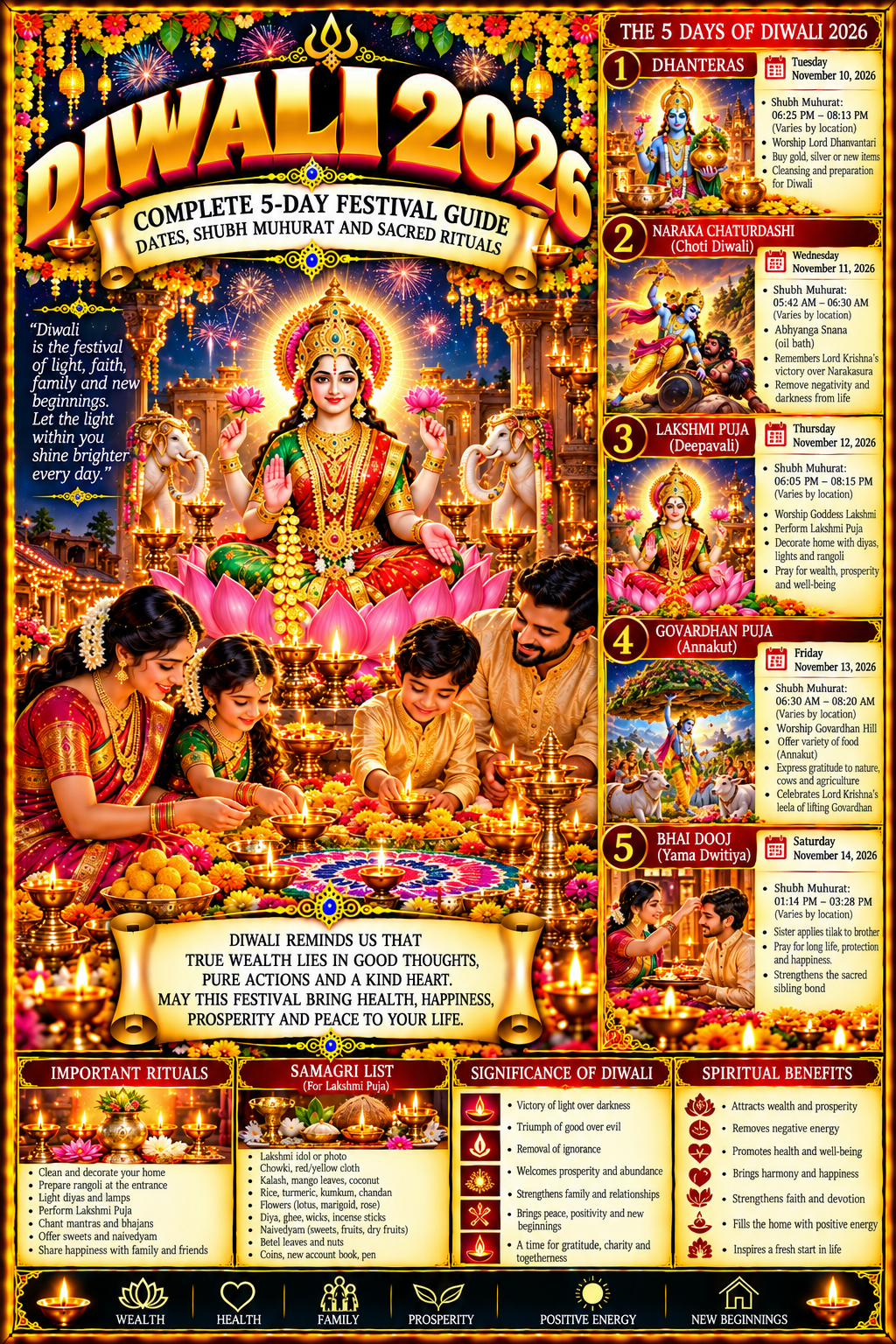
Because the Dwitiya Tithi prevails during the afternoon period (Aparahna) on November 11, scriptures prescribe conducting the sister-brother meal and tilak ceremonies during this window. This timing aligns harmoniously with the overarching 5-day cycle explored in our Diwali 2026 complete festival guide.
The Sacred Puranic Legend: Lord Yama and Goddess Yamuna
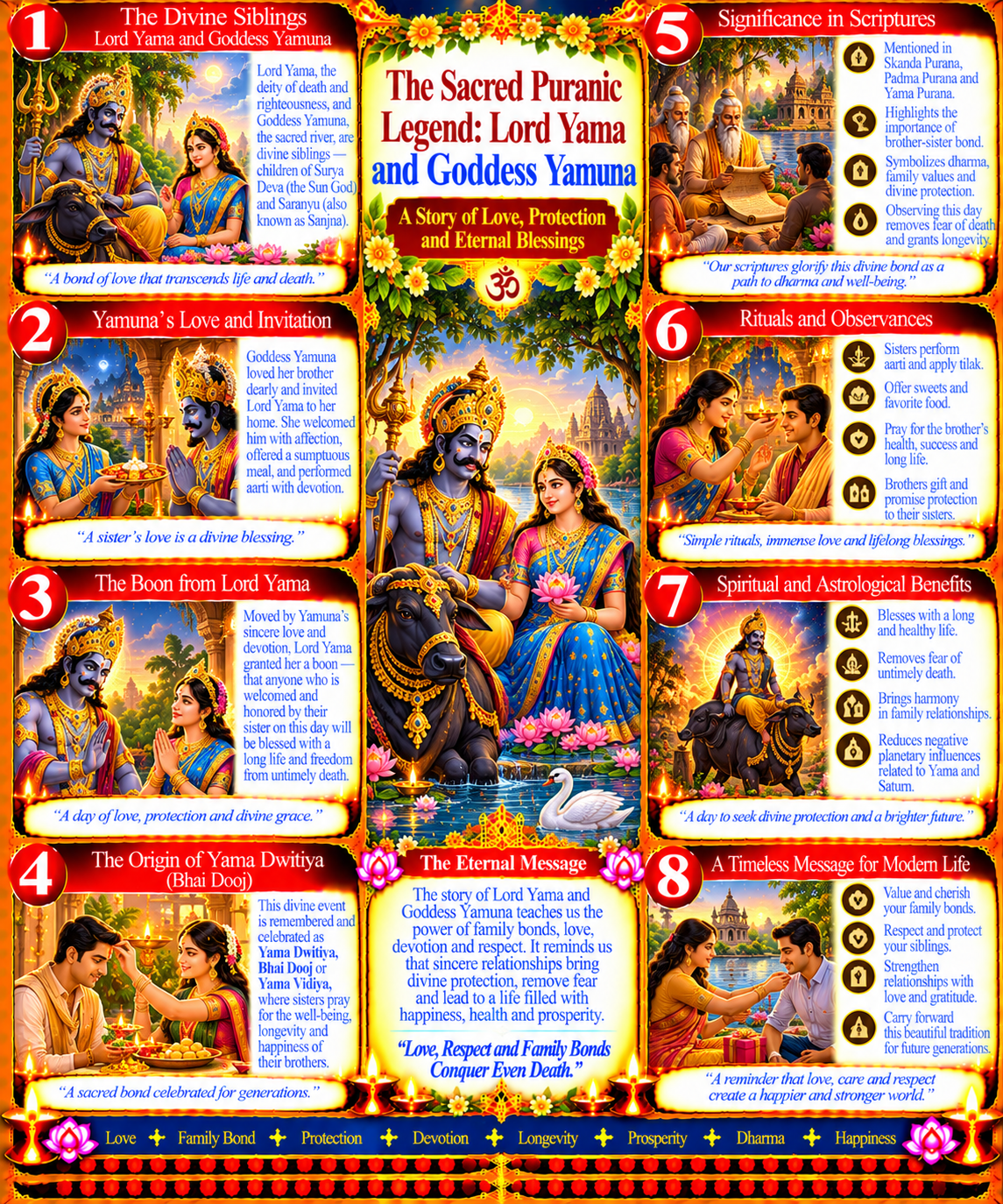
To truly grasp the sanctity of Yama Vidiya 2026, one must explore the cosmic narrative from the Padma Purana, Skanda Purana, and Bhavishya Purana.
The Divine Lineage: Children of Surya and Saranyu
Lord Yama (Dharmaraja) and Goddess Yamuna (Yami) were born as divine twins to the Sun god Surya and his celestial consort Saranyu (Sanjna). Bound by immense affection since childhood, the siblings were eventually separated by cosmic duties. Yama was designated the administrator of justice and afterlife in Yamaloka, while Yamuna descended to Earth as the sacred, purifying river Yamuna flowing gracefully across the sacred plains of Northern India.
Yamuna’s Longing and the Historic Arrival of Lord Yama
Due to the grim nature of his responsibilities—weighing mortal karma and administering consequences—Lord Yama was feared by all beings and rarely experienced social warmth. Yet, his sister Yamuna repeatedly sent messages affectionately inviting him to her home. Preoccupied with governance, Yama constantly postponed his journey.
Finally, on the second day of the bright fortnight in the month of Kartika, Yama took leave from his throne in the netherworld and arrived unannounced at Yamuna’s tranquil dwelling along the riverbank.
The Joyous Reception and the Lavish Sisterly Banquet
Overwhelmed with delight at her brother’s unexpected arrival, Yamuna washed Yama’s feet with fragrant water, applied an auspicious vermilion (Roli) and sandalwood (Chandan) tilak to his brow, and placed unbroken sacred rice (Akshat) upon his forehead to awaken spiritual peace. She then served him an extraordinary multi-course feast featuring his favorite vegetarian dishes, seasonal fruits, and sweets prepared entirely with her own hands.
The Immortal Boon: Origin of Yama Vidiya
Deeply touched by her selfless hospitality and boundless love, Lord Yama was moved to tears. He declared: “Dearest Yamuna, whatever boon you desire from me, ask today, and it shall be granted instantly.”
Rather than seeking personal wealth or celestial power, Yamuna selflessly requested a cosmic boon for the welfare of all humanity:
“O noble brother Dharmaraja! Grant that every year on this auspicious day, you shall return to visit my abode and dine at my table. Furthermore, grant that any brother who visits his sister on this sacred day, receives her holy tilak, eats food cooked by her hands, and bathes in the holy Yamuna waters shall never suffer untimely death (Apamrityu), nor face fear from your dreadful messengers or punishment in the realms of Yamaloka.”
Lord Yama joyfully conceded, establishing the sacred covenant of Yama Vidiya. Consequently, this festival is celebrated to liberate mortal siblings from the sorrow of separation and fear of the afterlife.
The Alternative Puranic Legend: Lord Krishna and Subhadra
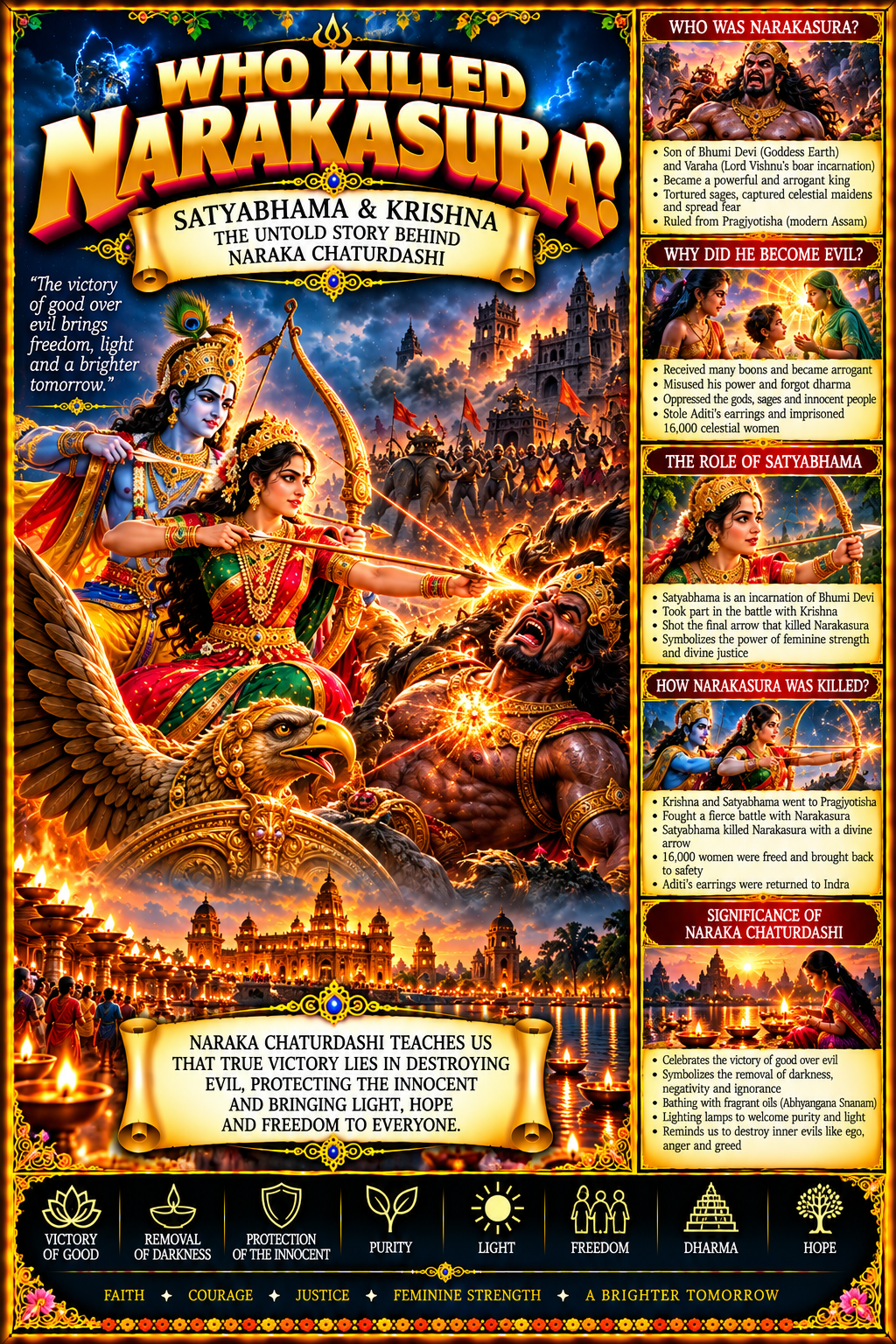
Alongside the Yama-Yamuna chronicle, classical folklore in Western and Eastern India cherishes another heroic narrative. Following the fierce battle in which Satyabhama and Krishna vanquished the tyrannical demon Narakasura (as recounted in detail in our treatise on who killed Narakasura), Lord Krishna journeyed to meet his beloved sister Subhadra.
Subhadra greeted her victorious brother with immense reverence, waving a sacred Aarti lamp, applying an auspicious victory tilak to his forehead, and offering him nourishing sweets to alleviate the fatigue of battle. This divine sibling celebration deepened the tradition of sisters praying for their brothers’ triumphs, complementing the sibling traditions explored in Govardhan Puja and Bhai Dooj.
Regional Celebrations of Yama Vidiya Across India
Because Sanatana Dharma weaves diverse regional practices into unified philosophical harmony, Yama Vidiya 2026 is celebrated with distinctive cultural nuances across different states:
1. Bhatru Dwitiya / Yama Vidiya in Andhra Pradesh & Telangana
Known specifically as Yama Vidiya or Bhatru Dwitiya in the Telugu states, brothers travel to their sisters’ residences. The sister applies a sacred tilak using red kumkum and performs Arati. In return, brothers offer gifts (Pasupu-Kumkuma offerings) and touch their sisters’ feet, acknowledging their divine status as living embodiments of Goddess Lakshmi.
2. Bhau Beej in Maharashtra and Goa
In Maharashtra, sisters draw special geometric squares of rangoli on the floor. The brother sits on a wooden plank (Paat) inside the square. After applying the tilak, the sister feeds him Basundi, Shrikhand, or Puran Poli. A bitter wild fruit (Karit) is also remembered from the preceding Chaturdashi.
3. Bhai Phonta in West Bengal
In Bengal, sisters observe a strict fast until the ritual concludes. Using the little finger of the left hand, the sister applies a tilak made of sandalwood paste (Chandan), curd (Dahi), and kajal to her brother’s forehead three times while chanting the iconic Bengali mantra: “Bhaayer kopaale dilam phñota, Jomer duaare porlo knaata…” (I apply this mark on my brother’s forehead, placing a thorn at the doorway of Yama).
4. Bhai Dooj in Northern India
In Uttar Pradesh, Bihar, Rajasthan, and Punjab, sisters offer whole dry coconuts (Gola) tied with sacred red Mauli thread. The brother receives the coconut as an emblem of longevity and divine protection.
Authentic Step-by-Step Puja Vidhi for Yama Vidiya 2026
To ensure maximum spiritual benefit on Yama Vidiya 2026, follow this canonical ritual framework:
Phase 1: Morning Yamuna Snan (or Gangajal Bath)
If residing near Mathura, Vrindavan, or Delhi, bathing in the holy Yamuna River at Vishram Ghat is considered incomparably auspicious. Alternatively, devotees add drops of Gangajal and Yamunajal to home bathwater during Brahma Muhurta while meditating upon Yamuna and Yama.
Phase 2: Arranging the Sacred Puja Thali
The sister prepares a clean brass or silver plate containing: Roli (kumkum), unbroken unboiled rice (Akshat), sandalwood paste, fresh betel leaves (Paan), betel nuts (Supari), Batashas, dry coconut (Gola), flowers, and a glowing pure cow ghee diya.
Phase 3: The Sacred Tilak Ceremony
Seat the brother facing East or North on a wooden seat (Aasan). The sister applies the auspicious tilak to the center of his forehead with her right ring finger, affixing unbroken Akshat grains upon it. She ties the sacred Kalava thread around his right wrist, waves the Aarti lamp clockwise around him, and hands him the consecrated dry coconut.
Sacred Vedic Mantra for Yama Vidiya
While applying the sacred mark, the sister recites the traditional blessing:
“Bhratastavanuja yata Bhratusth sneham samarpayet | Yamasya bhagini yamuna bhratruvriddhaye shubhada.”
(Translation: Just as Yamuna extended immortal love to her brother Yama, I offer my prayers for my brother’s longevity, prosperity, and spiritual welfare.)
The Sibling Feast (Bhojan)
According to the Skanda Purana, a brother must never dine at his own house on Yama Vidiya. He must partake of a festive meal cooked in his sister’s home to fulfill the sacred vow of Dharmaraja.
Mutual Gifts and Blessings
The brother touches his elder sister’s feet to receive her divine maternal blessings and presents thoughtful gifts and financial protection, reaffirming lifelong family solidarity.
According to mythological and cultural analyses preserved in historical records of Bhai Dooj and Yama Dwitiya (Wikipedia), this ancient rite has preserved sibling harmony across thousands of years of Indian civilization.
Frequently Asked Questions About Yama Vidiya 2026 (20 FAQs)
1. What is Yama Vidiya 2026 and why is it celebrated?
Yama Vidiya 2026 is the sacred Hindu sibling festival celebrated on Kartika Shukla Dwitiya (November 11, 2026), marking Lord Yama’s historic visit to his sister Goddess Yamuna, who granted protection from untimely death to all participating brothers.
2. What is the exact date for Yama Vidiya 2026?
Yama Vidiya 2026 will be observed on Wednesday, November 11, 2026, coinciding with Bhai Dooj across the Hindu calendar.
3. What is the best shubh muhurat for Yama Vidiya 2026 tilak?
The most auspicious tilak muhurat falls during the Aparahna Kaal between 01:12 PM and 03:24 PM on November 11, 2026.
4. Why is this festival called “Yama Vidiya” or “Yama Dwitiya”?
It is called Yama Vidiya (or Yama Dwitiya) because Lord Yama (the god of death) visited his sister Yamuna on the second tithi (Vidiya/Dwitiya) of the lunar fortnight.
5. Who are the parents of Lord Yama and Goddess Yamuna?
Lord Yama and Goddess Yamuna are the divine children of the Sun god Surya (Vivasvan) and his consort Saranyu (Sanjna).
6. Why should brothers eat at their sister’s house on Yama Vidiya?
Scriptures state that eating food prepared by a sister on this day satisfies Lord Yama, warding off negative karma, illnesses, and premature death.
7. What if a man does not have a real sister on Yama Vidiya 2026?
He can visit a cousin, aunt’s daughter, sister-in-law, or an elder woman regarded as a sister. If none are available, scriptures advise offering reverence to Goddess Yamuna or Mother Cow (Gau Mata).
8. What is the importance of bathing in the Yamuna River on Yama Vidiya?
Bathing in the holy Yamuna on this day washes away heavy sins, relieves anxiety about death, and ensures spiritual peace in the afterlife.
9. What is the difference between Raksha Bandhan and Yama Vidiya (Bhai Dooj)?
On Raksha Bandhan, sisters tie a sacred thread (Rakhi) on the brother’s wrist for protection. On Yama Vidiya, the sister applies a sacred Tilak to his forehead, feeds him a feast, and prays to Lord Yama for his longevity.
10. Why is a whole dry coconut (Gola) given to the brother on Yama Vidiya?
The dry coconut represents purity, prosperity, and longevity. It serves as a protective talisman shielding the brother from accidents and negativity.
11. Which finger should the sister use to apply the tilak on Yama Vidiya?
The sister should use the ring finger (Anamika) of her right hand, as it is connected to the Sun, life energy, and tranquility.
12. What direction should the brother face during the ceremony?
The brother should sit facing North (direction of Kubera and spiritual focus) or East (direction of the rising Sun and life energy).
13. Can a sister apply tilak to her younger brother?
Yes, sisters can apply tilak to both younger and elder brothers. An elder brother is touched on his feet for blessings, while a younger brother receives heartfelt affection and guidance.
14. Why is unbroken rice (Akshat) placed upon the tilak?
Akshat means “that which cannot be destroyed.” Placing unbroken rice over the vermilion symbolizes unbreakable health, uninterrupted lineage, and eternal prosperity.
15. What is the significance of the Yamuna Aarti at Vishram Ghat in Mathura?
Vishram Ghat in Mathura is believed to be the exact spot where Yama and Yamuna embraced. Lakhs of sibling pairs bathe holding hands and perform grand evening Aarti there.
16. What dishes are traditionally prepared on Yama Vidiya?
Traditional dishes include sweet kheer, halwa, puri, seasonal vegetable curries, and regional specialties like Basundi in Maharashtra and payasam in Southern India.
17. Why is Yama Deepam not lit on Yama Vidiya night?
Yama Deepam is specifically consecrated on Dhanteras and Naraka Chaturdashi to avert death. By Yama Vidiya, Yama has already arrived as an honored guest and blessed the household.
18. What should sisters do if their brothers live abroad or in distant cities?
Sisters can perform the Tilak prayer mentally by offering vermilion and akshat to the sacred Moon (Chanda Mama) and praying for their brother’s health and happiness.
19. Why should a brother not eat food prepared at his own house on this day?
The Padma Purana expressly states that dining at a sister’s home activates the divine boon of Yama. Eating alone at home on this day is considered inauspicious.
20. What is the broader social and psychological message of Yama Vidiya 2026?
Yama Vidiya reinforces lifelong familial bonds, mutual respect between genders, and mental reassurance that love, gratitude, and moral righteousness can overcome even the deepest existential fears.