Raja Ratnam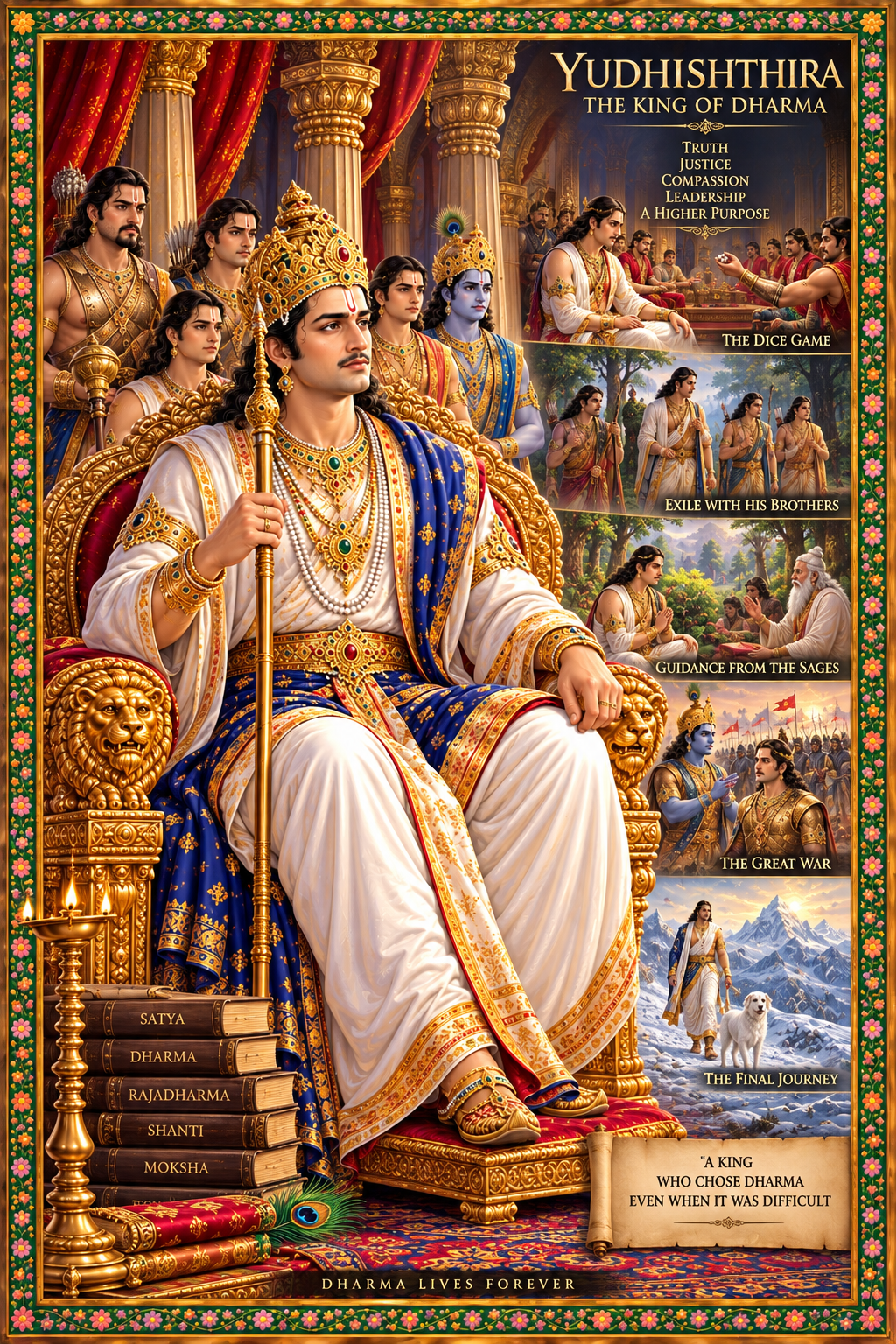
King Dharma Raju in the Mahabharata
Introduction – Dharma Raju(Yudhishthira) in Mahabharata
Dharma Raju(Yudhishthira) in Mahabharata : Dharma Raju, also known as Yudhishthira, stands as one of the most respected and morally upright characters in the Indian epic Mahabharata. Known for his unwavering commitment to truth and righteousness, he earned the title “King of Dharma.”
As the eldest of the Pandavas, Dharma Raju symbolized justice, patience, forgiveness, and moral strength. His life journey—from royal heir to exile, from gambler to emperor—teaches timeless lessons on leadership, responsibility, and ethical governance.
This detailed blog on RatnamStrategy explores his birth, virtues, challenges, leadership, Kurukshetra war role, and spiritual legacy Dharma Raju’s Divine Origin and Birth
Dharma Raju, also known as Yudhishthira, was the eldest of the Pandavas in the Mahabharata. He was born to Queen Kunti through the divine blessing of Lord Dharma (Yama).
Before marriage, Kunti received a sacred mantra from Sage Durvasa that allowed her to invoke any god and receive a child from him. After marrying King Pandu, who was cursed not to have children, Kunti used this mantra to call upon Lord Dharma, the god of righteousness.
As a result, Yudhishthira was born with divine qualities such as truthfulness, justice, wisdom, and calmness. Because he was the son of Dharma, he became known as Dharma Raju (King of Righteousness).
He later became the rightful king of the Pandavas and is remembered as the symbol of truth and moral duty in the Mahabharata.
Son of Dharma Deva – Dharma Raju(Yudhishthira) in Mahabharata
Dharma Raju was born to Queen Kunti through the blessings of Yama (Dharma Deva), the God of Justice. Hence, he was considered the embodiment of righteousness.
- Mother: Kunti
- Legal Father: King Pandu
- Divine Father: Yama (Dharma)
- Brothers: Bhima, Arjuna, Nakula, Sahadeva
His birth symbolized truth and moral balance in the world.
For official cultural and historical archives, visit the Ministry of Culture, Government of India.
Why is He Called Dharma Raju? – Dharma Raju(Yudhishthira) in Mahabharata
He is called Dharma Raju (King of Righteousness) because of his divine origin and unwavering commitment to truth and justice.
Son of Lord Dharma – Dharma Raju(Yudhishthira) in Mahabharata
Yudhishthira was born to Queen Kunti through the blessing of Lord Dharma (Yama), the god of righteousness. Because he was the divine son of Dharma, he naturally embodied moral values.
Always Spoke the Truth – Dharma Raju(Yudhishthira) in Mahabharata
He was famous for never telling lies, even in difficult situations. His commitment to truth made him respected by friends and enemies alike.
Follower of Righteousness (Dharma)
In the epic Mahabharata, he always tried to follow dharma (moral duty), even when it caused him personal suffering — such as accepting exile after losing the dice game.
Just and Fair King
After the Kurukshetra war, he ruled the kingdom with fairness, compassion, and justice, proving himself worthy of the title Dharma Raju.
Commitment to Truth – Dharma Raju(Yudhishthira) in Mahabharata
Yudhishthira never lied—except once during the Kurukshetra war under extreme circumstances. His commitment to “Satya” (truth) was so strong that:
- His chariot floated above the ground.
- People trusted his words without question.
- Even enemies respected his integrity.
Moral Strength Over Physical Power
Unlike Bhima (strength) or Arjuna (war skills), Dharma Raju’s power was ethical wisdom and calm decision-making.
Education and Training – Dharma Raju(Yudhishthira) in Mahabharata
Gurukul Education
Yudhishthira received his education in a Gurukul along with his brothers and the Kauravas. He was first trained by Kripacharya, who taught him basic scriptures, warfare principles, and royal duties.
Later, he became a disciple of Guru Dronacharya, the royal teacher of Hastinapura. Under Dronacharya’s guidance, he learned:
- Vedas and Scriptures
- Warfare and military strategy
- Administration and kingship
- Dharma (righteousness) and moral values
Special Skills
Unlike Bhima and Arjuna, who excelled in physical combat, Yudhishthira specialized in:
- Spear fighting
- Chariot warfare
- Political wisdom
- Decision-making and justice
Character Development
More than weapons training, Yudhishthira focused on truthfulness, patience, self-control, and leadership. His education shaped him into a wise and fair king, worthy of the title Dharma Raju.
Under Guru Dronacharya
Dharma Raju was trained in warfare and statecraft by Dronacharya. Though not the strongest warrior, he mastered:
- Spear fighting
- Chariot warfare
- Political administration
- Diplomacy
Wisdom and Leadership Skills
He excelled in understanding Dharma (righteous law), making him suitable to rule a kingdom.
His greatest achievement was the Rajasuya Yajna – Dharma Raju(Yudhishthira) in Mahabharata
One of Yudhishthira’s greatest achievements was performing the Rajasuya Yajna, a grand Vedic royal sacrifice mentioned in the Mahabharata.
What is Rajasuya Yajna?
The Rajasuya Yajna was a powerful ritual performed by a king to prove his supremacy and establish himself as an emperor (Chakravarti). A number of other kings supported and submitted to it.
How He Achieved It
Before conducting the yajna, the Pandavas conquered many kingdoms with the help of their brothers and allies, including Krishna. After gaining victory and recognition, Yudhishthira successfully performed the sacred ritual at Indraprastha.
Why It Was Important
- It proved his power and leadership.
- He was declared Emperor of Bharatavarsha.
- It brought great glory and respect to the Pandavas.
However, this success also increased jealousy in the Kauravas, especially Duryodhana, which later led to the infamous dice game.
In Short
The Rajasuya Yajna was Yudhishthira’s greatest royal achievement, marking him as a powerful and righteous emperor.
Becoming Emperor
After establishing Indraprastha, Dharma Raju performed the grand Rajasuya Yajna to declare himself emperor.
With the support of Krishna, the Pandavas conquered many kingdoms peacefully.
Shishupala’s Death
During the ceremony, Krishna killed Shishupala for insulting him repeatedly. This incident showed Dharma Raju’s respect for divine authority.
The Game of Dice – His Greatest Weakness – Dharma Raju(Yudhishthira) in Mahabharata
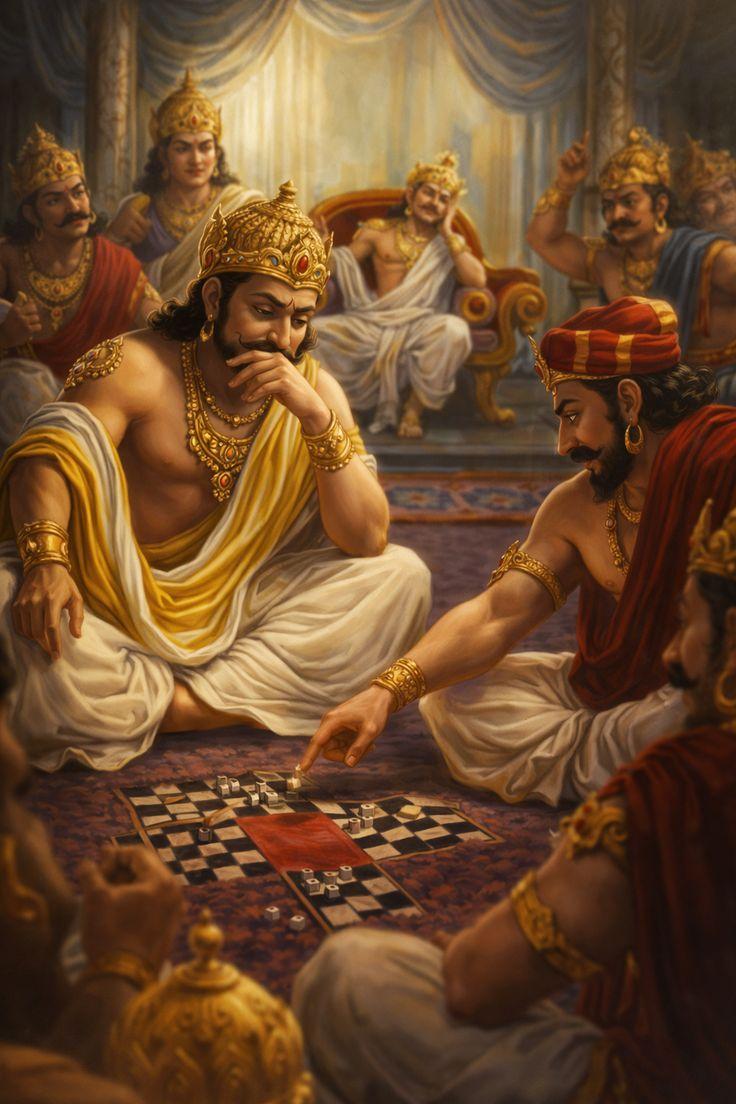
Invitation by Duryodhana
Dharma Raju accepted the dice game challenge from Duryodhana, organized by Shakuni.
Loss of Kingdom and Exile
He gambled away:
- His wealth
- His kingdom
- His brothers
- Himself
- Even Draupadi
This led to:
- Draupadi’s humiliation
- 13 years of exile
- The Kurukshetra war
Lesson Learned
Even the most righteous person can fall due to a single weakness—attachment to rules and ego.
Dharma Raju in the Kurukshetra War – Dharma Raju(Yudhishthira) in Mahabharata
Role in the War
Though not the fiercest warrior, Dharma Raju:
- Led the Pandava army
- Made strategic decisions
- Followed Krishna’s guidance
The Half-Truth About Ashwatthama
Under Krishna’s advice, he said:
“Ashwatthama is dead” (referring to an elephant).
This broke his lifetime vow of absolute truth. His chariot touched the ground afterward—symbolizing moral burden.
Coronation and Rule as King – Dharma Raju(Yudhishthira) in Mahabharata
Just and Fair Governance
After winning the war, Dharma Raju ruled Hastinapura with:
- Justice
- Fair taxation
- Protection of citizens
- Spiritual administration
He listened to elders like Bhishma and followed dharmic principles.
Ashwamedha Yajna – Dharma Raju(Yudhishthira) in Mahabharata
To restore peace and authority, he conducted the Ashwamedha Yajna.
The Final Journey to Heaven – Dharma Raju(Yudhishthira) in Mahabharata
The Test of Dharma – Dharma Raju(Yudhishthira) in Mahabharata
After ruling for many years, the Pandavas renounced their kingdom and walked toward the Himalayas.
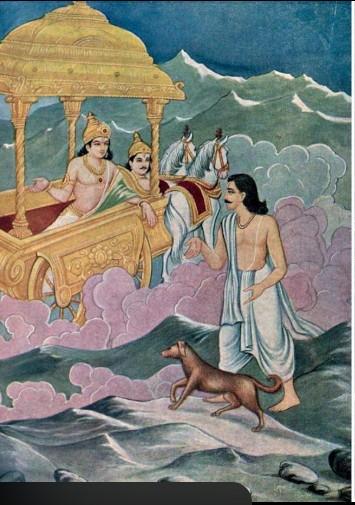
One by one, his brothers and Draupadi fell. Only Dharma Raju and a dog remained.
Refusal to Abandon the Dog – Dharma Raju(Yudhishthira) in Mahabharata
When Indra invited him to heaven, he refused to leave the dog. The dog was revealed to be Dharma Deva (his divine father), testing him.
This final act proved he was truly “King of Dharma.”
Leadership Lessons from Dharma Raju -Dharma Raju(Yudhishthira) in Mahabharata
1. Integrity is Power
2. Admit Mistakes and Grow
3. Rule with Compassion
4. Dharma Above Ego
5. Responsibility Over Emotion
Modern leaders can learn ethical governance and patience from his life.
Spiritual Significance of Dharma Raju – Dharma Raju(Yudhishthira) in Mahabharata
Dharma Raju represents:
- Truth (Satya)
- Justice
- Patience
- Karma
- Moral responsibility
In Hindu philosophy, he symbolizes the ideal ruler who balances duty and compassion.
Conclusion – Dharma Raju(Yudhishthira) in Mahabharata
Dharma Raju, or Yudhishthira, is not just a character in the Mahabharata—he is a timeless symbol of righteousness and moral leadership.
His life teaches us that:
- Even great people face weaknesses.
- True leadership is built on ethics.
- Dharma always triumphs in the end.
For spiritual wisdom and epic insights, stay connected with RatnamStrategy.
Frequently Asked Questions – Dharma Raju(Yudhishthira) in Mahabharata
1. Who is Dharma Raju in Mahabharata?
Dharma Raju is Yudhishthira, the eldest Pandava and son of Dharma Deva.
2. Why is Yudhishthira called Dharma Raju?
Because he strictly followed truth and righteousness.
3. Who were his parents?
Kunti and King Pandu (divinely Yama).
4. What was his main quality?
Truthfulness.
5. What was his weakness?
Addiction to gambling.
6. Did Yudhishthira ever lie?
Yes, once during the war about Ashwatthama.
7. Who guided him during the war?
Krishna.
8. What yajna did he perform?
Rajasuya and Ashwamedha Yajna.
9. Who was his wife?
Draupadi.
10. How long was his exile?
13 years.
11. Who trained him?
Dronacharya.
12. What kingdom did he rule?
Hastinapura and Indraprastha.
13. Why did his chariot float?
Due to his absolute truthfulness.
14. What happened at the dice game?
He lost everything including his kingdom.
15. Did he fight bravely?
Yes, though not as fiercely as Arjuna or Bhima.
16. How did he reach heaven?
After the final journey with a dog.
17. What does the dog symbolize?
Dharma (righteousness).
18. Who was his divine father?
Yama (Dharma Deva).
19. What lesson does his life teach?
Integrity and moral leadership.
20. Why is he important today?
He represents ethical leadership and justice.