Karthika Poornima 2025 – Significance, Rituals, and Celebration of the Sacred Full Moon Day
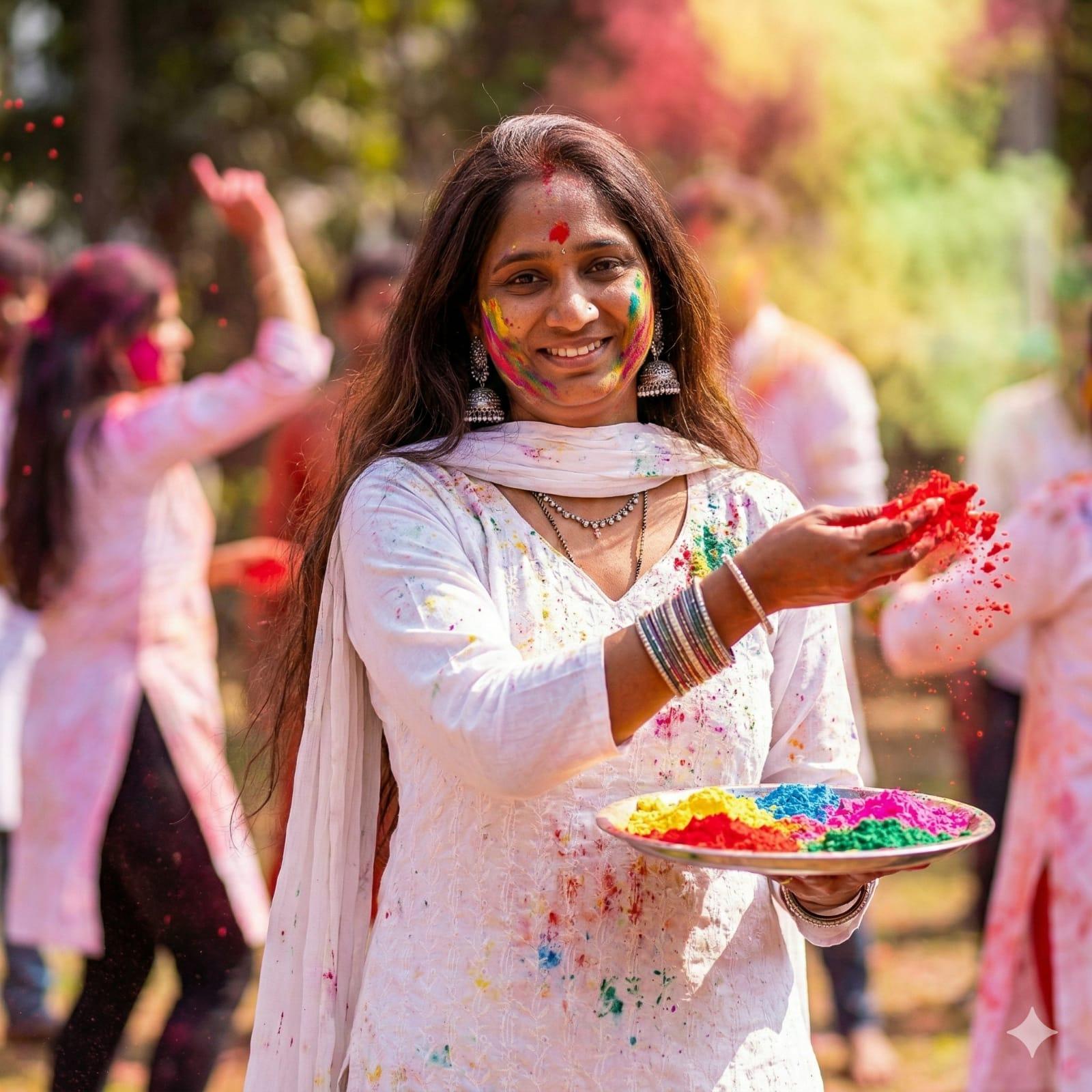
About the Author Raja Ratnam is a passionate researcher and writer specializing in Indian mythology and epic stories.With years of experience studying texts like Ramayana, Mahabharata, and other cultural scriptures,he brings insightful interpretations and practical lessons from these timeless stories. Raja Ratnam believes in making mythology accessible and meaningful for modern readers,helping them understand the moral, ethical, and cultural significance behind characters likeRamudu, Laxman, Shani Deva, and many more. Connect with the author: info@ratnamstrategy.com Introduction Karthika Poornima 2025 : Poornima, also known as Tripuri Poornima or Deva Diwali, is one of the most sacred full moon days in the Hindu calendar. It is celebrated on the full moon (Poornima) day of the Karthika Masam — a month deeply revered for its divine energy and spiritual merit This auspicious day marks the celebration of Lord Shiva’s victory over the demon Tripurasura and also holds significance for devotees of Lord Vishnu, who celebrate it as Vaikuntha Poornima. Lighting lamps, performing deepa daanam, fasting, and bathing in sacred rivers are the core rituals of this day. In 2025, Karthika Poornima falls on November 5 (Wednesday). Mythological Significance of Karthika Poornima 2025 Karthika Poornima is associated with multiple divine events in Hindu mythology. The…
Admin
- Festivals , Navratri [ Day 1 To Day 9 }
- September 29, 2025
- 166 views
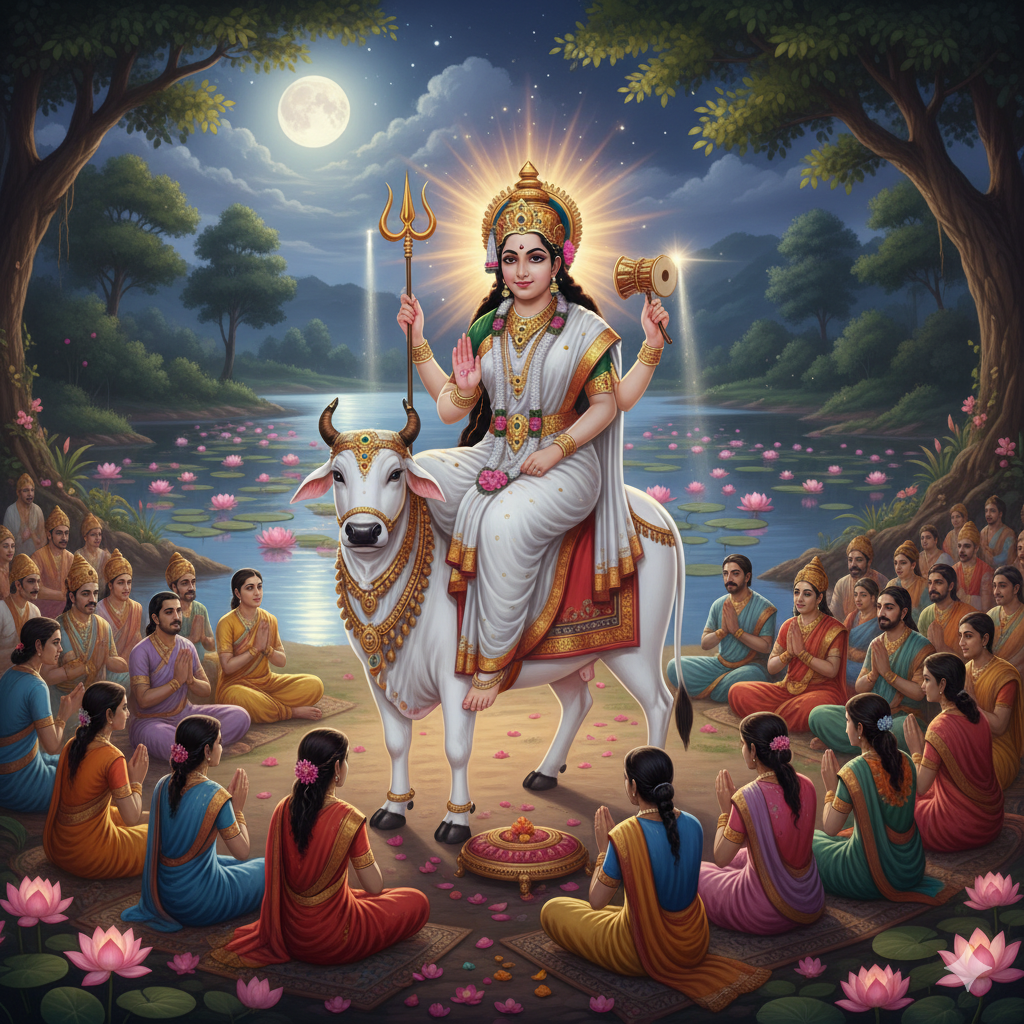
Maa Mahagauri (Day 8 of Navratri): The Goddess of Purity and Serenity
About the Author Raja Ratnam is a passionate researcher and writer specializing in Indian mythology and epic stories.With years of experience studying texts like Ramayana, Mahabharata, and other cultural scriptures,he brings insightful interpretations and practical lessons from these timeless stories. Raja Ratnam believes in making mythology accessible and meaningful for modern readers,helping them understand the moral, ethical, and cultural significance behind characters likeRamudu, Laxman, Shani Deva, and many more. Connect with the author: info@ratnamstrategy.com Introduction Maa Mahagauri (Day 8 of Navratri) :The eighth day of Navratri (Ashtami) is dedicated to Maa Mahagauri, the eighth manifestation of Goddess Durga. She represents purity, serenity, compassion, and forgiveness. Her name “Mahagauri” translates to “extremely fair and radiant,” symbolizing spiritual enlightenment and divine energy. Maa Mahagauri blesses her devotees with inner peace, wisdom, and prosperity while removing sins and past karmic debts. She is worshipped widely on Durga Ashtami, which is considered one of the most sacred days of Navratri. This day also holds special significance because many devotees perform Kanya Puja (Kumari Puja), where young girls are worshipped as embodiments of the Goddess herself. The Story of Maa Mahagauri (Day 8 of Navratri) According to legend, Maa Parvati undertook severe penance to please…
- Festivals , Navratri [ Day 1 To Day 9 }
- September 27, 2025
- 163 views
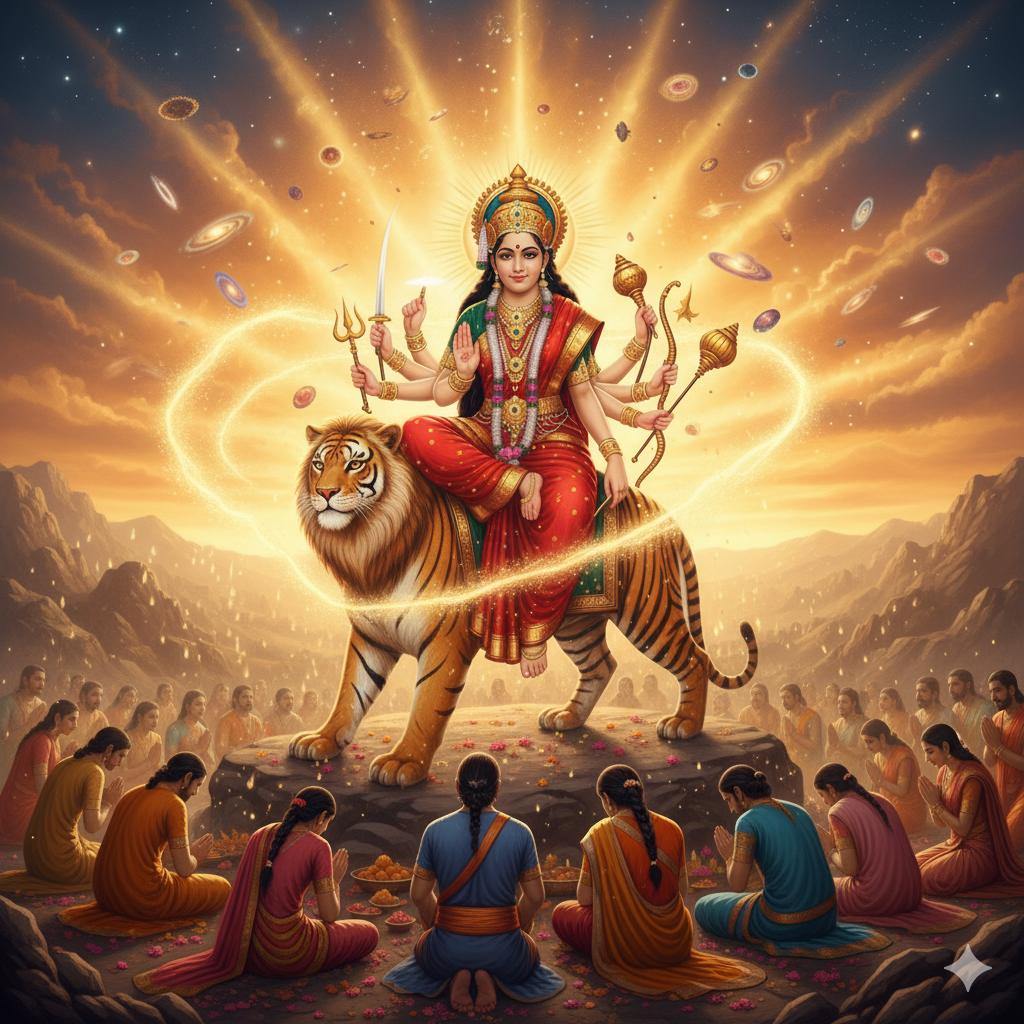
Maa Katyayani – Day 6 of Navratri | Story, Puja Vidhi, Significance & Mantra
About the Author Raja Ratnam is a passionate researcher and writer specializing in Indian mythology and epic stories.With years of experience studying texts like Ramayana, Mahabharata, Maa Katyayani – Day 6 of Navratri and other cultural scriptures,he brings insightful interpretations and practical lessons from these timeless stories. Raja Ratnam believes in making mythology accessible and meaningful for modern readers,helping them understand the moral, ethical, and cultural significance behind characters likeRamudu, Laxman, Shani Deva, and many more. Connect with the author: info@ratnamstrategy.com Introduction Maa Katyayani – Day 6 of Navratri: On the sixth day of Navratri, devotees worship Maa Katyayani, one of the fiercest and most powerful forms of Goddess Durga. She is known as the warrior goddess who embodies courage, victory, and the destruction of evil forces. She was born as the daughter of Sage Katyayan, and hence she came to be called Katyayani. Maa Katyayani is particularly revered because she was the one who defeated and killed the mighty demon Mahishasura, earning her the title of Mahishasuramardini (the slayer of Mahishasura). Devotees worship her for courage, protection, and marital bliss. Appearance of Maa Katyayani – Day 6 of Navratri Maa Katyayani’s divine form radiates strength and valor: Significance of…
- Festivals , Navratri [ Day 1 To Day 9 }
- September 24, 2025
- 174 views
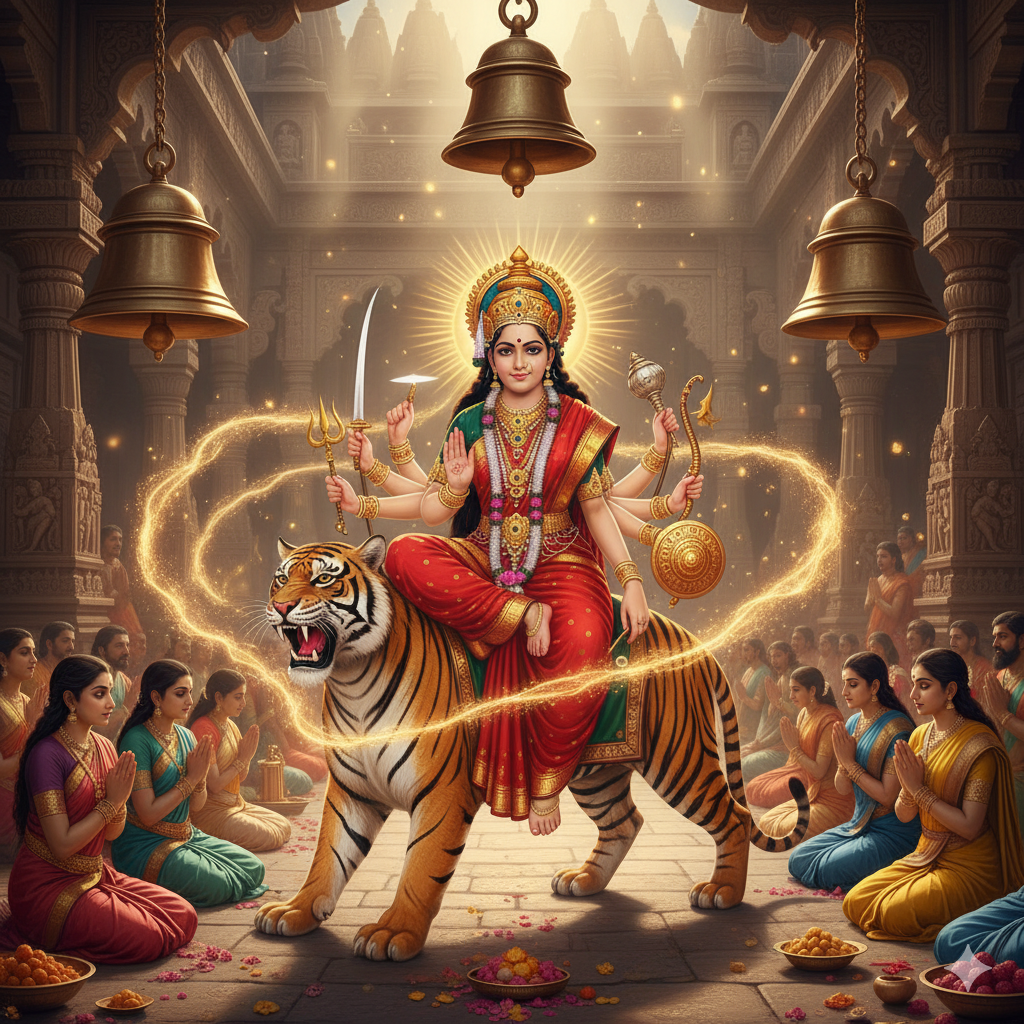
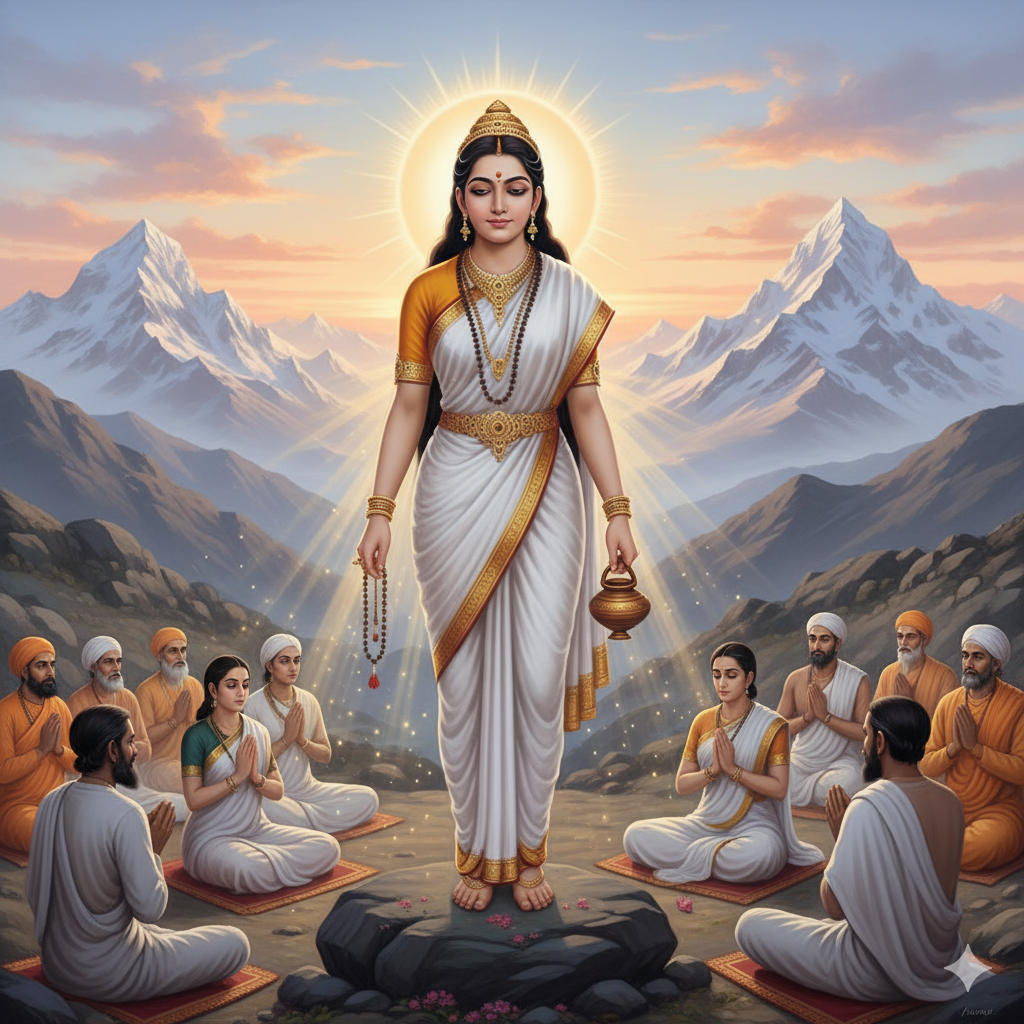
Maa Chandraghanta – Navratri Day 3 Puja Vidhi, Mantra & Significance
About the Author Raja Ratnam is a passionate researcher and writer specializing in Indian mythology and epic stories.With years of experience studying texts like Ramayana, Mahabharata, and other cultural scriptures,he brings insightful interpretations and practical lessons from these timeless stories. Raja Ratnam believes in making mythology accessible and meaningful for modern readers,helping them understand the moral, ethical, and cultural significance behind characters likeRamudu, Laxman, Shani Deva, and many more. Connect with the author: info@ratnamstrategy.com Introduction Maa Chandraghanta – Navratri Day 3 .On the third day of Navratri, devotees worship Maa Chandraghanta, the warrior goddess who represents courage, strength, and grace. Her name comes from the crescent moon (Chandra) that adorns her forehead in the shape of a bell (Ghanta). She is believed to ride a tiger, symbolising bravery, and carries weapons in her ten hands. Worshipping Maa Chandraghanta removes fear, grants courage, and fills life with peace and harmony. Who is Maa Chandraghanta – Navratri Day 3? Maa Chandraghanta is the married form of Goddess Parvati, after she wed Lord Shiva. With a crescent moon on her forehead resembling a bell, she is both compassionate to her devotees and fierce toward evil forces. She is often described as a goddess…
- Festivals , Navratri [ Day 1 To Day 9 }
- September 23, 2025
- 219 views
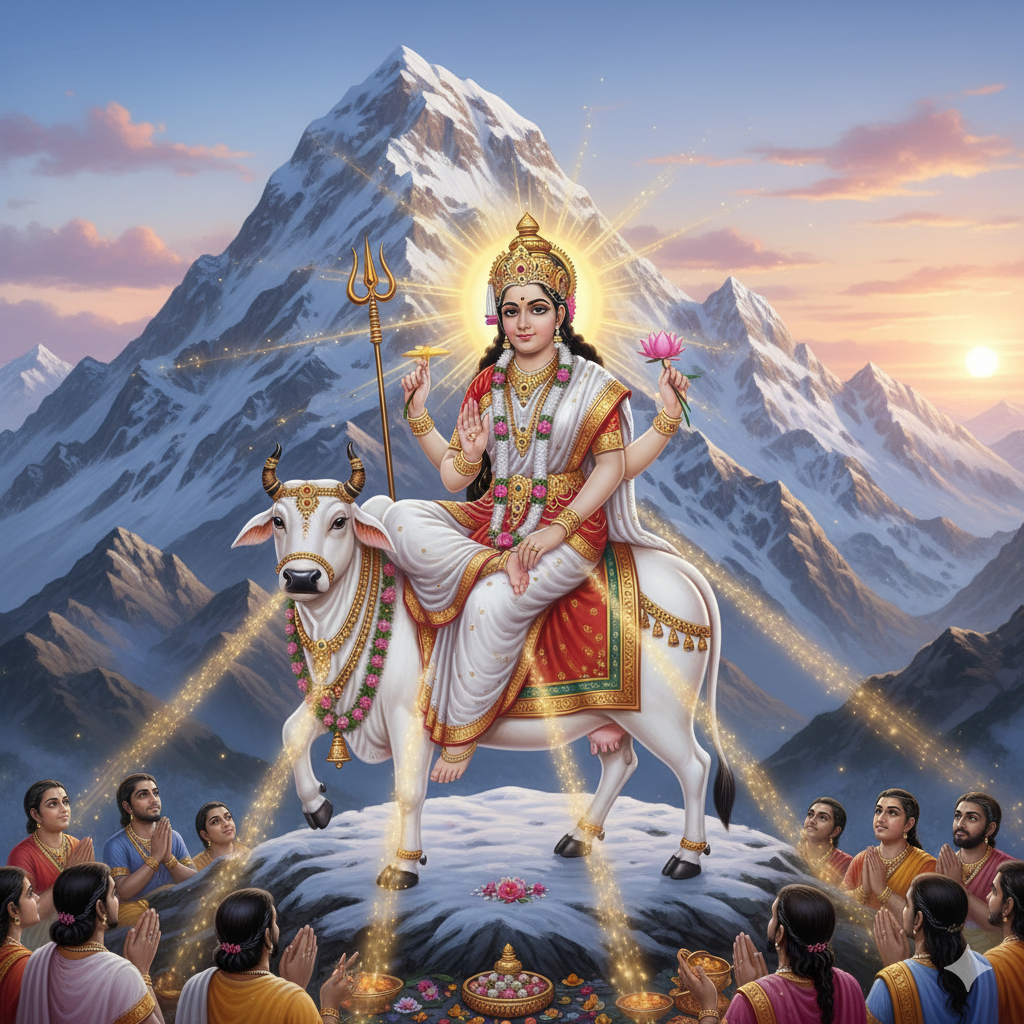
Maa Brahmacharini – Navratri Day 2 Puja, Mantra & Significance
About the Author Raja Ratnam is a passionate researcher and writer specialising in Indian mythology and epic stories.With years of experience studying texts like Ramayana, Mahabharata, and Maa Brahmacharini (Navratri Day 2 ), other cultural scriptures,he brings insightful interpretations and practical lessons from these timeless stories. Raja Ratnam believes in making mythology accessible and meaningful for modern readers,helping them understand the moral, ethical, and cultural significance behind characters likeRamudu, Laxman, Shani Deva, and many more. Connect with the author: info@ratnamstrategy.com Introduction Maa Brahmacharini (Navratri Day 2 ) : The second day of Navratri is dedicated to Maa Brahmacharini, the goddess of penance, austerity, and devotion. She represents Tapas (spiritual practice) and symbolizes patience, wisdom, and inner strength. Her worship on Navratri Day 2 inspires devotees to embrace discipline and devotion in their lives. The word Brahmacharini is a combination of Brahma (supreme knowledge or tapas) and Charini (one who practices). Thus, she is the goddess who practiced deep penance to please Lord Shiva. Worshipping her brings courage, self-control, and prosperity. Who is Maa Brahmacharini (Navratri Day 2 )? According to Hindu scriptures, Maa Brahmacharini is the unmarried form of Goddess Parvati. After her rebirth as the daughter of Himavan, she…
- Festivals , Navratri [ Day 1 To Day 9 }
- September 20, 2025
- 264 views
Maa Shailaputri – Navratri Day 1 Puja Vidhi, Mantra & Significance
About the Author Raja Ratnam is a passionate researcher and writer specializing in Indian mythology and epic stories.With years of experience studying texts like Ramayana, Mahabharata, Maa Shailaputri (Day 1 of Navratri) and other cultural scriptures,he brings insightful interpretations and practical lessons from these timeless stories. Raja Ratnam believes in making mythology accessible and meaningful for modern readers,helping them understand the moral, ethical, and cultural significance behind characters likeRamudu, Laxman, Shani Deva, Maa Shailaputri (Day 1 of Navratri) and many more. Connect with the author: info@ratnamstrategy.com Introduction Maa Shailaputri (Day 1 of Navratri):Maa Shailaputri symbolizes fresh starts and helps for your spiritual journey. Praying to her is believed to clear obstacles and bring peace and stability into life. She boosts mental strength, purity, and devotion and she protects the devotees from illnesses and bad luck. Her name explains that —Shaila means “mountain,” and Putri means “daughter.” She is for purity, strength, and staying grounded. Praying to this goddess on the first day is considered very important because she sets the spiritual tone for the rest of the days. Who is Maa Shailaputri (Day 1 of Navratri)? Maa Shailaputri (Day 1 of Navratri) :Maa Shailputri is the first manifestation of Goddess…
- Lord Ganesha
- September 6, 2025
- 265 views
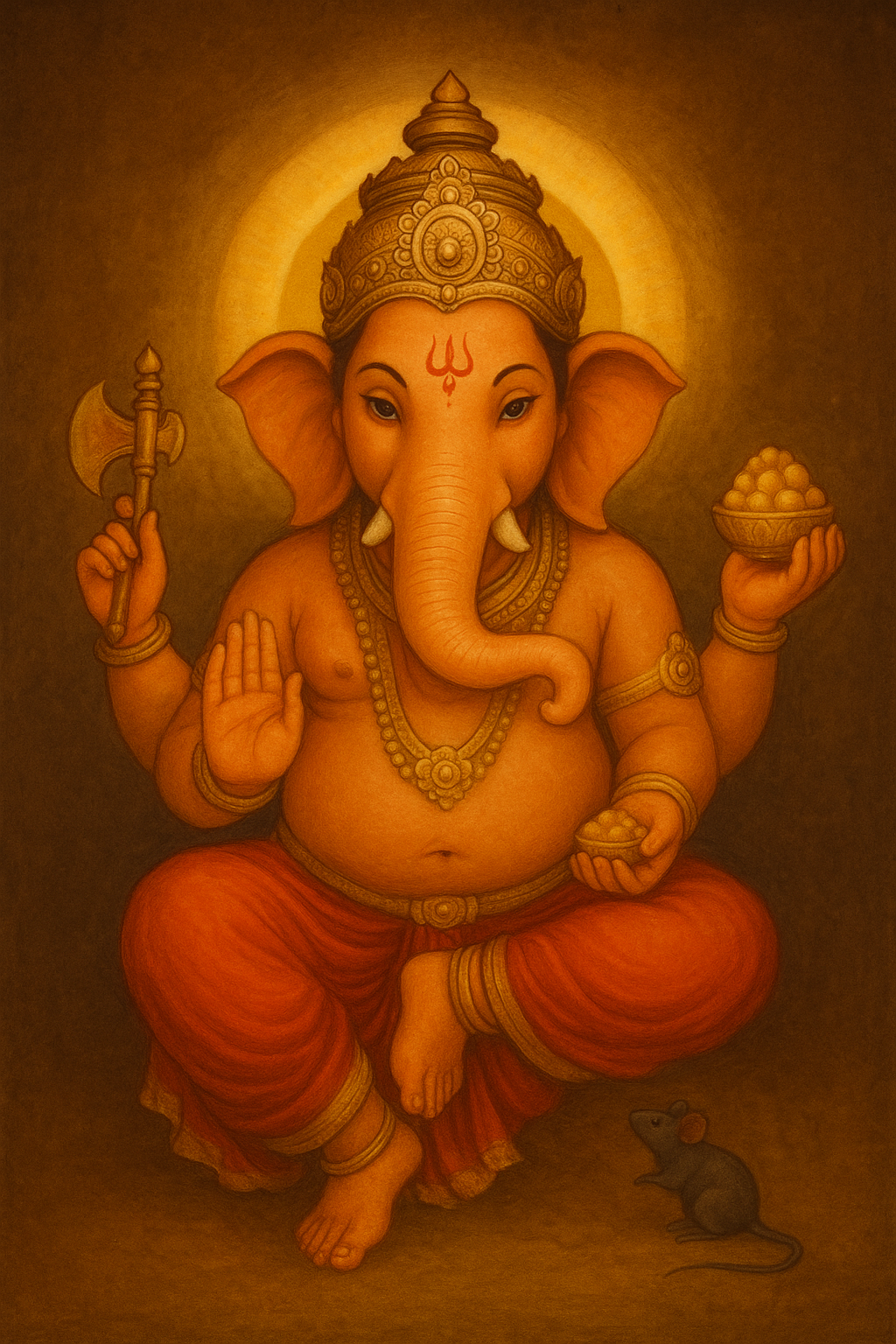
Gajanana Avatar of Lord Ganesha – Story, Symbolism & Significance
About the Author Raja Ratnam is a passionate researcher and writer specialising in Indian mythology and epic stories.With years of experience studying texts like Ramayana, Mahabharata, Gajanana Avatar of Ganesha and other cultural scriptures,he brings insightful interpretations and practical lessons from these timeless stories. Raja Ratnam believes in making mythology accessible and meaningful for modern readers,helping them understand the moral, ethical, and cultural significance behind characters likeRamudu, Laxman, Shani Deva, and many more. Connect with the author: info@ratnamstrategy.com Gajanana Avatar of Ganesha: In Hinduism, Lord Ganesha is revered as the remover of obstacles, the patron of wisdom, and the bringer of prosperity. Across traditions, Ganesha is venerated in nine unique forms, known as the Navavatars of Ganesha. Perhaps the most iconic and instantly recognizable is the Gajanana Avatar, the one with the elephant face. The name Gajanana comes from two Sanskrit words: Gaja (elephant) and Anana (face), meaning “the one with the elephant face.” This avatar is deeply symbolic, representing wisdom, strength, and the ability to overcome life’s greatest challenges with intelligence and patience. The Story of Gajanana During the cosmic struggle with Lobhasura, the Gajanana avatar appeared, according to the Mudgala Purana. Lobhasura was born out of greed (lobha)…
- Lord Ganesha
- August 31, 2025
- 232 views
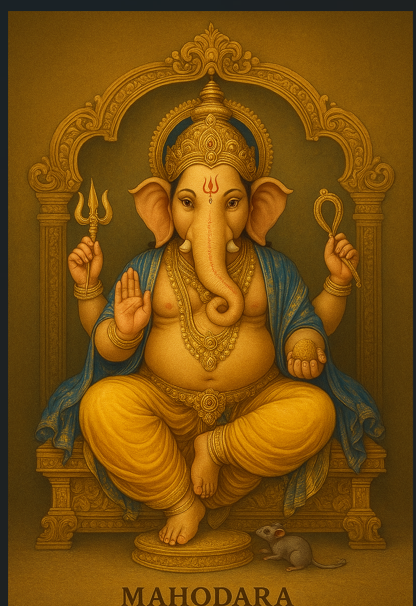
Mahodara Avatar of Lord Ganesha – Story, Symbolism & Significance
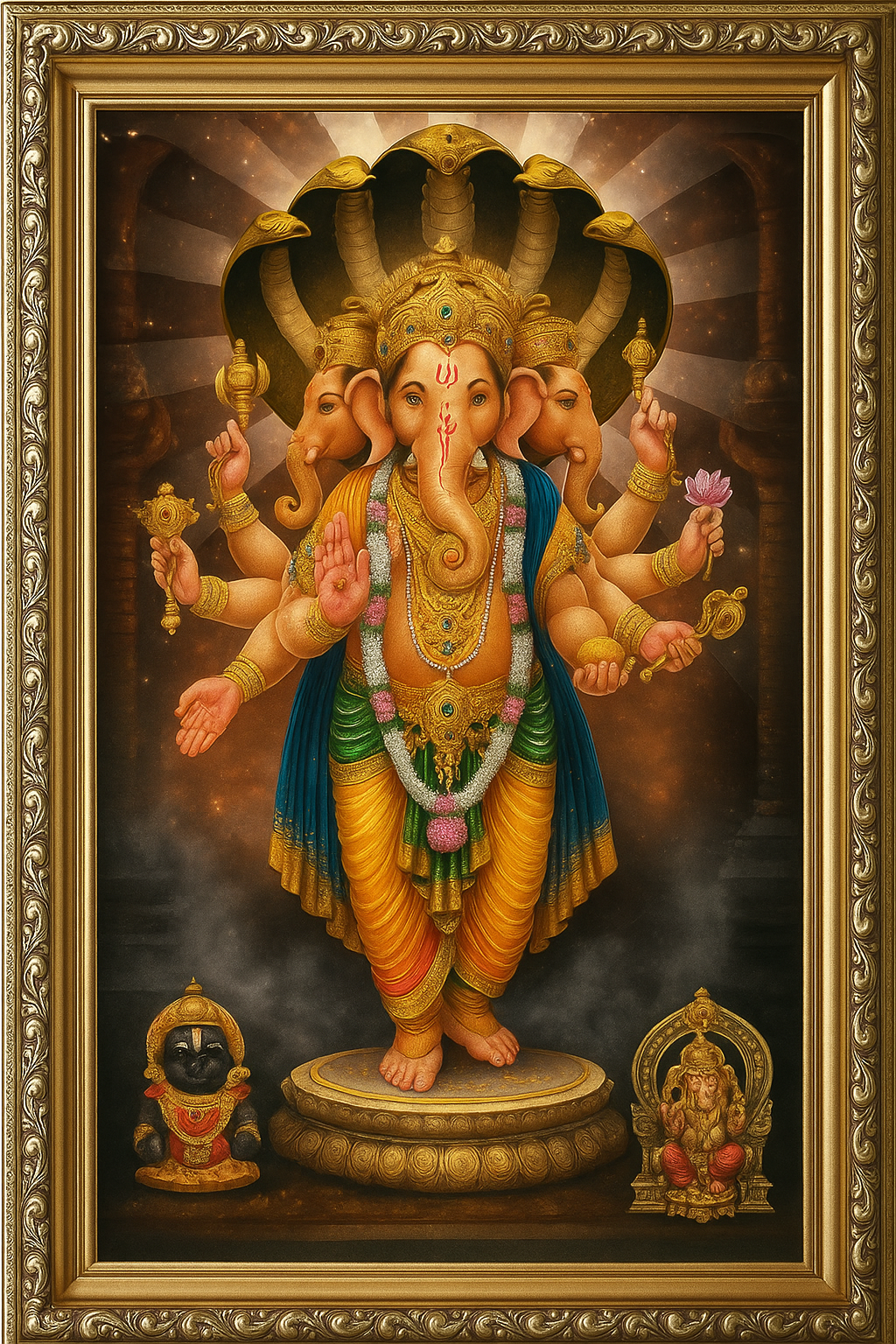
About the Author Raja Ratnam is a passionate researcher and writer specialising in Indian mythology and epic stories.With years of experience studying texts like Ramayana, Mahabharata, Mahodara Avatar of Ganesha and other cultural scriptures,he brings insightful interpretations and practical lessons from these timeless stories. Raja Ratnam believes in making mythology accessible and meaningful for modern readers,helping them understand the moral, ethical, and cultural significance behind characters likeRamudu, Laxman, Shani Deva, and many more. Connect with the author: info@ratnamstrategy.com Mahodara Avatar of Ganesha: lord Ganesha, the remover of obstacles, is worshipped in nine divine forms known as the Navavatars of Ganesha. Each avatar manifests to defeat a particular evil force and teach humanity a higher spiritual lesson. Among them, the Mahodara Avatar is especially revered for symbolizing wisdom, prosperity, and the balance of human desires. The word Mahodara combines Maha (great) and Udara (belly), meaning “the one with the great belly.” Far from being a symbol of gluttony, the big belly carries profound spiritual meaning—it represents the entire universe and the ability to absorb both good and bad energies without disturbance. Mahodara Avatar of Ganesha: The Story of Mahodara Avatar The Mudgala Purana, a sacred text dedicated to Lord Ganesha, narrates…
- Lord Ganesha
- August 25, 2025
- 266 views
Khairatabad Ganesh – This Pandal is Legendary in Hyderabad
About the Author Raja Ratnam is a passionate researcher and writer specialising in Indian mythology and epic stories.With years of experience studying texts like Ramayana, Mahabharata, Khairatabad Ganesh 2025 and other cultural scriptures,He brings insightful interpretations and practical lessons from these timeless stories. Raja Ratnam believes in making mythology accessible and meaningful for modern readers,helping them understand the moral, ethical, and cultural significance behind characters likeRamudu, Laxman, Shani Deva, and many more. Connect with the author: info@ratnamstrategy.com Introduction to Khairatabad Ganesh 2025 Khairatabad Ganesh 2025: The Khairatabad Ganesh pandal is not just a festive attraction in Hyderabad—it is a cultural landmark that has become synonymous with the grandeur of Ganesh Chaturthi celebrations in Telangana. For 2025, the organizers have unveiled an awe-inspiring 69-feet tall eco-friendly idol, crafted with the theme “Sri Vishwashanthi Maha Shakthi Ganapathy.” This magnificent creation is being sculpted entirely from natural clay, reflecting both tradition and environmental consciousness. There are millions of devotees and visitors at this Ganesh pandal every year, making it one of the most popular pandals in the country. Known for its gigantic idols, intricate themes, and spiritual aura, Khairatabad Ganesh continues to set benchmarks in devotion and artistry. Khairatabad Ganesh 2025:The Significance of…
- Lord Ganesha , Mythology
- August 19, 2025
- 294 views
Ekadanta (The One with a Single Tusk): Meaning, Symbolism & Benefits
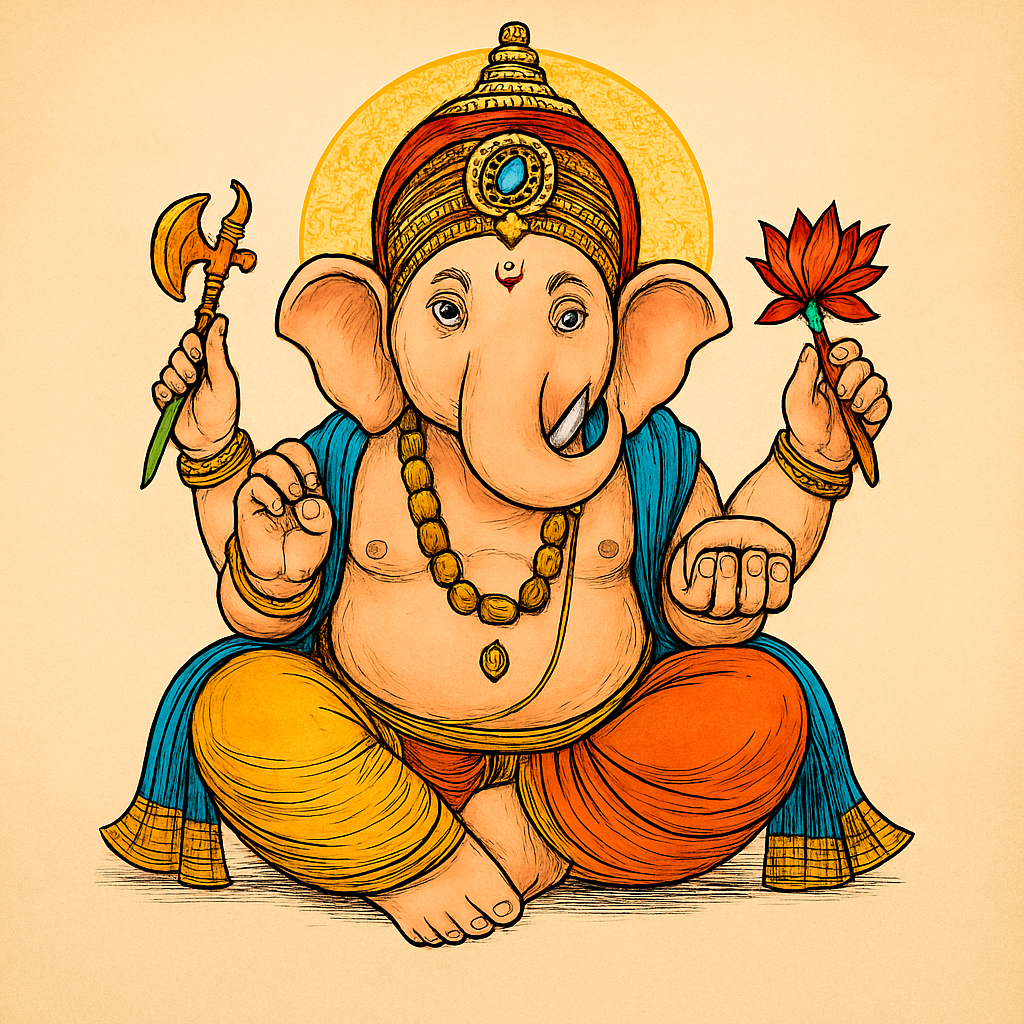
About the Author Raja Ratnam is a passionate researcher and writer specialising in Indian mythology and epic stories.With years of experience studying texts like Ramayana, Mahabharata, Ekadanta (The One with a Single Tusk) and other cultural scriptures,He brings insightful interpretations and practical lessons from these timeless stories. Raja Ratnam believes in making mythology accessible and meaningful for modern readers,helping them understand the moral, ethical, and cultural significance behind characters likeRamudu, Laxman, Shani Deva, and many more. Connect with the author: info@ratnamstrategy.com Introduction to Ekadanta (The One with a Single Tusk) – The Sacred Form of Lord Ganesha Ekadanta (The One with a Single Tusk):The Hindu god Ganesha is revered as the remover of obstacles, the god of beginnings, and the embodiment of wisdom. Among his many forms, Ekadanta, meaning “The One with a Single Tusk,” holds a special place. Worshipping Ekadanta is believed to enhance focus, patience, and self-control, qualities essential for both spiritual and worldly success.As a symbol of sacrifice and discernment, it represents keeping what is good and discarding what is bad. The Literal Meaning of “Ekadanta”The name Ekadanta comes from two Sanskrit words: Eka – meaning one Danta – meaning tusk or tooth Together, they form “One…