Admin
- Festivals , Navratri [ Day 1 To Day 9 }
- September 29, 2025
- 166 views
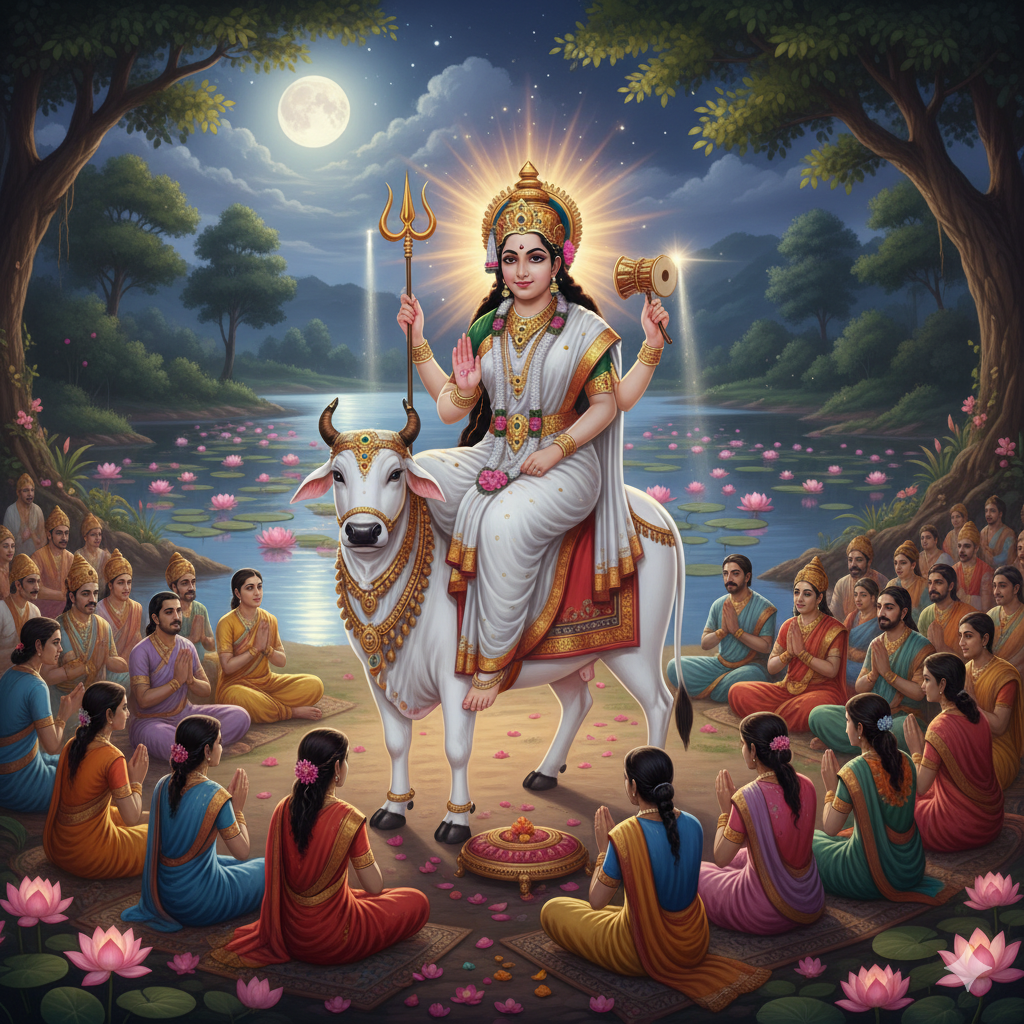
Maa Mahagauri (Day 8 of Navratri): The Goddess of Purity and Serenity
About the Author Raja Ratnam is a passionate researcher and writer specializing in Indian mythology and epic stories.With years of experience studying texts like Ramayana, Mahabharata, and other cultural scriptures,he brings insightful interpretations and practical lessons from these timeless stories. Raja Ratnam believes in making mythology accessible and meaningful for modern readers,helping them understand the moral, ethical, and cultural significance behind characters likeRamudu, Laxman, Shani Deva, and many more. Connect with the author: info@ratnamstrategy.com Introduction Maa Mahagauri (Day 8 of Navratri) :The eighth day of Navratri (Ashtami) is dedicated to Maa Mahagauri, the eighth manifestation of Goddess Durga. She represents purity, serenity, compassion, and forgiveness. Her name “Mahagauri” translates to “extremely fair and radiant,” symbolizing spiritual enlightenment and divine energy. Maa Mahagauri blesses her devotees with inner peace, wisdom, and prosperity while removing sins and past karmic debts. She is worshipped widely on Durga Ashtami, which is considered one of the most sacred days of Navratri. This day also holds special significance because many devotees perform Kanya Puja (Kumari Puja), where young girls are worshipped as embodiments of the Goddess herself. The Story of Maa Mahagauri (Day 8 of Navratri) According to legend, Maa Parvati undertook severe penance to please…
- Festivals , Navratri [ Day 1 To Day 9 }
- September 27, 2025
- 162 views
Maa Katyayani – Day 6 of Navratri | Story, Puja Vidhi, Significance & Mantra
About the Author Raja Ratnam is a passionate researcher and writer specializing in Indian mythology and epic stories.With years of experience studying texts like Ramayana, Mahabharata, Maa Katyayani – Day 6 of Navratri and other cultural scriptures,he brings insightful interpretations and practical lessons from these timeless stories. Raja Ratnam believes in making mythology accessible and meaningful for modern readers,helping them understand the moral, ethical, and cultural significance behind characters likeRamudu, Laxman, Shani Deva, and many more. Connect with the author: info@ratnamstrategy.com Introduction Maa Katyayani – Day 6 of Navratri: On the sixth day of Navratri, devotees worship Maa Katyayani, one of the fiercest and most powerful forms of Goddess Durga. She is known as the warrior goddess who embodies courage, victory, and the destruction of evil forces. She was born as the daughter of Sage Katyayan, and hence she came to be called Katyayani. Maa Katyayani is particularly revered because she was the one who defeated and killed the mighty demon Mahishasura, earning her the title of Mahishasuramardini (the slayer of Mahishasura). Devotees worship her for courage, protection, and marital bliss. Appearance of Maa Katyayani – Day 6 of Navratri Maa Katyayani’s divine form radiates strength and valor: Significance of…
- Festivals , Navratri [ Day 1 To Day 9 }
- September 24, 2025
- 173 views
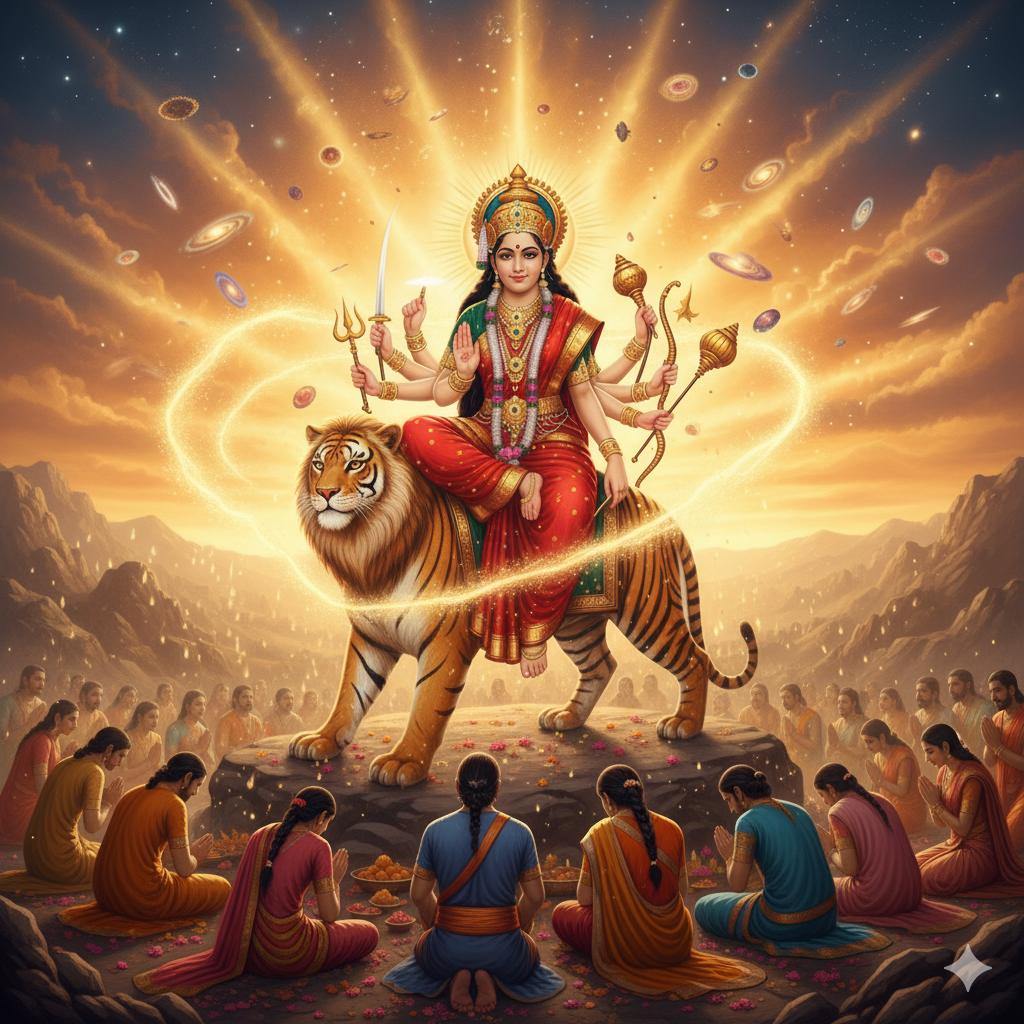
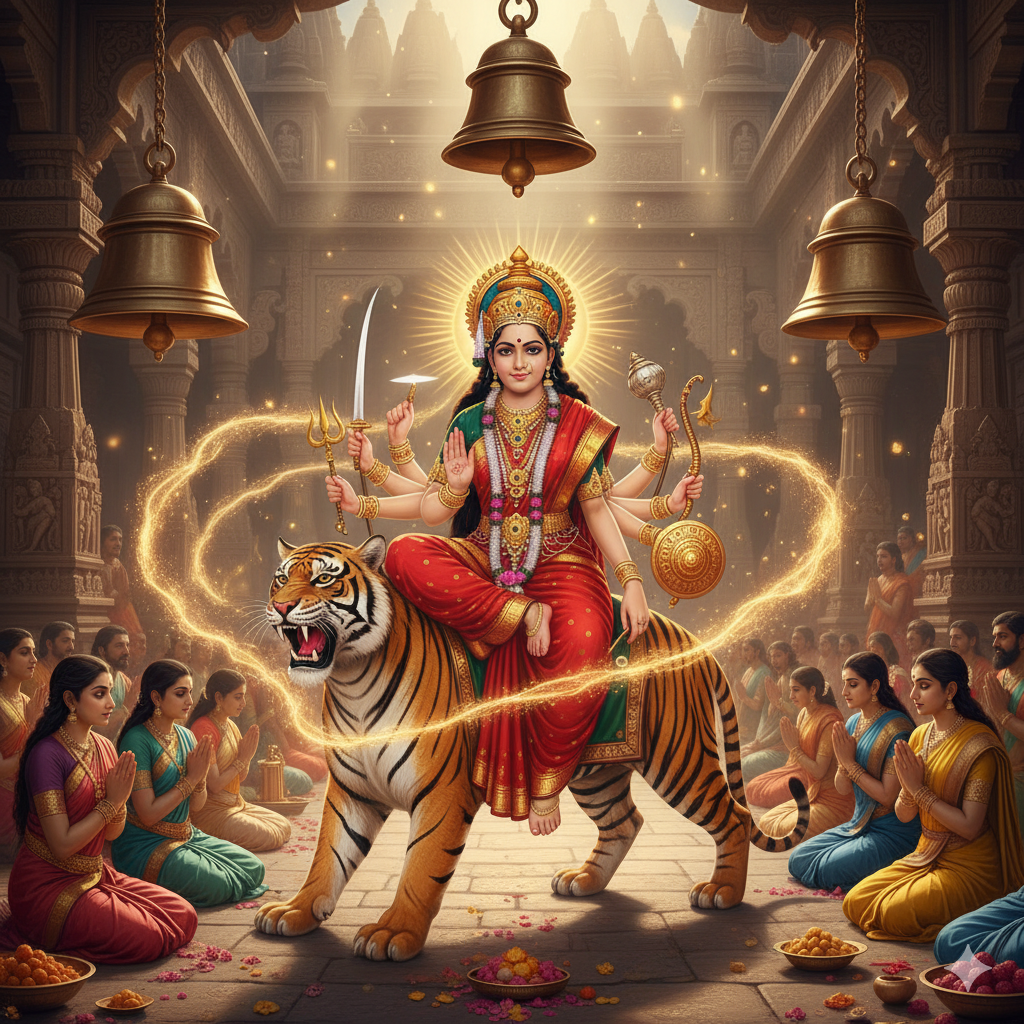
Maa Chandraghanta – Navratri Day 3 Puja Vidhi, Mantra & Significance
About the Author Raja Ratnam is a passionate researcher and writer specializing in Indian mythology and epic stories.With years of experience studying texts like Ramayana, Mahabharata, and other cultural scriptures,he brings insightful interpretations and practical lessons from these timeless stories. Raja Ratnam believes in making mythology accessible and meaningful for modern readers,helping them understand the moral, ethical, and cultural significance behind characters likeRamudu, Laxman, Shani Deva, and many more. Connect with the author: info@ratnamstrategy.com Introduction Maa Chandraghanta – Navratri Day 3 .On the third day of Navratri, devotees worship Maa Chandraghanta, the warrior goddess who represents courage, strength, and grace. Her name comes from the crescent moon (Chandra) that adorns her forehead in the shape of a bell (Ghanta). She is believed to ride a tiger, symbolising bravery, and carries weapons in her ten hands. Worshipping Maa Chandraghanta removes fear, grants courage, and fills life with peace and harmony. Who is Maa Chandraghanta – Navratri Day 3? Maa Chandraghanta is the married form of Goddess Parvati, after she wed Lord Shiva. With a crescent moon on her forehead resembling a bell, she is both compassionate to her devotees and fierce toward evil forces. She is often described as a goddess…
- Festivals , Navratri [ Day 1 To Day 9 }
- September 23, 2025
- 219 views
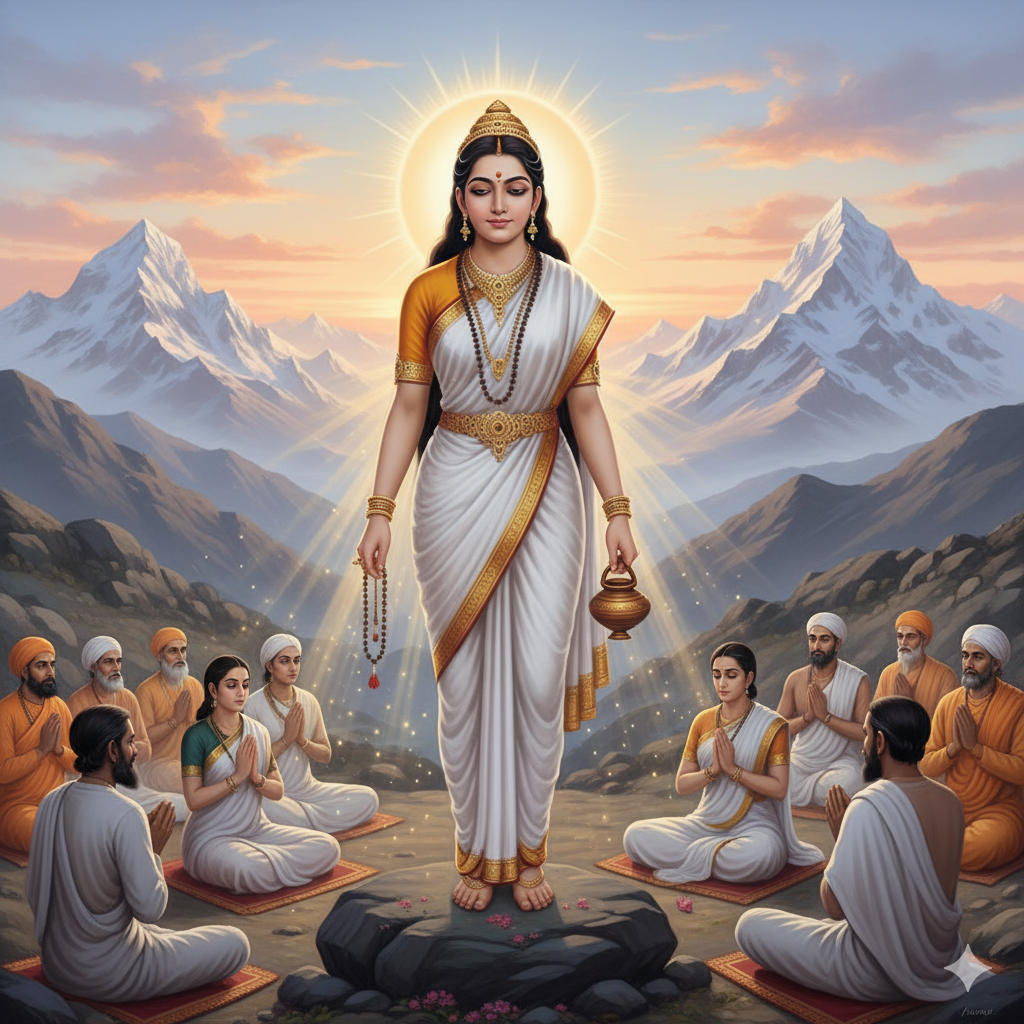
Maa Brahmacharini – Navratri Day 2 Puja, Mantra & Significance
About the Author Raja Ratnam is a passionate researcher and writer specialising in Indian mythology and epic stories.With years of experience studying texts like Ramayana, Mahabharata, and Maa Brahmacharini (Navratri Day 2 ), other cultural scriptures,he brings insightful interpretations and practical lessons from these timeless stories. Raja Ratnam believes in making mythology accessible and meaningful for modern readers,helping them understand the moral, ethical, and cultural significance behind characters likeRamudu, Laxman, Shani Deva, and many more. Connect with the author: info@ratnamstrategy.com Introduction Maa Brahmacharini (Navratri Day 2 ) : The second day of Navratri is dedicated to Maa Brahmacharini, the goddess of penance, austerity, and devotion. She represents Tapas (spiritual practice) and symbolizes patience, wisdom, and inner strength. Her worship on Navratri Day 2 inspires devotees to embrace discipline and devotion in their lives. The word Brahmacharini is a combination of Brahma (supreme knowledge or tapas) and Charini (one who practices). Thus, she is the goddess who practiced deep penance to please Lord Shiva. Worshipping her brings courage, self-control, and prosperity. Who is Maa Brahmacharini (Navratri Day 2 )? According to Hindu scriptures, Maa Brahmacharini is the unmarried form of Goddess Parvati. After her rebirth as the daughter of Himavan, she…
- Festivals , Navratri [ Day 1 To Day 9 }
- September 20, 2025
- 264 views
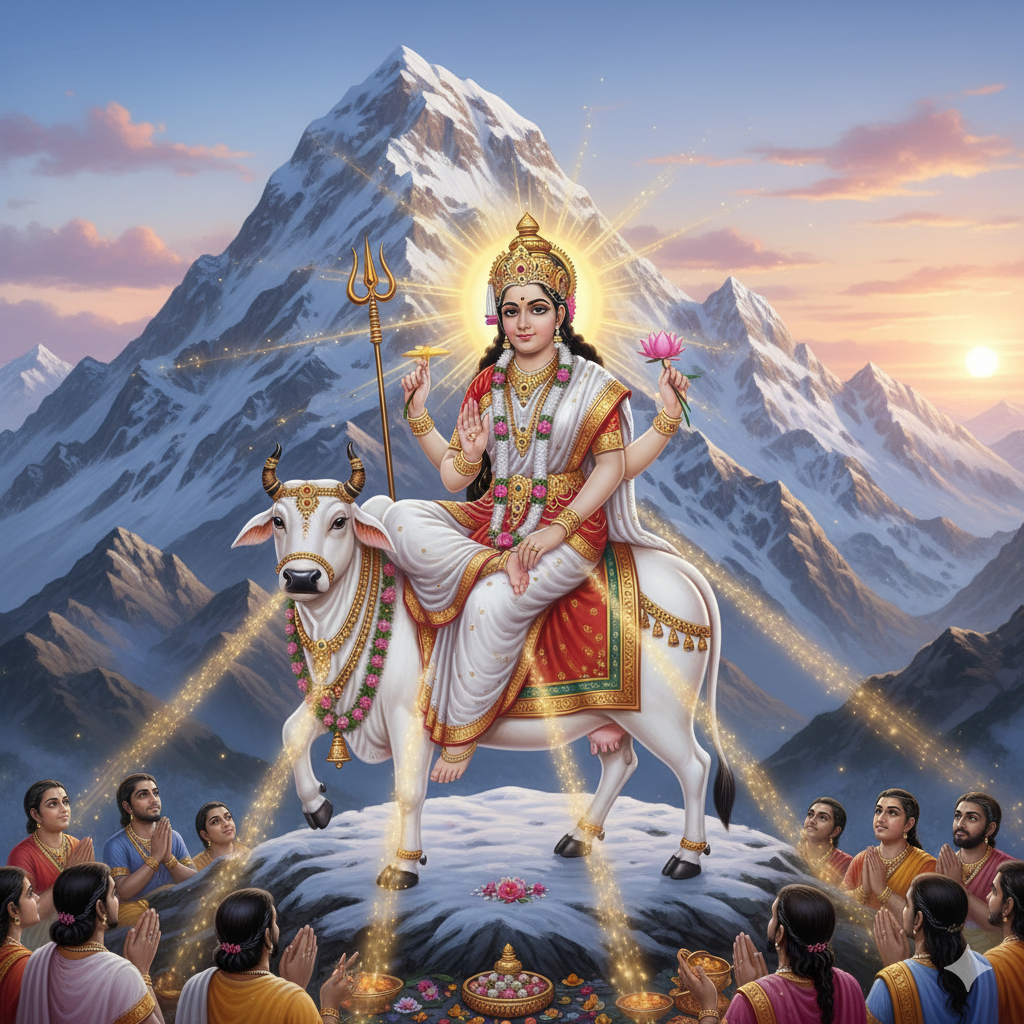
Maa Shailaputri – Navratri Day 1 Puja Vidhi, Mantra & Significance
About the Author Raja Ratnam is a passionate researcher and writer specializing in Indian mythology and epic stories.With years of experience studying texts like Ramayana, Mahabharata, Maa Shailaputri (Day 1 of Navratri) and other cultural scriptures,he brings insightful interpretations and practical lessons from these timeless stories. Raja Ratnam believes in making mythology accessible and meaningful for modern readers,helping them understand the moral, ethical, and cultural significance behind characters likeRamudu, Laxman, Shani Deva, Maa Shailaputri (Day 1 of Navratri) and many more. Connect with the author: info@ratnamstrategy.com Introduction Maa Shailaputri (Day 1 of Navratri):Maa Shailaputri symbolizes fresh starts and helps for your spiritual journey. Praying to her is believed to clear obstacles and bring peace and stability into life. She boosts mental strength, purity, and devotion and she protects the devotees from illnesses and bad luck. Her name explains that —Shaila means “mountain,” and Putri means “daughter.” She is for purity, strength, and staying grounded. Praying to this goddess on the first day is considered very important because she sets the spiritual tone for the rest of the days. Who is Maa Shailaputri (Day 1 of Navratri)? Maa Shailaputri (Day 1 of Navratri) :Maa Shailputri is the first manifestation of Goddess…