Pavani Pleasant Bangalore celebrates Ugadi 2026
Pavani Pleasant Bangalore celebrates Ugadi 2026 About the Author Raja Ratnam is a passionate researcher and writer specialising in Indian mythology and epic stories.With years of experience studying texts like Ramayana, Mahabharata, Bhima in Mahabharata, Festivals, Ugadi Celebration 2026 at Pavani Pleasant Bangalore, Meaning and Significance of Maha Shivaratri – Lord Shiva, the Auspicious One, Navagrahas, Ketu Deva and other cultural scriptures,he brings insightful interpretations and practical lessons from these timeless stories. Raja Ratnam believes in making mythology accessible and meaningful for modern readers,helping them understand the moral, ethical, and cultural significance behind characters like Rama, Laxman, Shani Deva, and many more. Connect with the author: info@ratnamstrategy.com Introduction : Ugadi Celebration 2026 The Ugadi Celebration 2026 at Pavani Pleasant Bangalore was a vibrant community event where residents welcomed the Telugu New Year with traditional rituals, cultural programs, and joyful gatherings. Ugadi is one of the most important festivals celebrated by Telugu and Kannada communities and symbolizes the beginning of a new year filled with hope and prosperity. At Pavani Pleasant, families gathered together in traditional attire, decorated their surroundings with colorful rangoli and mango leaves, and participated in cultural activities that brought the entire community together. The Ugadi Celebration 2026 at Pavani…
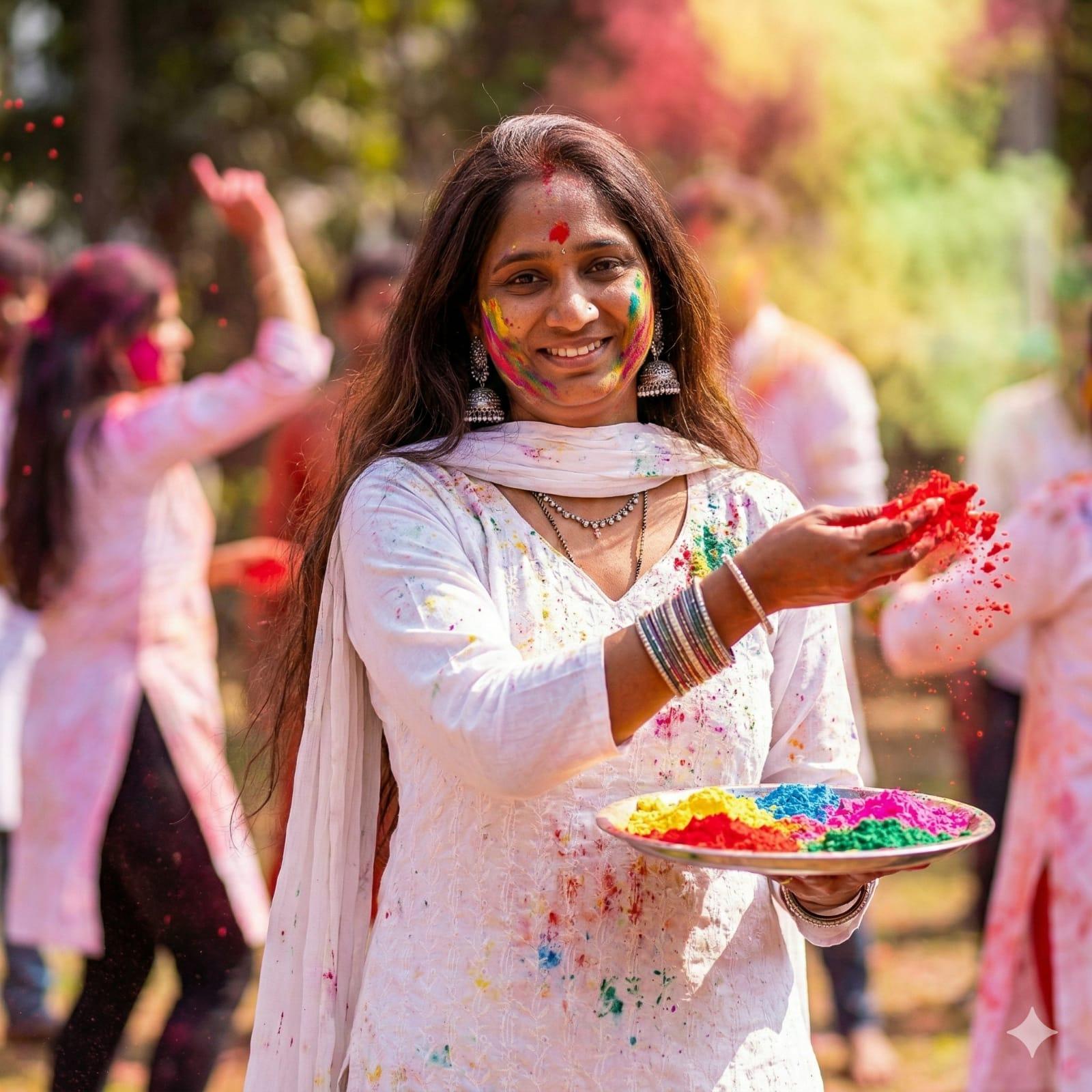
Holi 2026 at Pavani Pleasant: When Whitefield Turned into a Rainbow!
Holi 2026 at Pavani Pleasant: When Whitefield Turned into a Rainbow! About the Author Raja Ratnam is a passionate researcher and writer specialising in Indian mythology and epic stories.With years of experience studying texts like Ramayana, Mahabharata,Bhima in Mahabharata , Festivals, Holi celebration at Pavani Pleasant ,Meaning and Significance of Maha Shivaratri – Lord Shiva, the Auspicious One, Navagrahas, Ketu Deva and other cultural scriptures,he brings insightful interpretations and practical lessons from these timeless stories. Raja Ratnam believes in making mythology accessible and meaningful for modern readers,helping them understand the moral, ethical, and cultural significance behind characters like Rama, Laxman, Shani Deva, and many more. Connect with the author: info@ratnamstrategy.com Introduction : Holi celebration at Pavani Pleasant If you think Holi is just about colors, you haven’t celebrated it at Pavani Pleasant in Whitefield! Let me tell you, this year’s Holi was absolutely EPIC – and I’m not just saying that because I’m still finding gulal in my hair three days later! 😂 Holi is that one festival where adults turn into kids, kids go absolutely wild, and everyone ends up looking like a walking rainbow. And this year? It was a whole new experience for us. So buckle up, grab some…
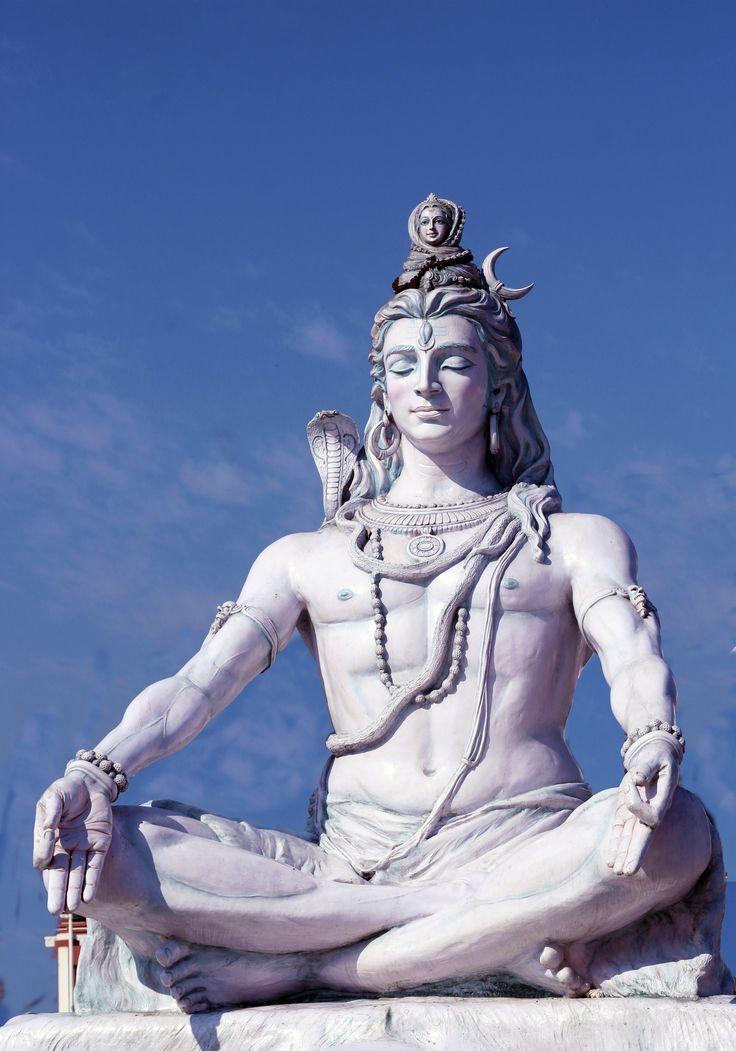
Meaning and Significance of Maha Shivaratri – Lord Shiva, the Auspicious One
About the Author Raja Ratnam is a passionate researcher and writer specialising in Indian mythology and epic stories.With years of experience studying texts like Ramayana, Mahabharata, Krishna in Mahabharata: The Divine Role of the Supreme Guide, Festivals, Meaning and Significance of Maha Shivaratri – Lord Shiva, the Auspicious One, Navagrahas, Ketu Deva and other cultural scriptures,he brings insightful interpretations and practical lessons from these timeless stories. Raja Ratnam believes in making mythology accessible and meaningful for modern readers,helping them understand the moral, ethical, and cultural significance behind characters like Rama, Laxman, Shani Deva, and many more. Connect with the author: info@ratnamstrategy.com Meaning and Significance of Maha Shivaratri Maha Shivaratri, meaning “The Great Night of Shiva,” is one of the most sacred festivals in Hindu spirituality. It symbolizes the cosmic union of consciousness and energy, where Lord Shiva represents supreme awareness and inner transformation. Observed on the 14th night of the dark fortnight in the month of Phalguna, this night is considered spiritually powerful for self-realization and liberation. Lord Shiva — The Auspicious One Lord Shiva is known as Mahadeva, Bholenath, and The Destroyer—not of the world, but of ignorance and ego. He is the embodiment of stillness, compassion, renunciation, and infinite cosmic…
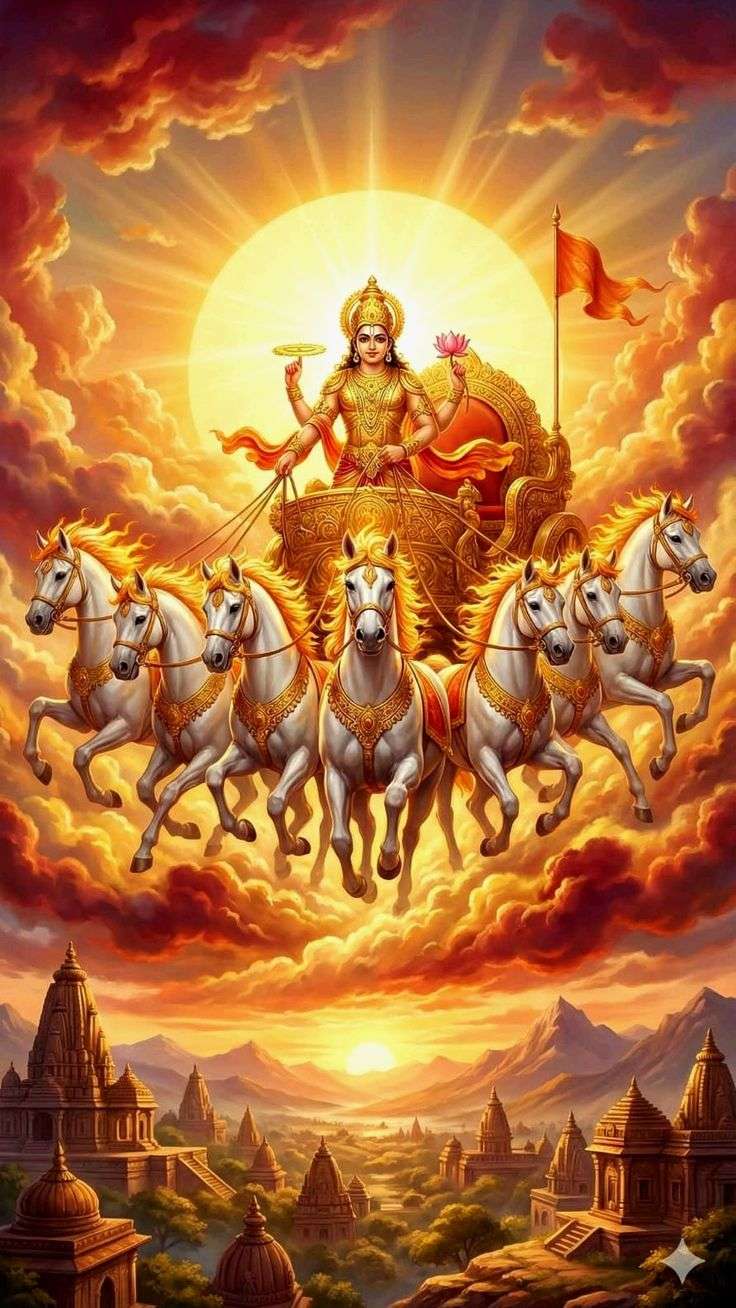
Ratha Saptami 2026: Meaning, Significance, Rituals, Benefits & Lord Surya Worship
About the Author Raja Ratnam is a passionate researcher and writer specialising in Indian mythology and epic stories.With years of experience studying texts like Ramayana, Mahabharata, Rama Rajya Explained, Ghatotkacha, Festivals, Ratha Saptami 2026, Navagrahas, Ketu Deva and other cultural scriptures,he brings insightful interpretations and practical lessons from these timeless stories. Raja Ratnam believes in making mythology accessible and meaningful for modern readers,helping them understand the moral, ethical, and cultural significance behind characters like Rama, Laxman, Shani Deva, and many more. Connect with the author: info@ratnamstrategy.com Introduction Ratha Saptami is one of the most auspicious Hindu festivals dedicated to Lord Surya (the Sun God). Celebrated on the seventh day (Saptami) of the bright fortnight (Shukla Paksha) in the month of Magha, this festival holds deep spiritual, cultural, and scientific importance in Indian tradition. It marks the symbolic beginning of the Sun’s northward journey (Uttarayana) and is considered highly beneficial for health, prosperity, and spiritual growth. What is Ratha Saptami? (Meaning of Ratha Saptami Festival) The word Ratha means chariot and Saptami means seventh day. According to Hindu belief, on this sacred day, Lord Surya rides his divine chariot drawn by seven horses, symbolizing the seven colors of light, seven days of the week, and seven chakras of the human body. Ratha Saptami…
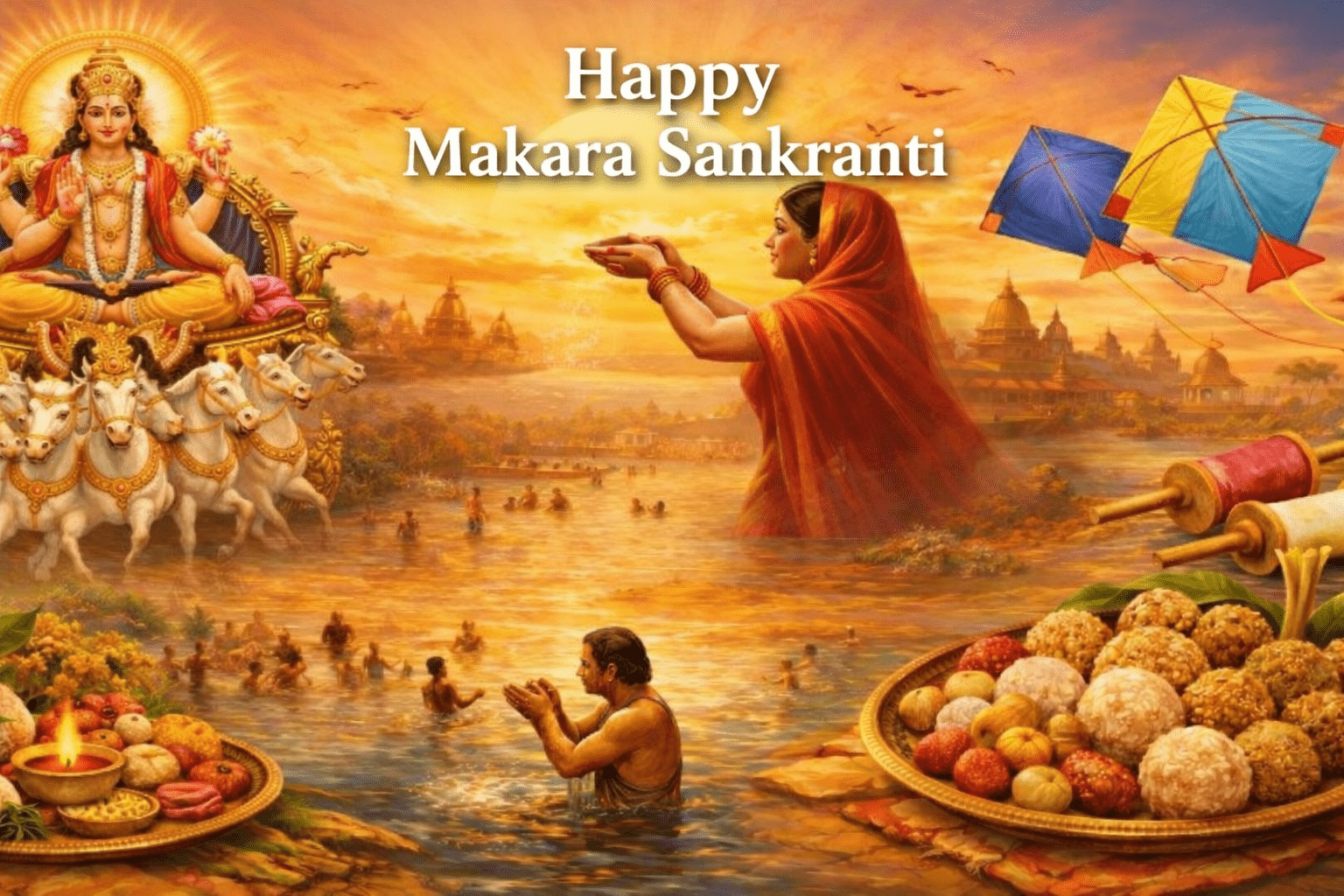
Makar Sankranti: Significance, Traditions, Rituals, and Celebrations Across India
About the Author Raja Ratnam is a passionate researcher and writer specializing in Indian mythology and epic stories.With years of experience studying texts like Ramayana, Mahabharata,In the Mahabharata, Makar Sankranti , Festivals ,King Shantanu , Goddess Ganga ,Navagrahas, Ketu Deva and other cultural scriptures,he brings insightful interpretations and practical lessons from these timeless stories. Raja Ratnam believes in making mythology accessible and meaningful for modern readers,helping them understand the moral, ethical, and cultural significance behind characters like Rama, Laxman, Shani Deva, and many more. Connect with the author: info@ratnamstrategy.com Introduction of Makar Sankranti Sankranti is one of India’s most auspicious and widely celebrated festivals, deeply rooted in astronomy, agriculture, and spirituality. Observed every year in mid-January, this harvest festival marks the Sun’s transition into the zodiac sign Capricorn (Makara), symbolising a shift toward positivity, growth, and renewal. Unlike many Indian festivals that follow the lunar calendar, Makar Sankranti is governed by the solar cycle, making its date relatively fixed—usually January 14 or 15. Across the country, Makar Sankranti is celebrated with immense joy under different regional names and customs. At its heart, the festival expresses gratitude to nature, honours farmers and the harvest, and welcomes longer, brighter days. Astronomical & Spiritual Significance…

Karthika Poornima 2025 – Significance, Rituals, and Celebration of the Sacred Full Moon Day
About the Author Raja Ratnam is a passionate researcher and writer specializing in Indian mythology and epic stories.With years of experience studying texts like Ramayana, Mahabharata, and other cultural scriptures,he brings insightful interpretations and practical lessons from these timeless stories. Raja Ratnam believes in making mythology accessible and meaningful for modern readers,helping them understand the moral, ethical, and cultural significance behind characters likeRamudu, Laxman, Shani Deva, and many more. Connect with the author: info@ratnamstrategy.com Introduction Karthika Poornima 2025 : Poornima, also known as Tripuri Poornima or Deva Diwali, is one of the most sacred full moon days in the Hindu calendar. It is celebrated on the full moon (Poornima) day of the Karthika Masam — a month deeply revered for its divine energy and spiritual merit This auspicious day marks the celebration of Lord Shiva’s victory over the demon Tripurasura and also holds significance for devotees of Lord Vishnu, who celebrate it as Vaikuntha Poornima. Lighting lamps, performing deepa daanam, fasting, and bathing in sacred rivers are the core rituals of this day. In 2025, Karthika Poornima falls on November 5 (Wednesday). Mythological Significance of Karthika Poornima 2025 Karthika Poornima is associated with multiple divine events in Hindu mythology. The…
Admin
- Festivals , Navratri [ Day 1 To Day 9 }
- September 29, 2025
- 166 views
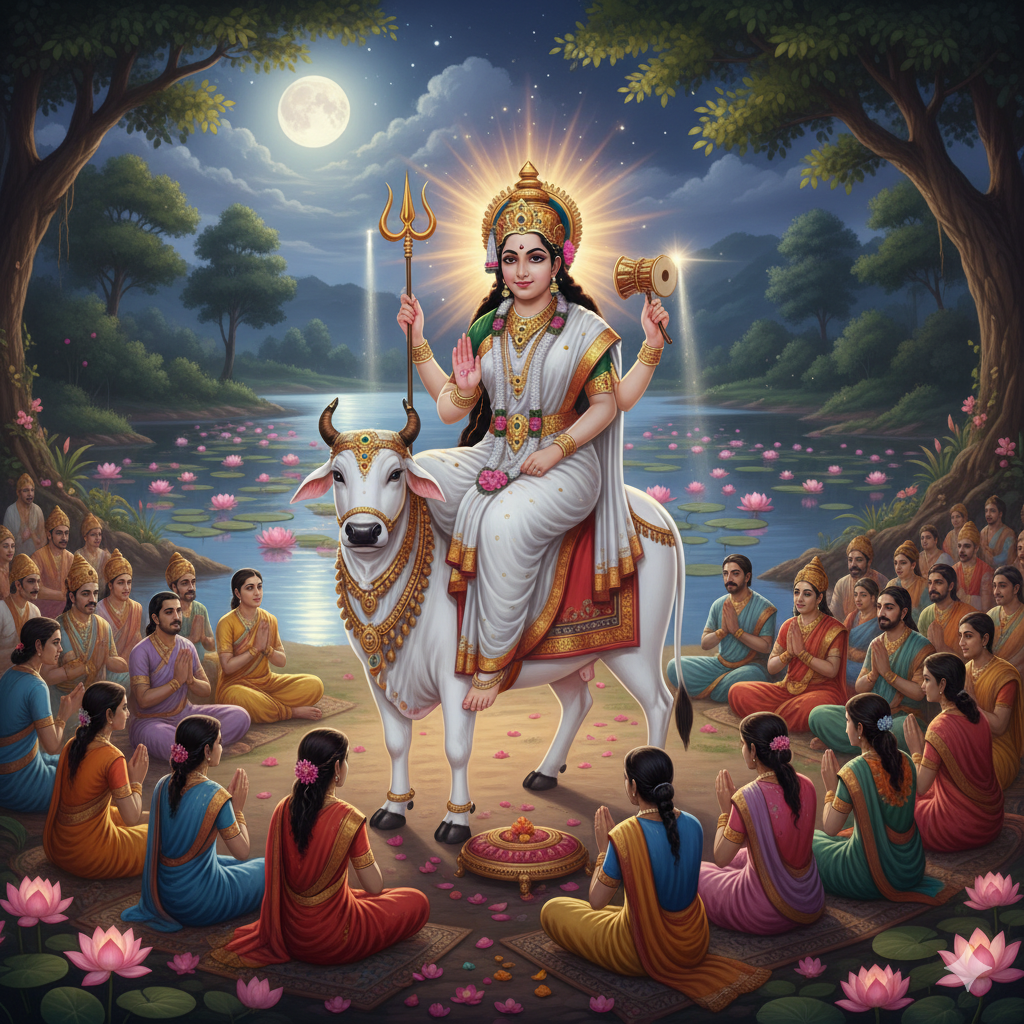
Maa Mahagauri (Day 8 of Navratri): The Goddess of Purity and Serenity
About the Author Raja Ratnam is a passionate researcher and writer specializing in Indian mythology and epic stories.With years of experience studying texts like Ramayana, Mahabharata, and other cultural scriptures,he brings insightful interpretations and practical lessons from these timeless stories. Raja Ratnam believes in making mythology accessible and meaningful for modern readers,helping them understand the moral, ethical, and cultural significance behind characters likeRamudu, Laxman, Shani Deva, and many more. Connect with the author: info@ratnamstrategy.com Introduction Maa Mahagauri (Day 8 of Navratri) :The eighth day of Navratri (Ashtami) is dedicated to Maa Mahagauri, the eighth manifestation of Goddess Durga. She represents purity, serenity, compassion, and forgiveness. Her name “Mahagauri” translates to “extremely fair and radiant,” symbolizing spiritual enlightenment and divine energy. Maa Mahagauri blesses her devotees with inner peace, wisdom, and prosperity while removing sins and past karmic debts. She is worshipped widely on Durga Ashtami, which is considered one of the most sacred days of Navratri. This day also holds special significance because many devotees perform Kanya Puja (Kumari Puja), where young girls are worshipped as embodiments of the Goddess herself. The Story of Maa Mahagauri (Day 8 of Navratri) According to legend, Maa Parvati undertook severe penance to please…
- Festivals , Navratri [ Day 1 To Day 9 }
- September 27, 2025
- 163 views
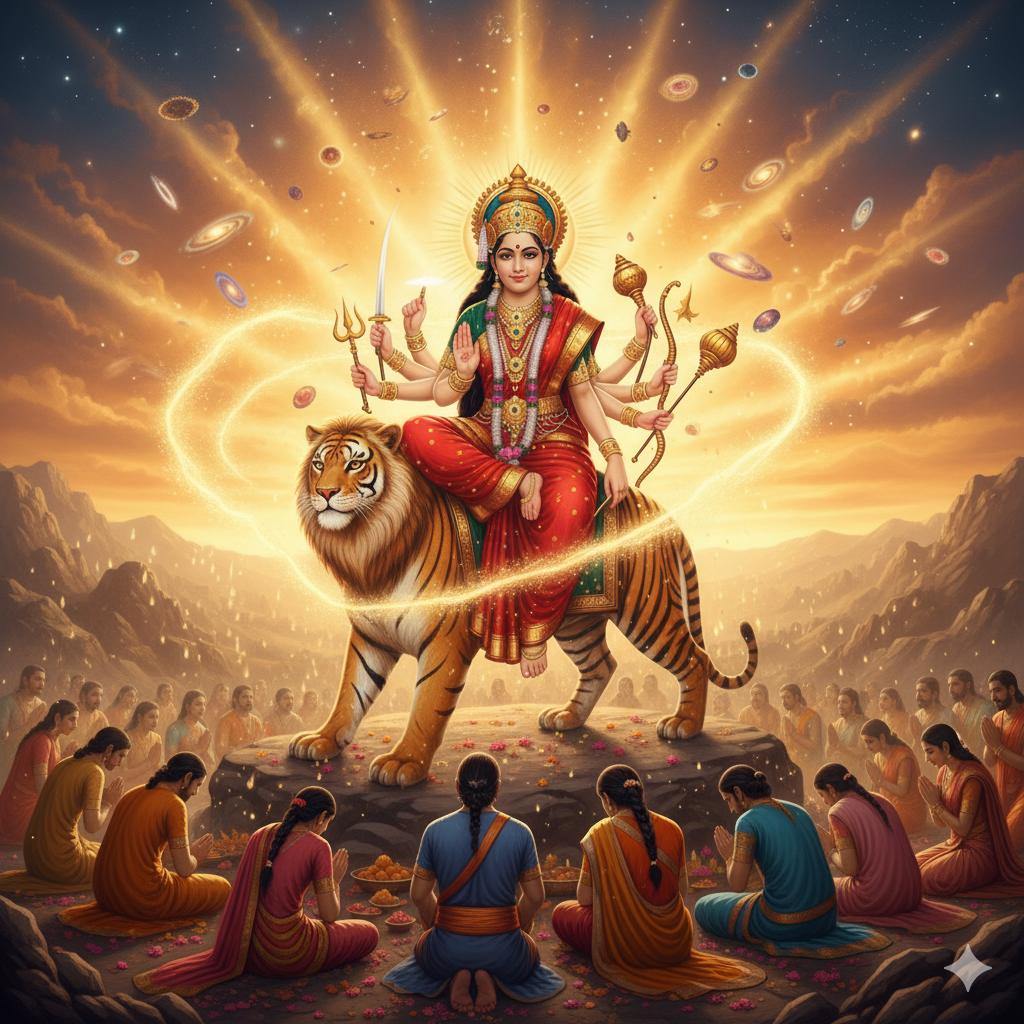
Maa Katyayani – Day 6 of Navratri | Story, Puja Vidhi, Significance & Mantra
About the Author Raja Ratnam is a passionate researcher and writer specializing in Indian mythology and epic stories.With years of experience studying texts like Ramayana, Mahabharata, Maa Katyayani – Day 6 of Navratri and other cultural scriptures,he brings insightful interpretations and practical lessons from these timeless stories. Raja Ratnam believes in making mythology accessible and meaningful for modern readers,helping them understand the moral, ethical, and cultural significance behind characters likeRamudu, Laxman, Shani Deva, and many more. Connect with the author: info@ratnamstrategy.com Introduction Maa Katyayani – Day 6 of Navratri: On the sixth day of Navratri, devotees worship Maa Katyayani, one of the fiercest and most powerful forms of Goddess Durga. She is known as the warrior goddess who embodies courage, victory, and the destruction of evil forces. She was born as the daughter of Sage Katyayan, and hence she came to be called Katyayani. Maa Katyayani is particularly revered because she was the one who defeated and killed the mighty demon Mahishasura, earning her the title of Mahishasuramardini (the slayer of Mahishasura). Devotees worship her for courage, protection, and marital bliss. Appearance of Maa Katyayani – Day 6 of Navratri Maa Katyayani’s divine form radiates strength and valor: Significance of…
- Festivals , Navratri [ Day 1 To Day 9 }
- September 24, 2025
- 173 views
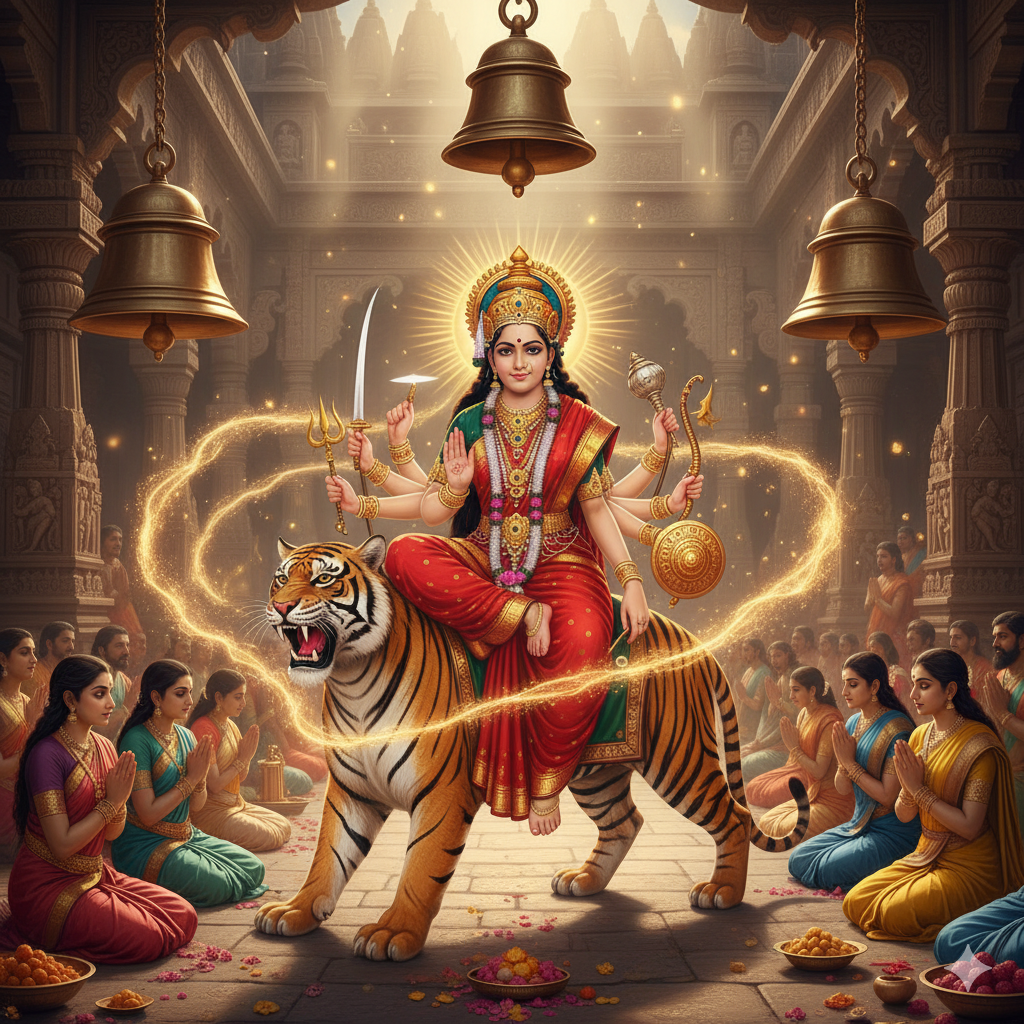
Maa Chandraghanta – Navratri Day 3 Puja Vidhi, Mantra & Significance
About the Author Raja Ratnam is a passionate researcher and writer specializing in Indian mythology and epic stories.With years of experience studying texts like Ramayana, Mahabharata, and other cultural scriptures,he brings insightful interpretations and practical lessons from these timeless stories. Raja Ratnam believes in making mythology accessible and meaningful for modern readers,helping them understand the moral, ethical, and cultural significance behind characters likeRamudu, Laxman, Shani Deva, and many more. Connect with the author: info@ratnamstrategy.com Introduction Maa Chandraghanta – Navratri Day 3 .On the third day of Navratri, devotees worship Maa Chandraghanta, the warrior goddess who represents courage, strength, and grace. Her name comes from the crescent moon (Chandra) that adorns her forehead in the shape of a bell (Ghanta). She is believed to ride a tiger, symbolising bravery, and carries weapons in her ten hands. Worshipping Maa Chandraghanta removes fear, grants courage, and fills life with peace and harmony. Who is Maa Chandraghanta – Navratri Day 3? Maa Chandraghanta is the married form of Goddess Parvati, after she wed Lord Shiva. With a crescent moon on her forehead resembling a bell, she is both compassionate to her devotees and fierce toward evil forces. She is often described as a goddess…
- Festivals , Navratri [ Day 1 To Day 9 }
- September 23, 2025
- 219 views
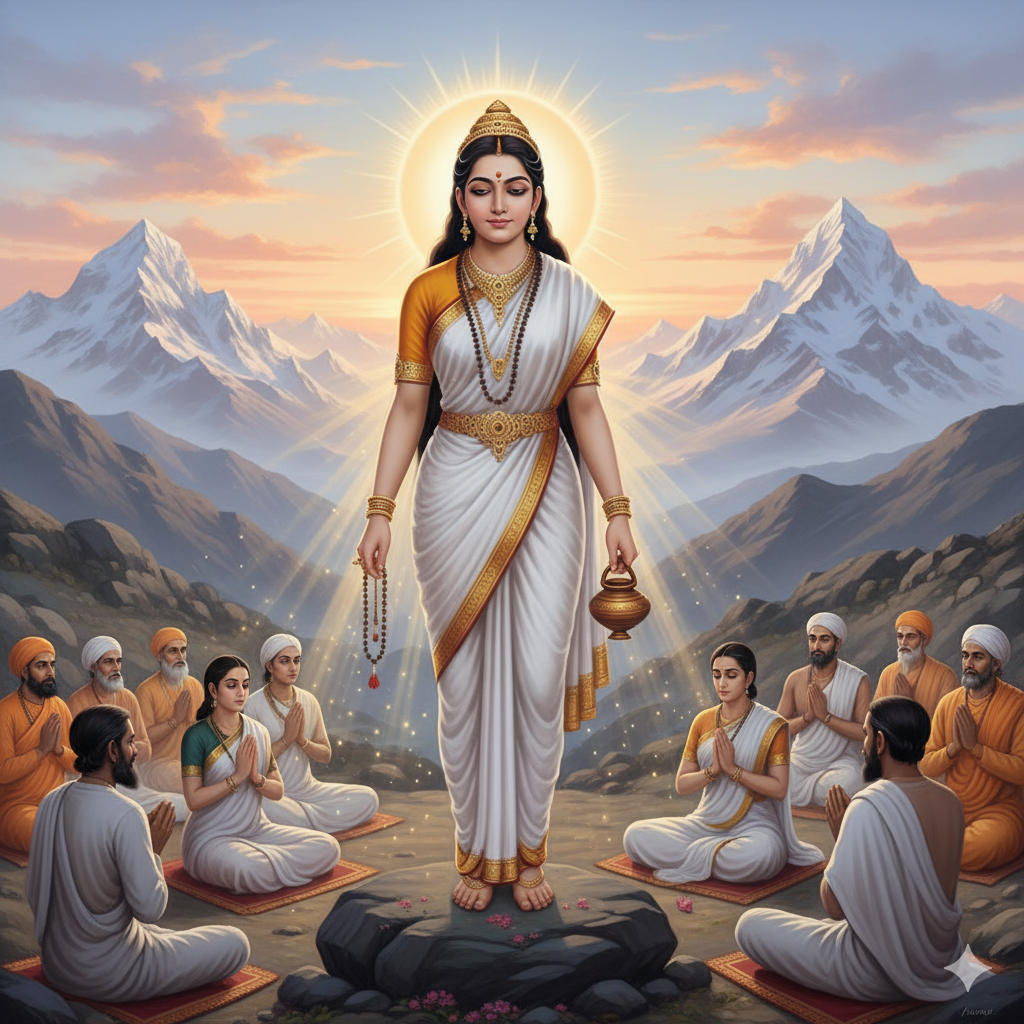
Maa Brahmacharini – Navratri Day 2 Puja, Mantra & Significance
About the Author Raja Ratnam is a passionate researcher and writer specialising in Indian mythology and epic stories.With years of experience studying texts like Ramayana, Mahabharata, and Maa Brahmacharini (Navratri Day 2 ), other cultural scriptures,he brings insightful interpretations and practical lessons from these timeless stories. Raja Ratnam believes in making mythology accessible and meaningful for modern readers,helping them understand the moral, ethical, and cultural significance behind characters likeRamudu, Laxman, Shani Deva, and many more. Connect with the author: info@ratnamstrategy.com Introduction Maa Brahmacharini (Navratri Day 2 ) : The second day of Navratri is dedicated to Maa Brahmacharini, the goddess of penance, austerity, and devotion. She represents Tapas (spiritual practice) and symbolizes patience, wisdom, and inner strength. Her worship on Navratri Day 2 inspires devotees to embrace discipline and devotion in their lives. The word Brahmacharini is a combination of Brahma (supreme knowledge or tapas) and Charini (one who practices). Thus, she is the goddess who practiced deep penance to please Lord Shiva. Worshipping her brings courage, self-control, and prosperity. Who is Maa Brahmacharini (Navratri Day 2 )? According to Hindu scriptures, Maa Brahmacharini is the unmarried form of Goddess Parvati. After her rebirth as the daughter of Himavan, she…