Raja Ratnam
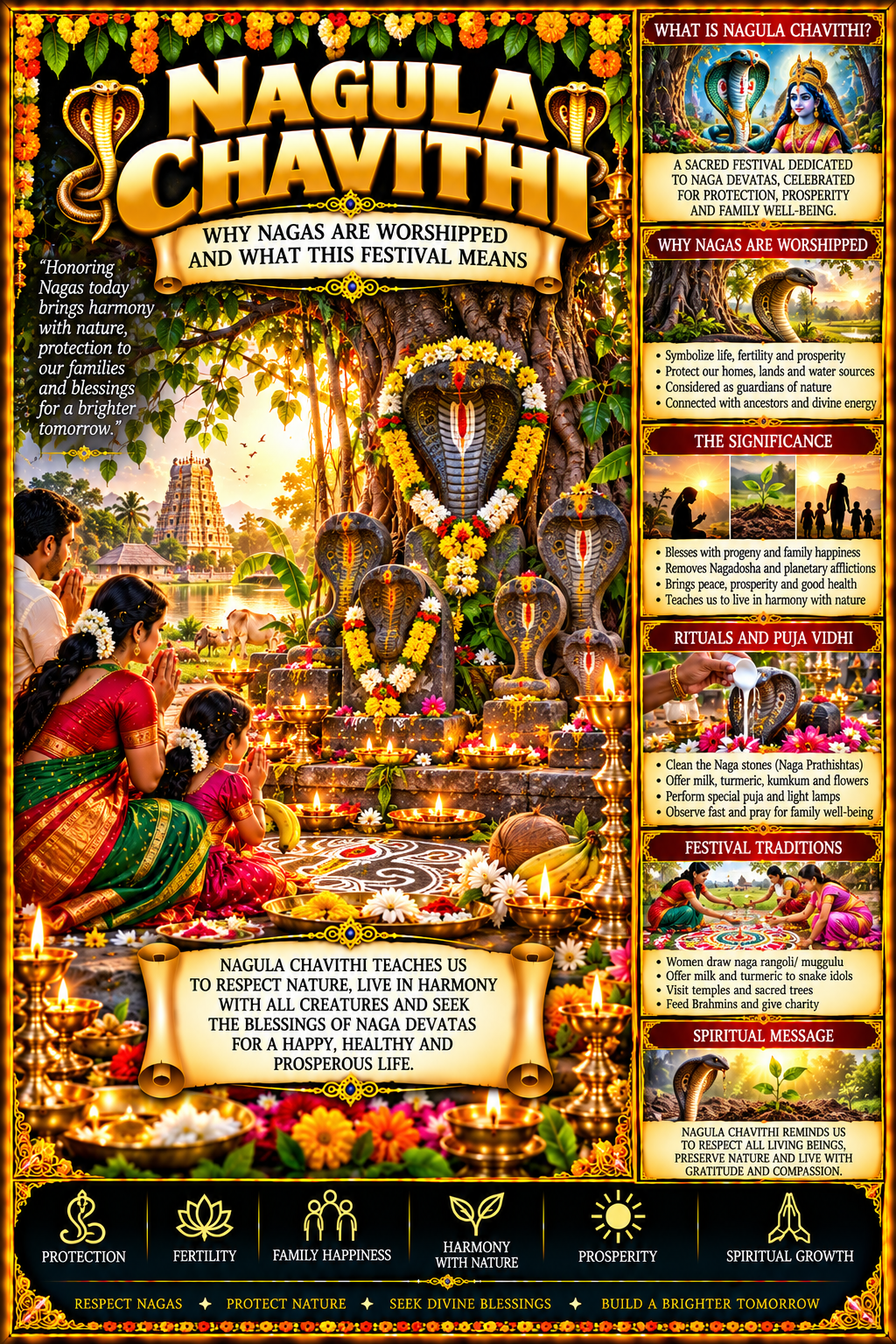
Just days after the illuminating celebrations of Diwali and Bhai Dooj, millions across Southern India gather around sacred ant-hills to observe Nagula Chavithi with intense devotion. Celebrated on the fourth lunar day (Chaturthi) of the bright fortnight (Shukla Paksha) in the holy month of Kartika, Nagula Chavithi is an ancient Vedic observance dedicated to the worship of the Naga Devatas (serpent deities). However, beyond traditional offerings of milk and flowers, contemplating Nagula Chavithi invites seekers to understand the cosmic, ecological, and esoteric dimensions of serpent veneration in Sanatana Dharma.
While modern viewpoints often perceive snakes merely with fear, ancient Indian philosophy recognizes them as guardians of the subterranean realms, protectors of agricultural bounty, and living symbols of dormant spiritual energy (Kundalini Shakti). Furthermore, performing the authentic rituals of Nagula Chavithi is believed to bestow family prosperity, ensure the longevity of children, and neutralize astrological planetary afflictions such as Sarpa Dosha and Kala Sarpa Dosha.
When Is Nagula Chavithi Observed? Kartika Shukla Chaturthi Significance
In the traditional luni-solar Vedic calendar detailed in our Hindu festival calendar guide, Nagula Chavithi occurs precisely four days after Deepavali Amavasya, following closely on the heels of Yama Vidiya and Bhai Dooj. In 2026, the Chaturthi Tithi falls on Friday, November 13, 2026.
While North India and parts of Western India prominently celebrate Naga Panchami during the monsoon month of Shravana, the states of Andhra Pradesh, Telangana, Karnataka, and Tamil Nadu observe Nagula Chavithi during the auspicious Kartika Maas. In this post-monsoon period, as agricultural harvesting approaches, farmers and families pay heartfelt homage to serpents for preserving paddy fields against destructive rodents.
Why Are Nagas Worshipped in Hinduism? The Cosmic and Scriptural Foundation
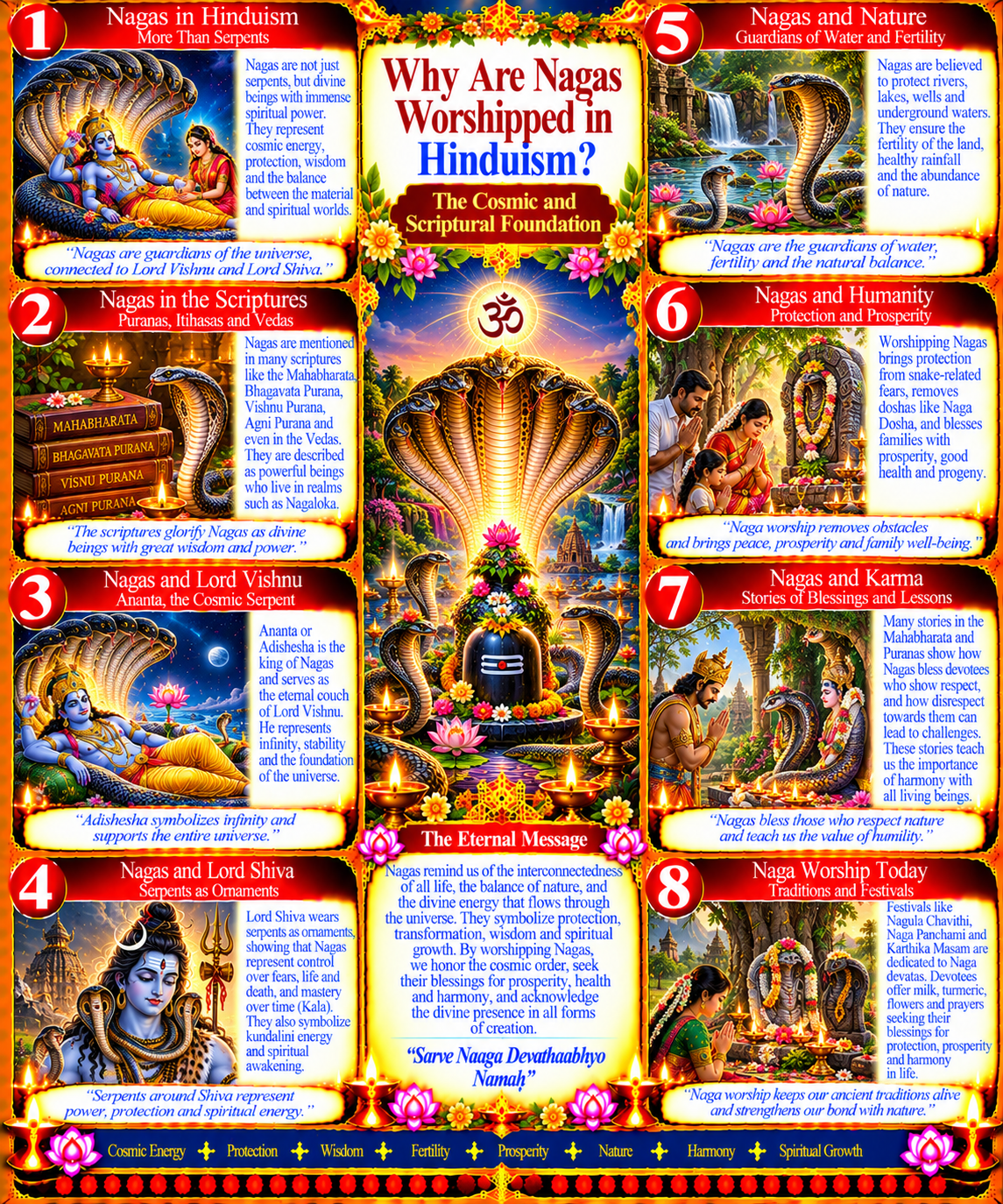
The reverence accorded to Nagas during Nagula Chavithi is not primitive superstition; it is deeply rooted in canonical Hindu cosmology, Puranic epics, and Vedic symbolism.
1. The Celestial Lineage of Sage Kashyapa and Kadru
According to the Adi Parva of the Mahabharata, the Nagas trace their ancestry to the great Prajapati Sage Kashyapa and his wife Kadru, who gave birth to a thousand serpents. Among these prominent divine serpents are:
- Sheshanaga (Adishesha): The cosmic thousand-headed serpent who floats upon the primordial ocean of milk (Kshira Sagara) serving as the resting couch for Lord Vishnu. Adishesha upholds the planetary spheres and incarnates alongside Vishnu as Lakshmana in the Treta Yuga and Balarama in the Dvapara Yuga.
- Vasuki: The king of the Nagas who offered his colossal body as the churning rope around Mount Mandara during the cosmic Samudra Manthan, and who rests eternally as a sacred ornament around the neck of Lord Shiva.
- Takshaka: The fiery ruler of the subterranean kingdom of Nagaloka, renowned for his strategic intellect.
- Kaliya: The multi-hooded serpent of the Yamuna River whose pride was subdued by the youthful dancing feet of Lord Krishna.
2. The Selfless Sacrifice of King Vasuki in Samudra Manthan
During the cosmic churning of the milk ocean, when the Devas and Asuras sought the divine nectar of immortality (Amrita), King Vasuki willingly allowed his body to be tied around Mount Mandara. Enduring immense friction, heat, and exhausting strain, Vasuki exhaled clouds of venom that Lord Shiva drank as Halahala to save creation. Worshipping Vasuki on Nagula Chavithi commemorates this immortal service to cosmic stability.
3. The Intimate Association with Lord Shiva and Lord Ganesha
Serpents are inseparable companions of the Supreme Deities. Lord Shiva wears Vasuki around his throat to symbolize mastery over physical time, mortality, and poisonous passions. Similarly, Lord Ganesha ties the great serpent around his stomach as a sacred sacred belt (Udara Bandhana), demonstrating emotional balance and cosmic restraint, a motif deeply revered during Ganesh Chaturthi celebrations.
The Esoteric Spiritual Meaning: Kundalini Shakti and the Muladhara
On a metaphysical plane, Nagula Chavithi represents the awakening of inner spiritual consciousness. In Yogic and Tantric anatomy, the primordial life-force energy (Prana Shakti) lies coiled three-and-a-half times at the base of the spine in the Muladhara Chakra, depicted as the sleeping serpent Kundalini.
When an aspirant practices ethical discipline, meditation, and devotion, this dormant serpent energy uncoils, ascending through the Sushumna Nadi across the seven chakras until it merges with the Sahasrara Chakra (pure consciousness) at the crown of the head. Worshipping the Naga Devatas symbolizes seeking divine permission to awaken this inner dormant power without burning the subtle nervous system with unruly desires.
The Ant-Hill as a Symbol of the Subconscious Mind
The natural ant-hill (Valmika / Putta) fashioned from earthen soil mirrors the human physical body. Just as an ant-hill conceals labyrinthine subterranean tunnels housing the serpent, the human physical vehicle conceals complex subconscious thought corridors housing the dormant soul. Pouring sanctified milk into the ant-hill represents purifying subconscious tendencies with cool, sattvic virtues.
Step-by-Step Puja Vidhi and Rituals for Nagula Chavithi
In rural and urban areas alike, women wake before dawn, take an oil-purifying head bath, dress in traditional silk sarees, and prepare sacred homemade offerings before walking to a nearby ant-hill. Follow this canonical procedural structure:
1. Essential Puja Samagri Checklist
- Raw Cow’s Milk (Kacha Doodh): Fresh unboiled cow milk carried in a clean brass or silver vessel.
- Pasupu and Kumkuma: Generous amounts of organic turmeric and red vermilion powders.
- Chalimidi: A traditional sweet paste prepared by pounding soaked raw rice into fine flour mixed with jaggery, cardamom, and cow ghee.
- Chimmili: Sacred laddoos made from roasted black sesame seeds (Til) and unrefined jaggery.
- Jowar or Rice Puffs (Pelalu / Murmura): Puffed grains representing fruitful abundance.
- Yellow-Dyed Holy Thread (Noolu Daaram): Cotton thread anointed with turmeric paste for tying around the ant-hill.
- Fresh Yellow Flowers & Bananas: Marigolds, oleanders, and unblemished yellow bananas.
2. The Ant-Hill Worship Procedure (Putta Puja)
Upon reaching the sacred ant-hill (Putta), women sweep the surrounding perimeter and sprinkle holy water. Turmeric and kumkuma are applied reverently around the base and apertures of the mound. Devotees then wrap the yellow cotton thread around the ant-hill three, five, or seven times in a clockwise direction (Pradakshina).
Pouring the Sacred Milk and Offering Chalimidi
Devotees gently pour unboiled cow milk into the openings of the ant-hill, accompanied by offerings of Chalimidi, Chimmili, puffed grains, and pieces of sugarcane. Burning incense (Dhoop) and lighting a small clay ghee lamp creates a fragrant, peaceful atmosphere.
Applying Putta Mannu (Sacred Ant-Hill Soil)
After completing prayers, women take a tiny pinch of moist soil from the sacred ant-hill (known as Putta Mannu) and gently dab it behind the ears and on the throats of their children and husbands. According to regional folklore, this consecrated earth shields family members from throat infections, skin ailments, ear afflictions, and poisonous insect stings throughout the winter.
Vedic Naga Gayatri Mantra
Devotees chant the potent Naga Gayatri: “Om Nava Kulaya Vidmahe Visha Dantaya Dhimahi | Tanno Sarpa Prachodayat.”
As documented in scholarly research preserved in historical records of Nagaradhane and serpent worship in South Asia (Wikipedia), these ancient rites have successfully safeguarded biodiversity and cultural ecology for millennia.
Astrological Significance: Remedying Sarpa Dosha and Rahu-Ketu Afflictions
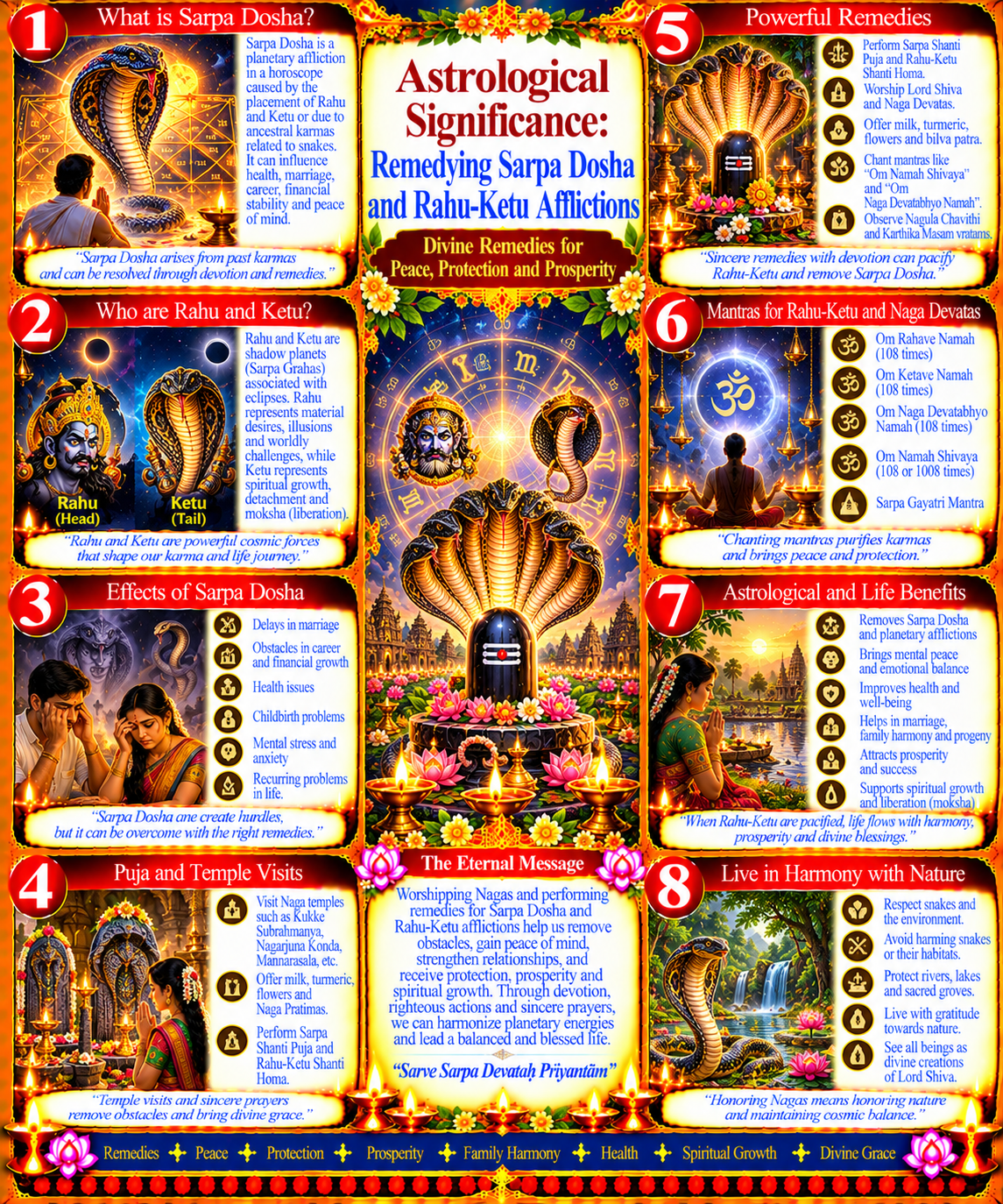
In Vedic astrology (Jyotisha), Rahu and Ketu are known as the shadowy planetary nodes representing the head and tail of the cosmic serpent. Individuals born with Kala Sarpa Dosha (when all seven planets are hemmed between Rahu and Ketu) or Naga Dosha frequently experience chronic delays in marriage, childbearing obstacles, persistent career turbulence, or sudden health shocks.
Observing Nagula Chavithi with sincere fasting, making donations of sesame sweets, and chanting the names of the nine supreme serpents (Ananta, Vasuki, Shesha, Padmanabha, Kambala, Shankhapala, Dhritarashtra, Takshaka, and Kaliya) mitigates malefic Rahu-Ketu vibrations and harmonizes family horoscopes.
Ecological Wisdom: Serpents as the Guardians of Agriculture
Beyond theology, Sanatana Dharma embeds scientific ecological equilibrium into festive celebrations. Rodents, mice, and subterranean pests destroy an estimated 15% to 25% of standing food crops and stored grain bins each year. Non-venomous and venomous snakes naturally control rodent populations, preserving food security for agrarian societies.
By venerating snakes on Nagula Chavithi, ancient Indian wisdom taught communities to respect, protect, and live in peaceful coexistence with predatory reptiles rather than persecuting them out of indiscriminate fear. This holistic ethos complements the overarching environmental stewardship celebrated during Diwali and Kartika festival observances.
Frequently Asked Questions About Nagula Chavithi (20 FAQs)
1. What is Nagula Chavithi and who primarily observes it?
Nagula Chavithi is a sacred Hindu festival observed on Kartika Shukla Chaturthi, celebrated primarily by married women and mothers in Andhra Pradesh, Telangana, Karnataka, and Tamil Nadu for the protection, health, and prosperity of their families and children.
2. When is Nagula Chavithi celebrated in 2026?
Nagula Chavithi will be observed on Friday, November 13, 2026, falling on the fourth lunar day after the Diwali new moon.
3. What is the difference between Nagula Chavithi and Naga Panchami?
Naga Panchami is celebrated on the fifth day (Panchami) of Shravana month during the monsoons across North and Western India. Nagula Chavithi is observed on the fourth day (Chaturthi) of Kartika month during post-monsoon autumn in Southern India.
4. Why do women pour milk into ant-hills during Nagula Chavithi?
Termite ant-hills (Putta) are natural subterranean habitats where snakes often reside. Offering milk, flowers, and sweets symbolizes peaceful coexistence, gratitude, and seeking blessings from Naga Devatas.
5. What is Chalimidi and why is it prepared on Nagula Chavithi?
Chalimidi is a traditional sweet paste made from soaked raw rice flour, jaggery, and ghee. It is cooling (sattvic) in nature and is offered to pacify the fiery, venomous nature of serpents.
6. What is Chimmili and what does it represent?
Chimmili consists of laddoos rolled from pounded roasted sesame seeds and jaggery. Sesame (Til) represents planetary balance and remedies malefic influences of Saturn, Rahu, and Ketu.
7. What is Putta Mannu and how is it used after the puja?
Putta Mannu is the sanctified soil gathered from the base of the ant-hill. Mothers apply a small dab behind their children’s ears and throat to grant immunity from ear, nose, throat infections, and evil eyes.
8. Why do women tie yellow thread around the ant-hill?
Wrapping turmeric-dyed cotton thread (Noolu Daaram) around the ant-hill symbolizes establishing a sacred boundary of cosmic protection, invoking divine shield around the household.
9. What astrological afflictions are relieved by observing Nagula Chavithi?
Worshipping Naga Devatas on this day relieves Kala Sarpa Dosha, Sarpa Dosha, Rahu-Ketu afflictions, obstacles in conceiving children (Santana Dosha), and chronic skin disorders.
10. Can people who do not have access to an ant-hill perform this puja at home?
Yes, devotees can worship silver, brass, or stone Naga idols at home or at local Shiva temples, bathing the idols in milk and offering turmeric, vermilion, Chalimidi, and flowers.
11. Who was the mother of all serpents in Hindu mythology?
Kadru, the wife of Prajapati Sage Kashyapa, is the celestial mother of the thousand serpents, while Vinata was the mother of Garuda.
12. Why is Lord Shiva worshipped alongside Nagas on Nagula Chavithi?
Lord Shiva wears the serpent king Vasuki around his neck as a jewel. Worshipping Shiva and Nagas jointly invokes profound peace, ascetic willpower, and immunity from worldly toxins.
13. What is the spiritual connection between Nagas and the Kundalini energy?
The serpentine Kundalini energy resides coiled at the root Muladhara Chakra. Venerating serpents symbolizes honouring the primal spiritual force that leads to higher enlightenment when awakened.
14. Why are non-vegetarian food, alcohol, and sharp objects avoided on this day?
Nagula Chavithi is a strictly sattvic observance. Digging soil, ploughing land, cutting trees, or using sharp tools is strictly avoided to prevent accidental injury to living subterranean creatures.
15. What are the names of the nine supreme Naga Devatas (Nava Nagas)?
The nine supreme serpent deities are Ananta, Vasuki, Shesha, Padmanabha, Kambala, Shankhapala, Dhritarashtra, Takshaka, and Kaliya.
16. What is the ecological importance of snakes honored during this festival?
Snakes naturally consume rodents and insects that ravage harvest crops. Celebrating them acknowledges their irreplaceable ecological role in sustaining agricultural food chains.
17. Why do farmers leave grain offerings at ant-hills?
Farmers offer puffed grains (Pelalu) and rice flour as a gesture of reciprocal gratitude to nature for protecting their fields throughout the growing season.
18. Is fasting observed on Nagula Chavithi?
Yes, women typically observe a strict fast until the completion of the ant-hill puja and consumption of the prasad (Chalimidi and Chimmili) in the afternoon.
19. What are the benefits of chanting the Sarpa Suktam on this day?
Reciting the Vedic Sarpa Suktam dissolves generational ancestral karmas, cleanses speech of negative curses, and brings mental serenity to the household.
20. What is the ultimate message of Nagula Chavithi for modern society?
Nagula Chavithi teaches humanity reverence for all forms of biodiversity, fostering compassionate coexistence with wildlife rather than fearful destruction of the natural ecosystem.