Raja Ratnam
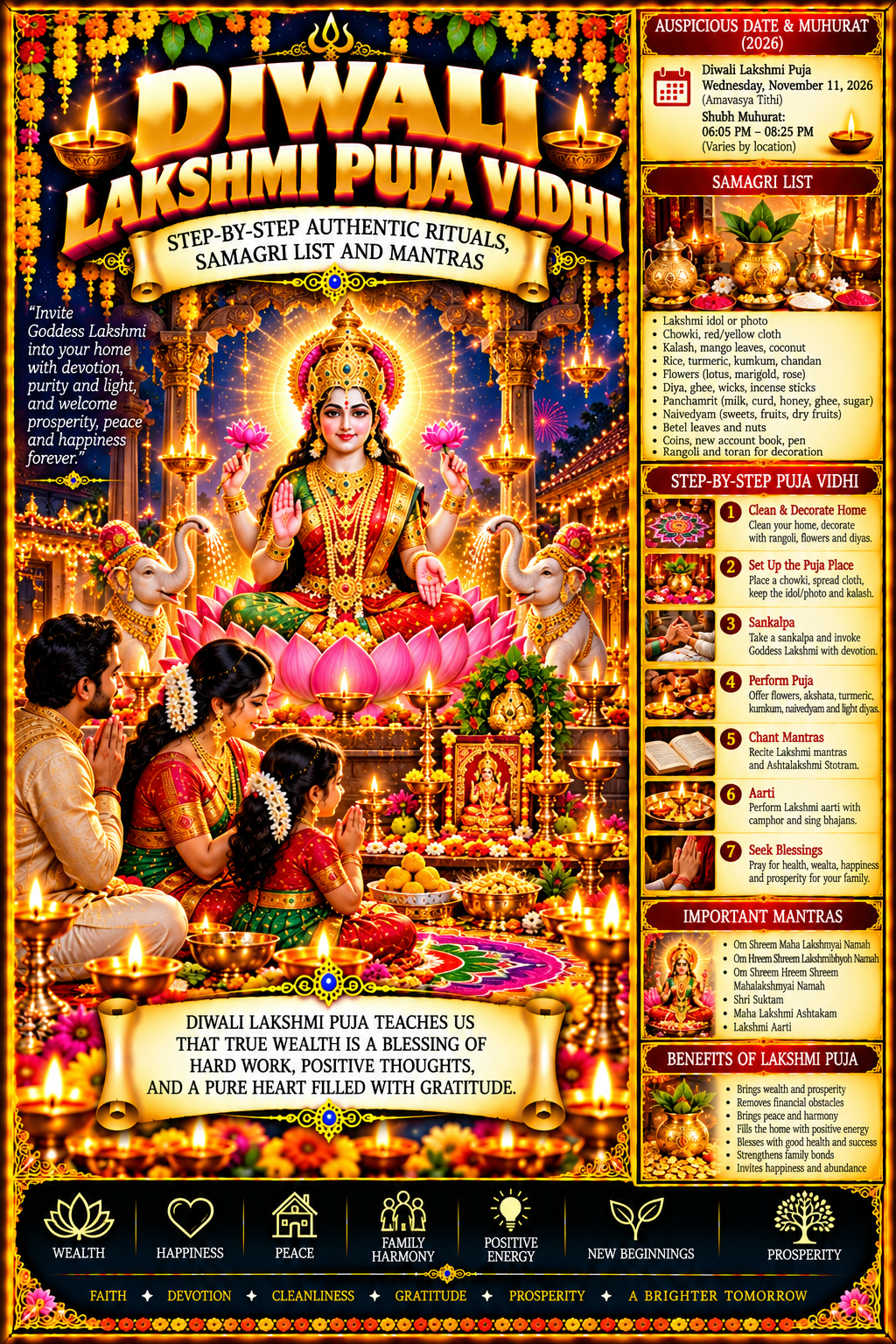
Deepavali night represents the supreme cosmic window when the goddess of absolute prosperity, fortune, and spiritual grace visits the mortal world. To properly receive this divine presence, performing an authentic Lakshmi Puja Vidhi at home and business is one of the most sacred spiritual obligations in Sanatana Dharma. Furthermore, contrary to the misconception that worship requires esoteric complexities, a genuine Vedic Lakshmi Puja Vidhi is built upon sincere devotion (Bhakti), internal and external cleanliness (Saucha), and adherence to traditional Shodashopachara rituals. Consequently, when families follow the correct sequence of invocations, chant sacred mantras, and observe auspicious muhurat timings, they create an energetic sanctuary where lasting prosperity (Sthir Lakshmi) naturally abides.
In this comprehensive guide, we unpack the complete Lakshmi Puja Vidhi from start to finish. You will find an exhaustive samagri checklist, step-by-step altar arrangement rules, exact Sanskrit mantras with their English significances, Shubh Muhurat guidance aligned with the Hindu Festival Calendar, and crucial dos and don’ts to ensure your Diwali worship yields supreme spiritual and material fruit.
Understanding the Sacred Foundations of Lakshmi Puja Vidhi
Before initiating any ritual actions, it is vital to contemplate the divine symbolism underpinning the ceremony. In Vedic philosophy, Goddess Mahalakshmi is not merely the deity of metallic gold or financial currency; rather, She represents Ashta Lakshmi—the eightfold dimensions of abundance encompassing courage (Dhanya), wisdom (Vidya), progeny (Santana), patience (Dhairya), victory (Vijaya), prosperity (Dhana), and spiritual liberation (Moksha).
Why Goddess Lakshmi and Lord Ganesha Are Worshipped Together
Intriguingly, an essential element of every Lakshmi Puja Vidhi is placing Lord Ganesha to the right of Goddess Lakshmi. As explored in our deep study of Ganesh Chaturthi rituals and symbolism, Lord Ganesha is the presiding master of intellect, discretion (Buddhi), and the dispeller of all obstacles (Vighnaharta). Wealth bestowed upon an undisciplined mind devoid of wisdom leads inevitably to arrogance, ethical decay, and ruination. Therefore, worshiping Ganesha alongside Lakshmi guarantees that the wealth acquired will be managed with prudence, righteousness, and humility.
The Confluence of Wisdom (Buddhi) and Prosperity (Siddhi)
Scriptures state that Goddess Lakshmi considers Lord Ganesha as Her adopted son. Hence, whenever Lakshmi arrives in a home, She comes in the loving company of Her son. When Ganesha is worshipped first, Goddess Lakshmi is instantly pleased and bestows Her most benevolent boons.
Comprehensive Samagri Checklist for an Authentic Lakshmi Puja Vidhi
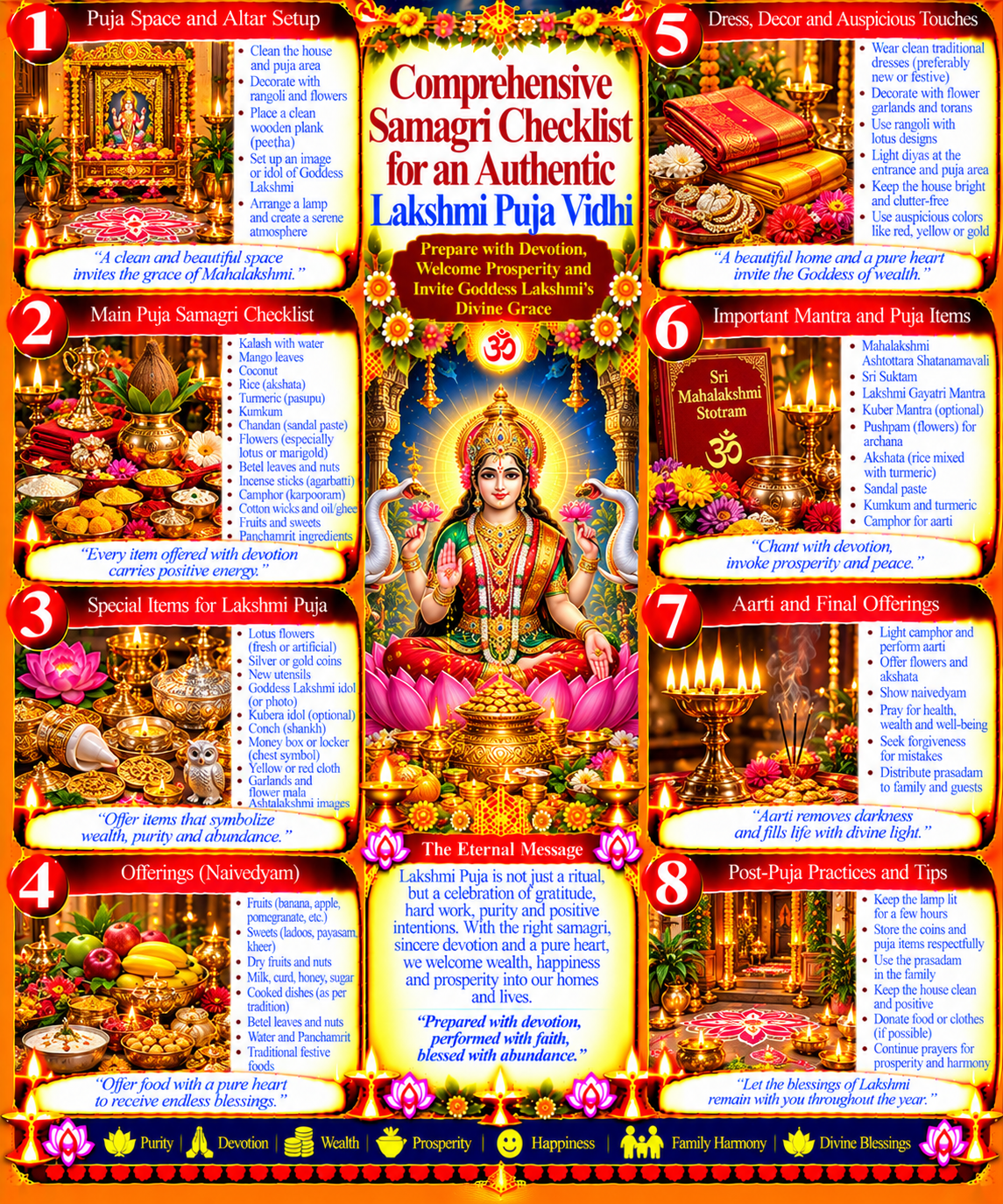
Gathering all sacred items beforehand prevents disruptions during the solemn worship. Here is the complete list of items required for your Lakshmi Puja Vidhi:
Sacred Idols, Chowki Setup, and Red Fabric
- Puja Chowki: A clean, raised wooden stool or platform.
- Sacred Cloth: Fresh, unstitched red or yellow silk/cotton cloth to drape over the chowki.
- Divine Idols: Clay or metal murtis of Goddess Lakshmi and Lord Ganesha (ensure they are in seated posture, not standing).
- Lord Kubera Yantra: Optional copper or brass Kubera Yantra or coin for business prosperity.
Panchamrit, Fruits, Sweets, and Floral Offerings
- Panchamrit Ingredients: Raw cow milk, fresh curd, pure cow ghee, natural honey, and organic jaggery or sugar.
- Gangajal: Sacred water from the river Ganga for purification.
- Fresh Lotus Flowers (Kamal ke Phool): Goddess Lakshmi’s supreme favorite flower. Red hibiscus and marigold garlands are also essential.
- Five Seasonal Fruits (Panchamrit Phal): Including pomegranate (anar), banana, custard apple, water chestnut (singhara), and coconut with its husk intact.
- Sweets (Mithai): Kheer, motichoor ladoos, besan ladoos, batasha (sugar drops), and puffed rice (kheel).
Coins, Kauri Shells, Gomti Chakra, and Lotus Seeds
- Metallic Currency: Silver or gold coins stamped with images of Lakshmi and Ganesha.
- Auspicious Ocean Charms: 5 or 11 yellow cowrie shells (Peeli Kauri), 5 Gomti Chakras, and a Kamal Gatta (lotus seed) rosary.
- Fragrant Herbs & Spices: Betel leaves (Paan), betel nuts (Supari), cloves (Laung), cardamom (Elaichi), and unbroken raw turmeric sticks (Haldi ki Gaanth).
- Diyas and Incense: A primary brass/clay four-wick diya for the center, 11 smaller clay diyas, pure cow ghee, mustard oil, cotton wicks, dhoop sticks, and camphor (Kapur).
Step-by-Step Shodashopachara Lakshmi Puja Vidhi at Home
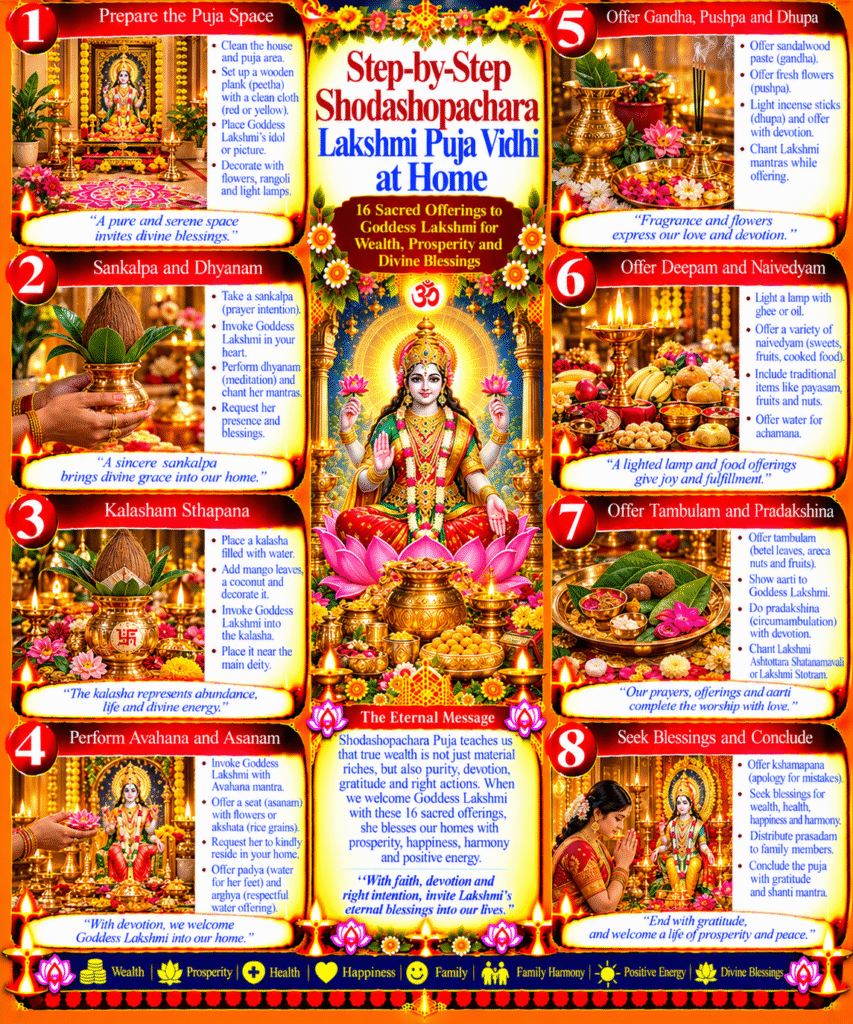
The traditional Vedic ceremony encompasses sixteen systematic steps of adoration (Shodashopachara). Below is the precise sequential process for your family’s Lakshmi Puja Vidhi:
Step 1: Shuddhikaran (Purification of Self and Space)
Begin by taking a bath and wearing clean traditional garments. Sit comfortably facing East or North on a woolen mat (Asana). Take a copper spoon (Achamani), pour a few drops of water into your right palm, and chant the sacred Pavitrikaran mantra:
Pavitrikaran Mantra and Achamana
“Om Apavitrah Pavitro Va Sarvavastham Gato’pi Va, Yah Smaret Pundarikaksham Sa Bahyabhyantarah Shuchih.”
Sprinkle the sanctified water over yourself, the puja items, and the altar to purify the entire environment.
Step 2: Sankalpa (Solemn Spiritual Declaration)
Hold raw rice (Akshat), a flower, a coin, and a few drops of water in your right palm. Close your eyes, mentally recall the current lunar day (Kartik Amavasya), your gotra, your family members’ names, and express your earnest prayer for peace, health, and spiritual abundance before letting the water flow onto the ground.
Step 3: Kalash Sthapana and Varuna Avahanam
Place a small bed of raw grains or rice on the chowki. Position a brass, copper, or silver Kalash upon it. Fill three-fourths of the pot with pure water and a few drops of Gangajal. Place a betel nut, a clove, a clean coin, and holy durva grass inside.
Astrological Alignment of the Sacred Vessel
Arrange five fresh mango or betel leaves around the mouth of the vessel. Smear a whole coconut with vermilion, wrap it in a red sacred thread (Moli), and place it upright atop the leaves, invoking Lord Varuna and the cosmic divine mothers.
Step 4: Ganesha Avahanam and Dhyanam
Every authentic Lakshmi Puja Vidhi prioritizes Lord Ganesha. Offer fresh flowers and akshat at Ganesha’s lotus feet, chanting: “Om Gam Ganapataye Namah. Vighneshvaraya Varadaya Surapriyaya, Lambodaraya Sakalaya Jagaddhitaya.” Apply sandalwood paste, offer sweet modaks or ladoos, and seek His divine grace to clear all hurdles.
Step 5: Mahalakshmi Avahanam and Asana Samarpana
Fold your hands in meditation (Dhyanam) and welcome the divine presence of Goddess Mahalakshmi into the sanctified idol: “Om Shrim Hrim Shrim Kamale Kamalalaye Prasida Prasida, Shrim Hrim Shrim Om Mahalakshmyai Namah.” Offer a fresh red lotus or rose flower as a seat (Asana) to the Mother.
Step 6: Panchamrit Snan and Shuddhoda Snan
Using a flower or spoon, offer symbolic drops of water for washing the feet (Padya), washing the hands (Arghya), and sipping (Achamaniya). Offer drops of Panchamrit followed by clean Gangajal for the sacred bath (Snana).
Step 7: Vastra, Janeu, Chandan, and Kumkum
Present a red sacred cloth or chunri to Goddess Lakshmi and a yellow cloth/Janeu to Lord Ganesha. Adorn the forehead of Lakshmi with fragrant red Kumkum and Sindoor, and Ganesha with cooling Raktachandan. Sprinkle fragrant Ittar (natural floral perfume) onto the altar.
Step 8: Naivedya, Tamboolam, and Dakshina
Offer freshly prepared Kheer, batasha, kheel, fruits, and traditional sweets. Place two betel leaves with a betel nut and clove (Tamboolam) before the deities, followed by a gold, silver, or standard coin as Dakshina.
Step 9: Mahalakshmi Aarti and Pushpanjali
Light the camphor lamp (Kapur Aarti) and lead the entire family in singing the sacred “Om Jai Lakshmi Mata” Aarti with pure devotion.
Chanting Shri Suktam and Lakshmi Gayatri
Reciting the 16 verses of the Rigvedic Shri Suktam during the culmination of your Lakshmi Puja Vidhi invokes immense celestial benevolence. Conclude with the Lakshmi Gayatri Mantra: “Om Mahalakshmyai Cha Vidmahe, Vishnu Patnyai Cha Dhimahi, Tanno Lakshmih Prachodayat.”
Correct Intonation Guidelines
Maintain a serene, measured tempo while chanting. Avoid rushing through the Sanskrit verses, allowing each vibration to resonate through the home.
Pronunciation Nuances
Ensure clear articulation of seed syllables like Shrim (Shreem) and Hrim (Hreem) to activate their fullest energetic resonance.
Step 10: Kshama Prarthana (Seeking Forgiveness)
Bow with folded hands and chant the Kshama Prarthana: “Avahanam Na Janami, Na Janami Visarjanam, Puja Chaiva Na Janami, Kshamasva Parameshvari.” Humbly seek forgiveness for any shortcomings, omissions, or unintentional mistakes committed during the worship.
Determining the Most Auspicious Muhurat for Lakshmi Puja Vidhi
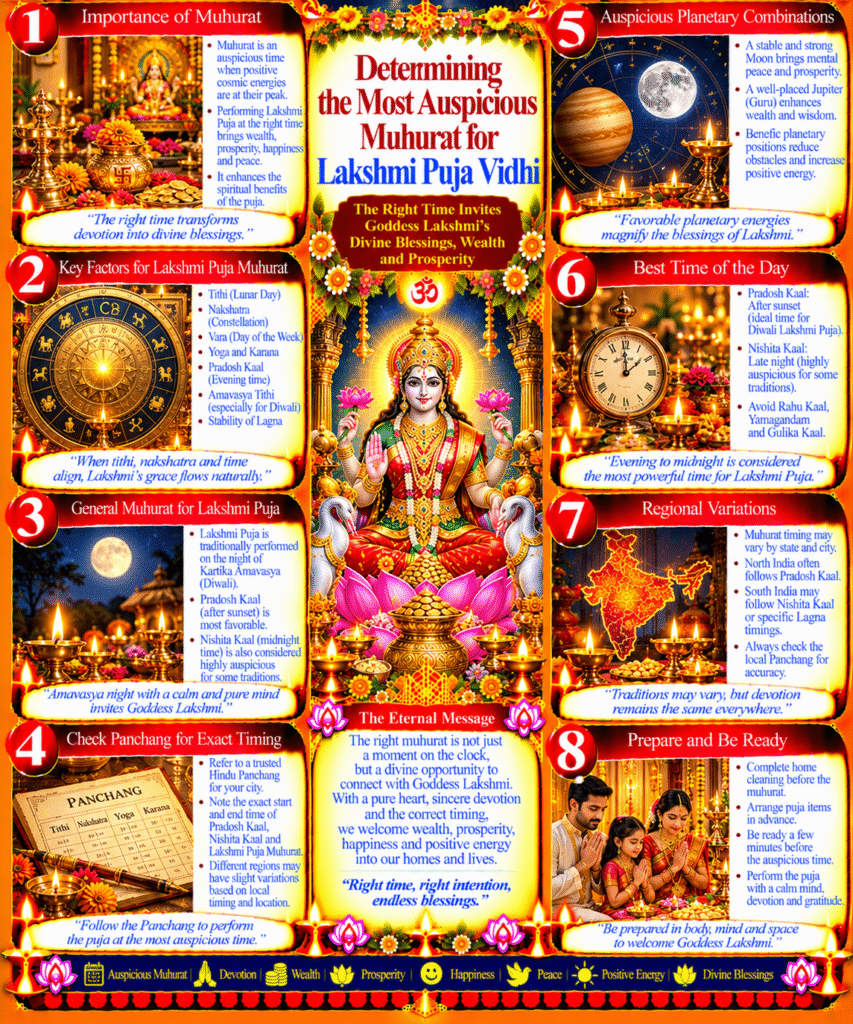
Timing plays a monumental role in Vedic astrology. The effectiveness of the Lakshmi Puja Vidhi is multiplied when aligned with specific celestial windows:
Pradosh Kaal Muhurat: Best for Householders
Pradosh Kaal begins at sunset and lasts for approximately 2 hours and 24 minutes. Crucially, when Pradosh Kaal overlaps with Vrishabha Lagna (the fixed astrological sign of Taurus), the energy of Sthir Lakshmi (immovable, stable wealth) is invoked. This is universally recommended for families seeking harmony, children’s success, and financial peace.
Nishita Kaal Muhurat: Revered for Tantric and Deep Sadhana
Nishita Kaal occurs during the middle of the night (around midnight). This powerful window overlapping with Simha Lagna (Leo) is particularly sought after by business owners, traders, and spiritual seekers reciting the Kanakadhara Stotram or performing intense Lakshmi Japa.
Choghadiya Muhurat: Labh, Amrit, and Shubh Timings
If unavoidable travel or duties prevent puja during Pradosh Kaal, consult the regional Panchang for the Shubh, Amrit, or Labh evening Choghadiya Muhurat.
Critical Dos and Don’ts of Lakshmi Puja Vidhi
To preserve sacred energy during your ceremony, keep these essential principles in mind:
Golden Rules to Invite Abundance
- Use Pure Cow Ghee: Ensure the main lamp uses unadulterated cow ghee with a red or clean white cotton wick.
- Face North or East: The worshiper should sit facing East (direction of wisdom and dawn) or North (direction of Kubera and wealth).
- Keep Accounts Books on the Altar: Business owners should place ledger books (Bahi-Khata), laptops, and stationery on the chowki for Saraswati and Lakshmi blessings.
- Distribute Prasad Generously: Never store all sweets for yourself; sharing sanctified prasad is integral to Lakshmi’s blessings.
Inauspicious Mistakes That Obstruct Lakshmi’s Arrival
- Never Clap Loudly During Lakshmi Aarti: While clapping is common during other aartis, scriptures recommend gentle bell ringing during Lakshmi Aarti, as harsh clatter disturbs the serene presence of Mahalakshmi.
- Do Not Use Broken Rice (Khandit Akshat): Ensure every grain of rice offered to the deities is unbroken.
- Avoid White Flowers for Lakshmi: White flowers are traditionally associated with renunciation. Offer vibrant red or pink blossoms instead.
- Never Leave the Mandir in Darkness: Keep at least one Akhand Diya burning continuously throughout the night in your puja room.
As detailed in classical research on Goddess Lakshmi in Vedic tradition (Britannica), Mahalakshmi embodies auspiciousness, supreme grace, and spiritual abundance.
Frequently Asked Questions About Lakshmi Puja Vidhi
1. What is the fundamental objective of performing Lakshmi Puja Vidhi on Diwali?
The core objective is to invite Goddess Mahalakshmi into the home to grant Ashta Lakshmi blessings—encompassing health, spiritual enlightenment, family harmony, and righteous material prosperity.
2. Why is Lord Ganesha always placed to the right of Goddess Lakshmi?
In Vedic iconology, a wife sits to the left of her husband, while an adopted son or divine companion sits to the right. Because Lakshmi considers Ganesha as Her divine son and the master of wisdom, He sits to Her right side.
3. Can householders perform Lakshmi Puja Vidhi without a priest?
Absolutely. Sincere devotion (Bhakti) and inner purity (Saucha) matter far more than elaborate ceremonial rituals. Following the simple Shodashopachara steps with heartfelt mantras brings complete divine blessings.
4. What direction should one face while performing the Lakshmi Puja Vidhi?
The person performing the puja should sit facing either East (the direction of the rising Sun and new beginnings) or North (the direction of Lord Kubera and spiritual ascension).
5. What is the significance of the Kalash in Lakshmi Puja Vidhi?
The Kalash symbolizes the cosmic womb of creation containing the nectar of immortality (Amrit). It embodies all Vedic deities, sacred rivers, and the four Vedas, serving as an anchor for divine energies.
6. Why are Lotus flowers so sacred to Goddess Lakshmi?
The lotus blooms pristinely above muddy waters without being stained by them. It symbolizes detached purity, spiritual awakening, and transcending the material world while residing within it.
7. What is Vrishabha Lagna and why is it preferred for Lakshmi Puja?
Vrishabha Lagna is Taurus, a fixed earth sign in astrology. Worshipping during this ascendant ensures that wealth becomes ‘Sthir’—meaning stable, enduring, and peaceful rather than volatile.
8. What is the role of yellow cowrie shells (Peeli Kauri) in the puja?
Cowrie shells originated from the churning of the ocean (Samudra Manthan), making them celestial siblings to Goddess Lakshmi. Placing 5 or 11 cowrie shells in the puja and then storing them in cash lockers attracts steady wealth.
9. Which oil or ghee is best for lighting the main Akhand Diya?
Pure desi cow ghee is universally considered the most Sattvic and potent offering for the central altar lamp. Mustard oil can be used for secondary outdoor lamps.
10. What should be done with the puja items the next day?
Prasad should be consumed immediately. Holy flowers and mango leaves can be immersed in a river or placed at the roots of a sacred tree like Tulsi or Peepal. Coins and cowrie shells should be wrapped in red cloth and kept in your safe.
11. Can ladies during their menstrual cycle perform the Lakshmi Puja Vidhi?
Traditional customs advise women to rest and refrain from active physical participation in ceremonial idol rituals during menstruation, while continuing internal mental chanting (Manasika Japa).
12. Why is ringing a bell important during the puja?
The sound of the sacred bell (Ghanta) produces the auspicious unstruck cosmic sound (Anahata Nada), which disperses negative astral energies and summons divine beings to the sacred space.
13. What is the significance of offering Batasha and Kheel?
Kheel (puffed rice) represents the newly harvested winter paddy, signifying thanksgiving to nature. Batasha (sugar candy) represents sweetness and the planet Venus (Shukra), the planetary ruler of beauty and luxury.
14. What is the primary seed mantra (Beej Mantra) of Goddess Lakshmi?
The supreme Beej Mantra is “Shrim” (Shreem). Chanting “Om Shrim Hrim Shrim Kamale Kamalalaye Prasida Prasida Shrim Hrim Shrim Om Mahalakshmyai Namah” activates immense prosperity vibrations.
15. How should new business account books (Bahi-Khata) be consecrated?
Draw an auspicious Swastika and write “Shubh-Labh” using roli and chandan on the first page of the ledger. Place a betel leaf and coin upon it, worshiping Goddess Saraswati for righteous accounting.
16. What is Nishita Kaal and who should worship during it?
Nishita Kaal is the midnight astrological window. It is ideal for entrepreneurs, financial institutions, and dedicated spiritual practitioners chanting the Shri Suktam or Kanakadhara Stotra.
17. Why should we never offer Tulsi leaves to Lord Ganesha or Goddess Lakshmi?
According to Puranic legends, Tulsi Devi cursed Ganesha after a celestial disagreement, and Ganesha decreed that Tulsi must never be offered to Him. Instead, offer Durva grass to Ganesha and Lotus/Rose flowers to Lakshmi.
18. What is the significance of the silver coin in the puja?
Silver is an auspicious lunar metal associated with calmness, purity, and the cooling rays of the Moon. Washing the silver coin with Gangajal and milk purifies family finances for the coming year.
19. Can we reuse the clay idols of Lakshmi and Ganesha every year?
Traditional customs recommend using new clay (Mitti) idols each Diwali, immersing the old idols respectfully in water (Visarjan) to symbolize renewal and fresh cosmic energy. If idols are made of pure gold, silver, or brass, they can be cleaned and reused permanently.
20. What is the ultimate spiritual fruit of a sincere Lakshmi Puja Vidhi?
Beyond material security, the highest fruit is self-realization and freedom from worldly anxiety. When Lakshmi dwells in a pure heart, the soul experiences unshakeable fulfillment and peace.