Admin
AdminAbout the Author
Raja Ratnam is a passionate researcher and writer specialising in Indian mythology and epic stories.
With years of experience studying texts like Ramayana, Mahabharata,, Vikarna in the Mahabharata: The Righteous Kaurava Who Stood for Justice, Festivals, Meaning and Significance of Maha Shivaratri – Lord Shiva, the Auspicious One, Navagrahas, Ketu Deva and other cultural scriptures,
he brings insightful interpretations and practical lessons from these timeless stories.
Raja Ratnam believes in making mythology accessible and meaningful for modern readers,
helping them understand the moral, ethical, and cultural significance behind characters like Rama, Laxman, Shani Deva, and many more.
Connect with the author: info@ratnamstrategy.com
Meta Title
Ambika in the Mahabharata: Story, Role, Family, and Significance | Ratnam Stratey
Meta Description
Discover the complete story of Ambika in the Mahabharata. Learn about her marriage to Vichitravirya, the birth of Dhritarashtra, her role in the Kuru dynasty, and her significance in Hindu mythology.
Ambika in the Mahabharata
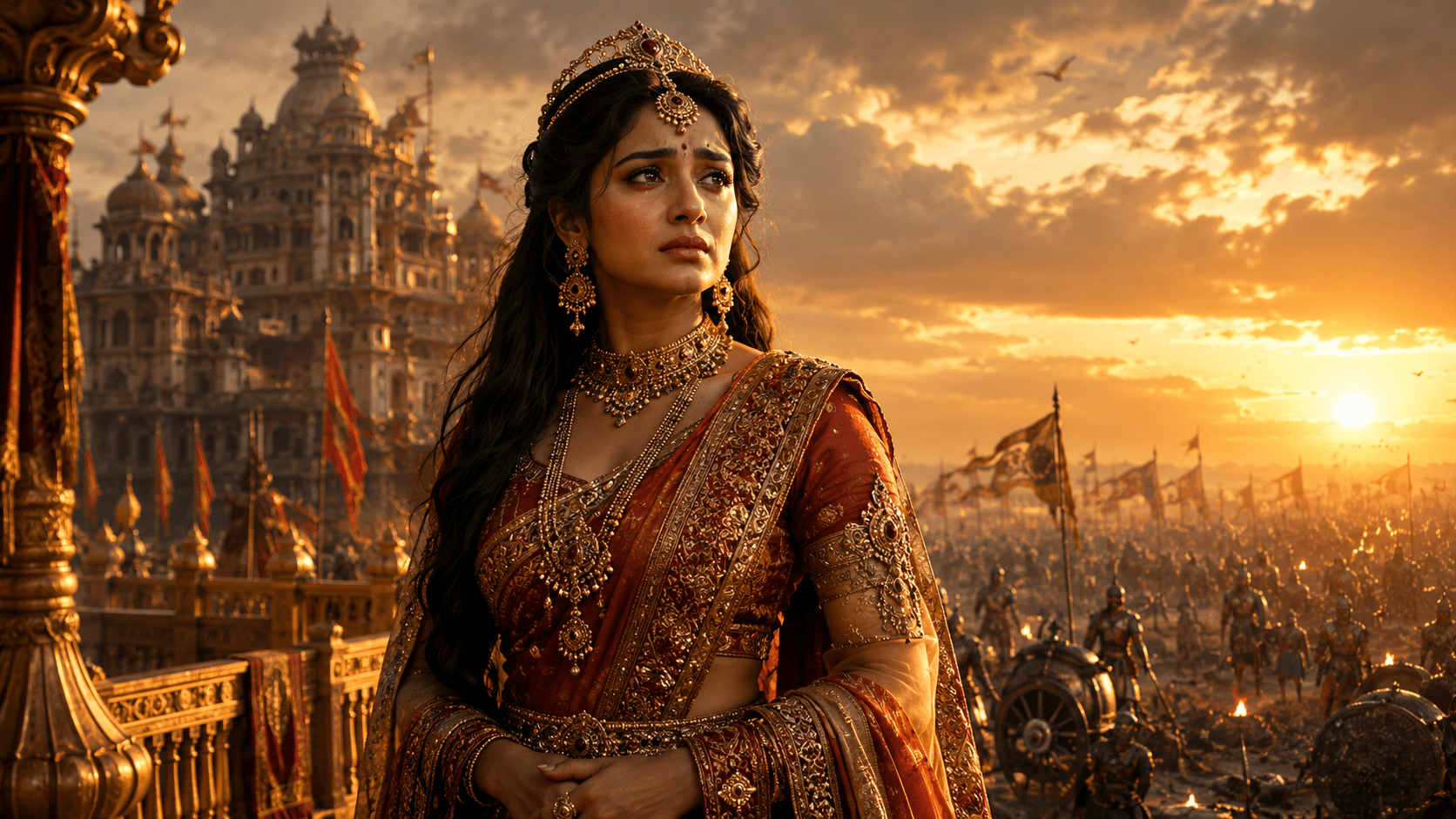
The Mahabharata is one of the greatest epics in world literature, filled with heroic warriors, wise sages, powerful kings, and influential women. Among the many women who shaped the destiny of the Kuru dynasty, Ambika occupies a significant place. Though she is not as widely discussed as Kunti, Gandhari, or Draupadi, Ambika played a crucial role in ensuring the continuation of the Kuru lineage.
As the wife of King Vichitravirya and the mother of Dhritarashtra, Ambika became an important link in the chain of events that ultimately led to the Kurukshetra War. Her life reflects the challenges faced by royal women in ancient India and highlights the importance of duty, sacrifice, and destiny.
H2: Who Was Ambika?
Ambika was one of the princesses of the Kingdom of Kashi. She was the daughter of the King of Kashi and the sister of Ambalika and Amba. The three sisters became famous in the Mahabharata because of the dramatic events surrounding their marriage.
Ambika later became the queen of Hastinapura after marrying King Vichitravirya, a member of the Kuru dynasty. She is primarily remembered as the mother of Dhritarashtra, the blind king of Hastinapura and father of the Kauravas.
H3: The Royal Family of Ambika
Ambika belonged to a noble and respected royal family. Her family connections included:
- Father: King of Kashi
- Sisters: Amba and Ambalika
- Husband: King Vichitravirya
- Son: Dhritarashtra
- Grandsons: The 100 Kauravas, including Duryodhana
Through her descendants, Ambika became one of the most influential maternal figures in the Mahabharata.
H2: The Swayamvara of the Princesses of Kashi
One of the most dramatic events in Ambika’s life occurred during her swayamvara ceremony.
King of Kashi organized a grand swayamvara for his daughters—Amba, Ambika, and Ambalika. Princes and kings from across India gathered to compete for their hands in marriage.
However, Bhishma, the mighty warrior of Hastinapura, arrived at the ceremony and forcibly carried away the three princesses on behalf of his half-brother Vichitravirya.
H3: Bhishma’s Intervention
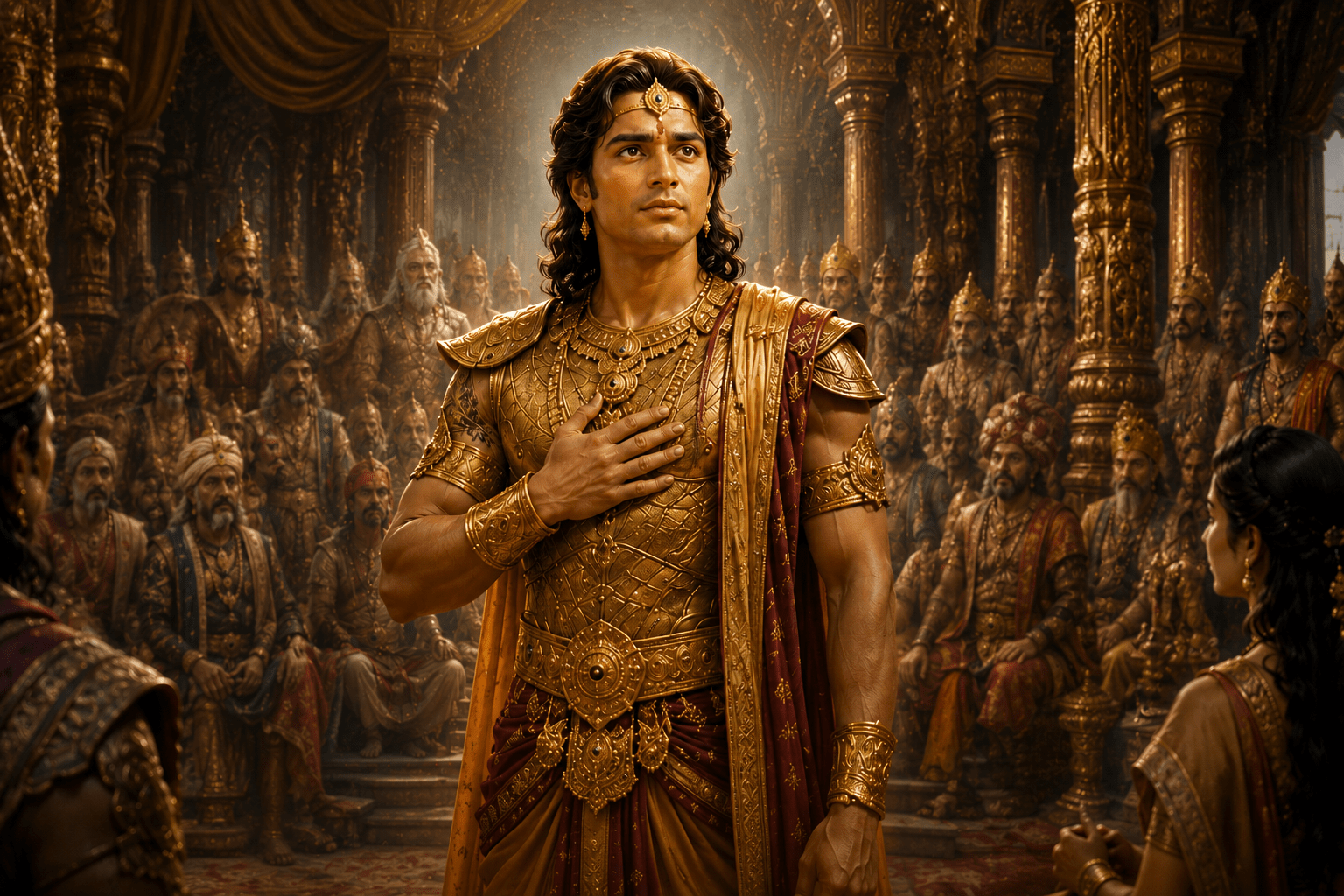
Bhishma believed that the princesses were suitable brides for Vichitravirya. Following the customs of warrior kings, he challenged and defeated all opposing rulers before taking the princesses to Hastinapura.
This event dramatically altered the lives of the three sisters and became one of the most memorable episodes in the Mahabharata.
H2: Marriage to Vichitravirya
After arriving in Hastinapura, Ambika and Ambalika were married to King Vichitravirya.
H3: A Short-Lived Marriage
Unfortunately, their married life was brief. Vichitravirya died at a young age without producing any children.
This created a serious crisis for the Kuru dynasty because there was no direct heir to continue the royal lineage.
H4: The Succession Problem
The death of Vichitravirya threatened the future of Hastinapura. Bhishma could not marry because he had taken a vow of lifelong celibacy. Therefore, the responsibility of preserving the dynasty fell upon Queen Mother Satyavati.
H2: The Practice of Niyoga
To ensure the continuation of the Kuru line, Satyavati turned to an ancient practice known as Niyoga.
H3: What Is Niyoga?
Niyoga was a traditional custom in which a respected man could father children on behalf of a deceased or childless husband to preserve family lineage.
Satyavati invited her son, the sage Vyasa, to perform this duty with the widowed queens Ambika and Ambalika.
H2: Ambika and Sage Vyasa
When the time came for Ambika to meet Vyasa, she was frightened by his appearance.
Vyasa had spent years performing severe penance in forests and hermitages. His appearance was rugged, with matted hair and intense features.
H3: Ambika’s Reaction
As Vyasa approached her, Ambika became terrified and closed her eyes.
Because of this reaction, Vyasa declared that the child born from their union would be physically strong but blind.
H4: Birth of Dhritarashtra
In due course, Ambika gave birth to Dhritarashtra.
Although he possessed extraordinary strength, wisdom, and leadership qualities, he was born blind. This blindness later prevented him from becoming king immediately and influenced many events in the Mahabharata.
H5: Symbolic Interpretation
Many scholars interpret Dhritarashtra’s blindness as symbolic. It reflects not only physical blindness but also emotional attachment and inability to judge his sons impartially.
H2: Ambika’s Second Encounter with Vyasa
Satyavati desired another son without any defects. She requested Ambika to meet Vyasa again.
H3: Ambika Sends a Maid
Still fearful of Vyasa, Ambika sent her maid instead of appearing herself.
In addition to treating Vyasa respectfully, the maid also kept a calm disposition.
As a result, a wise and virtuous child named Vidura was born.
H4: Birth of Vidura
Vidura became one of the wisest figures in the Mahabharata. Although he was not eligible to become king due to his birth status, he served as a trusted advisor and moral guide.
His wisdom often surpassed that of kings and warriors.
H2: Ambika’s Role as Mother of Dhritarashtra
After the birth of Dhritarashtra, Ambika focused on raising her son.
H3: Supporting the Heir
Despite his blindness, Dhritarashtra was educated in:
- Statecraft
- Politics
- Dharma
- Warfare theory
- Royal administration
Ambika ensured that he received the best possible upbringing.
H2: Ambika’s Place in the Kuru Dynasty
Ambika’s contribution to the Kuru dynasty was immense.
Without her, Dhritarashtra would not have been born, and the lineage leading to the Kauravas would not have existed.
H3: Influence on the Epic
The major events of the Mahabharata—including the rivalry between the Pandavas and Kauravas—can be traced back to the descendants of Ambika.
Thus, although she appears in only a few chapters, her impact resonates throughout the entire epic.
H2: Relationship with Ambalika
Ambika shared a close bond with her sister Ambalika.
H3: Parallel Destinies
The two sisters experienced remarkably similar lives:
- Both were princesses of Kashi.
- Both were abducted by Bhishma.
- Both married Vichitravirya.
- Both became widows.
- Both participated in Niyoga.
- Both became mothers of key figures in the Mahabharata.
While Ambika gave birth to Dhritarashtra, Ambalika became the mother of Pandu.
H2: Ambika’s Later Life
After the next generation took control of Hastinapura, Ambika gradually withdrew from public life.
H3: Life in Retirement
According to some traditions, Ambika accompanied Satyavati and Ambalika to the forest during their later years.
They chose a life of simplicity, meditation, and spiritual practice.
H4: End of Her Journey
The Mahabharata suggests that these royal women spent their final years in peace and detachment, away from palace politics.
H2: Lessons from Ambika’s Life
Ambika’s life offers several valuable lessons:
H3: 1. Duty Above Personal Desire
She fulfilled her responsibilities despite personal hardships and fears.
H3: 2. The Power of Destiny
Her brief reaction during the encounter with Vyasa changed the course of history.
H3: 3. Importance of Women in History
Although often overlooked, women like Ambika shaped the future of kingdoms and dynasties.
H3: 4. Courage During Difficult Times
As a widow and queen, she faced immense challenges yet continued to support the Kuru lineage.
H2: Legacy of Ambika
Ambika remains an important figure in Hindu mythology and the Mahabharata. Through her son Dhritarashtra and her descendants, she became one of the foundational mothers of the Kuru dynasty.
Her story reminds readers that even seemingly minor characters can have a profound influence on history. The fate of kingdoms, wars, and generations often depends on the choices and experiences of individuals whose stories deserve greater recognition.
H6: Conclusion
Ambika’s journey from a princess of Kashi to the queen of Hastinapura and mother of Dhritarashtra is a tale of duty, sacrifice, and destiny. Though she lived in the background of the Mahabharata’s grand narrative, her actions significantly influenced the future of the Kuru dynasty. Understanding Ambika’s life helps readers appreciate the depth and complexity of the women who shaped one of India’s greatest epics.
Frequently Asked Questions (FAQs)
1. Who was Ambika in the Mahabharata?
Ambika was the wife of King Vichitravirya and the mother of Dhritarashtra.
2. Who were Ambika’s sisters?
Her sisters were Amba and Ambalika.
3. Who abducted Ambika from her swayamvara?
Bhishma abducted her along with her sisters.
4. Why did Bhishma abduct Ambika?
He wanted her to marry his half-brother Vichitravirya.
5. Who was Ambika’s husband?
King Vichitravirya of Hastinapura.
6. Did Ambika have children with Vichitravirya?
No, Vichitravirya died before they had children.
7. What is Niyoga?
An ancient practice used to continue a family lineage through a designated man.
8. Who fathered Ambika’s child?
The sage Vyasa.
9. Who was Ambika’s son?
Dhritarashtra.
10. Why was Dhritarashtra born blind?
Because Ambika closed her eyes during her encounter with Vyasa.
11. Was Dhritarashtra physically strong?
Yes, he was exceptionally strong despite being blind.
12. Did Ambika meet Vyasa more than once?
She was asked to, but later sent her maid instead.
13. Who was born from the maid and Vyasa?
Vidura.
14. Was Vidura Ambika’s son?
No, Vidura was born from Ambika’s maid.
15. What was Ambika’s role in the Kuru dynasty?
She ensured the continuation of the Kuru lineage through Dhritarashtra.
16. Who were Ambika’s grandchildren?
The Kauravas, including Duryodhana.
17. What happened to Ambika later in life?
She retired from royal life and went to the forest.
18. What lessons can be learned from Ambika?
Duty, resilience, destiny, and sacrifice.
19. Why is Ambika important in the Mahabharata?
She was the mother of Dhritarashtra and ancestor of the Kauravas.
20. What is Ambika’s legacy?
Her descendants played central roles in the events of the Mahabharata.
This article is optimized for SEO with target keywords such as Ambika in the Mahabharata, Mother of Dhritarashtra, Ambika and Vyasa, Kuru Dynasty, and Mahabharata characters, making it suitable for publication on Ratnam Strategy.