Admin
Admin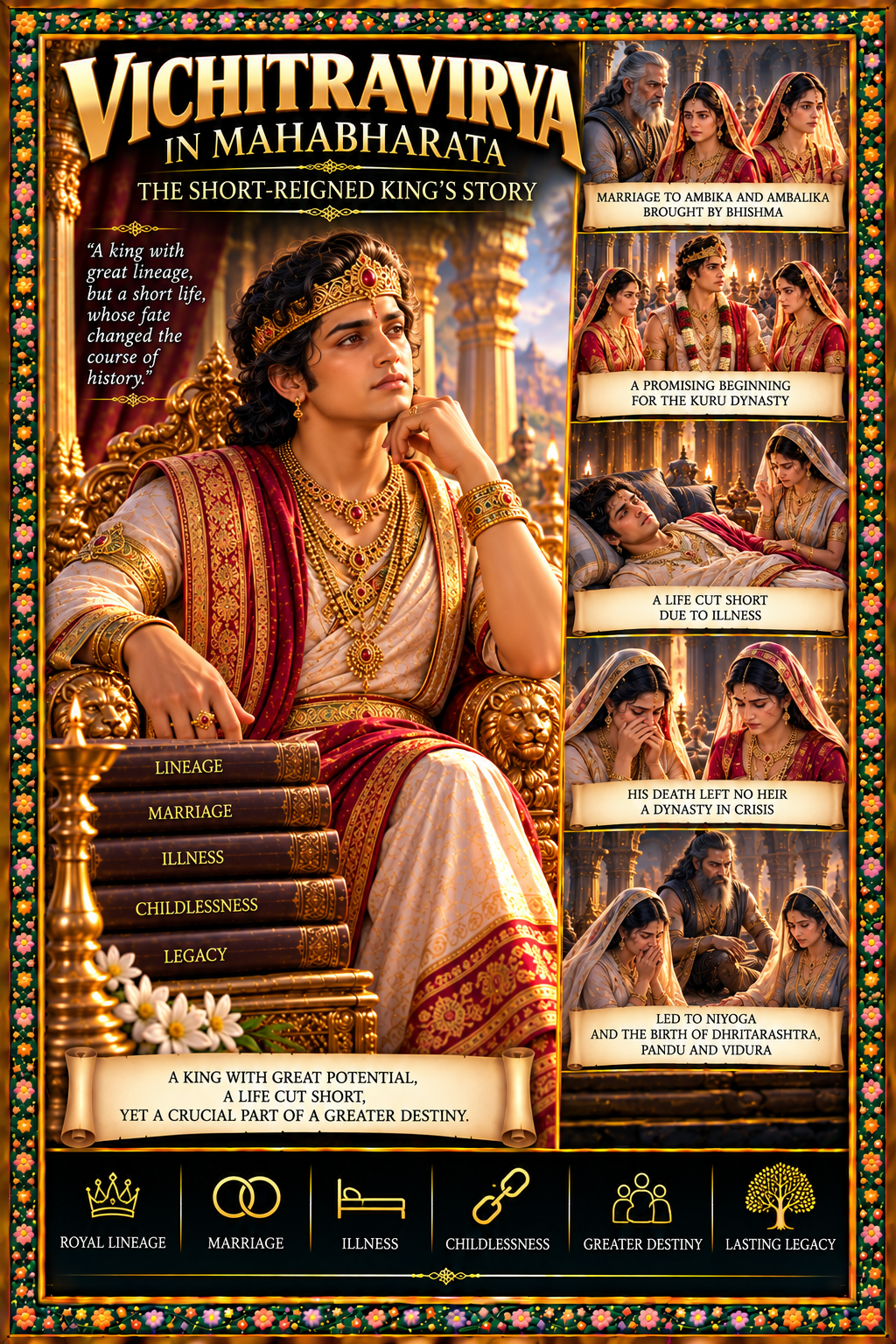
Vichitravirya in the Mahabharata – The Short-Reigned King Who Changed Destiny
Vichitravirya in Mahabharata
Vichitravirya in Mahabharata : The Mahabharata, one of the greatest epics of ancient India, is filled with powerful kings, warriors, and complex characters. Among them stands Vichitravirya, a lesser-discussed yet highly significant figure. Though his life was short, his role in shaping the destiny of the Kuru dynasty was immense.
Vichitravirya was the son of King Shantanu and Queen Satyavati, and the younger half-brother of the mighty Bhishma. His life, marked by royal privilege, fragile health, and untimely death, set in motion events that eventually led to the great Kurukshetra war.
Birth and Lineage of Vichitravirya – Vichitravirya in Mahabharata

Vichitravirya was born into the illustrious Kuru dynasty, one of the most powerful royal families in the Mahabharata. His parents were:
- King Shantanu – the ruler of Hastinapura
- Queen Satyavati – a woman of humble origin who became queen
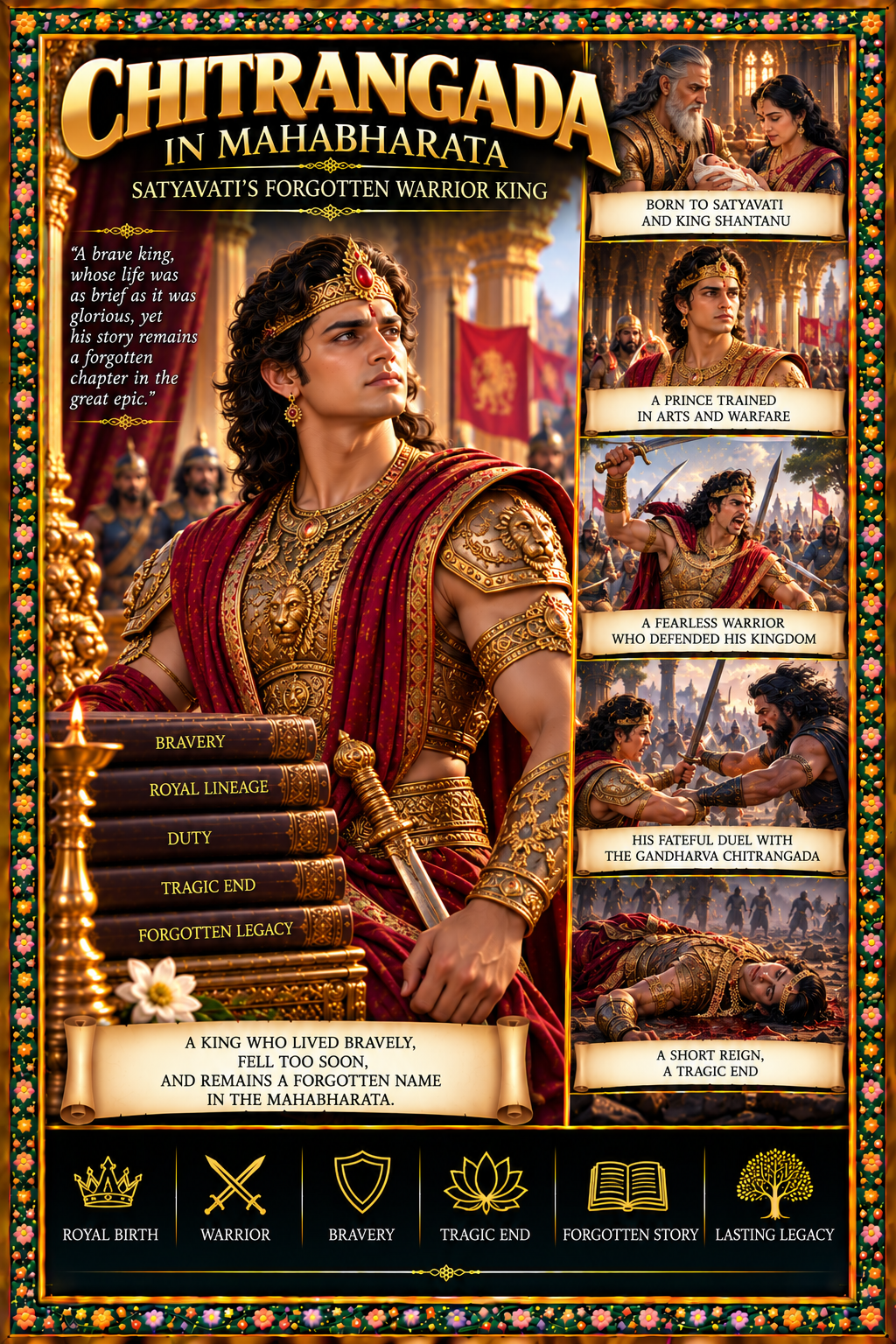
He had an elder brother, Chitrangada, who initially ascended the throne. However, after Chitrangada’s untimely death in battle, the young Vichitravirya became the heir to the throne.
Bhishma’s Role in His Life – Vichitravirya in Mahabharata
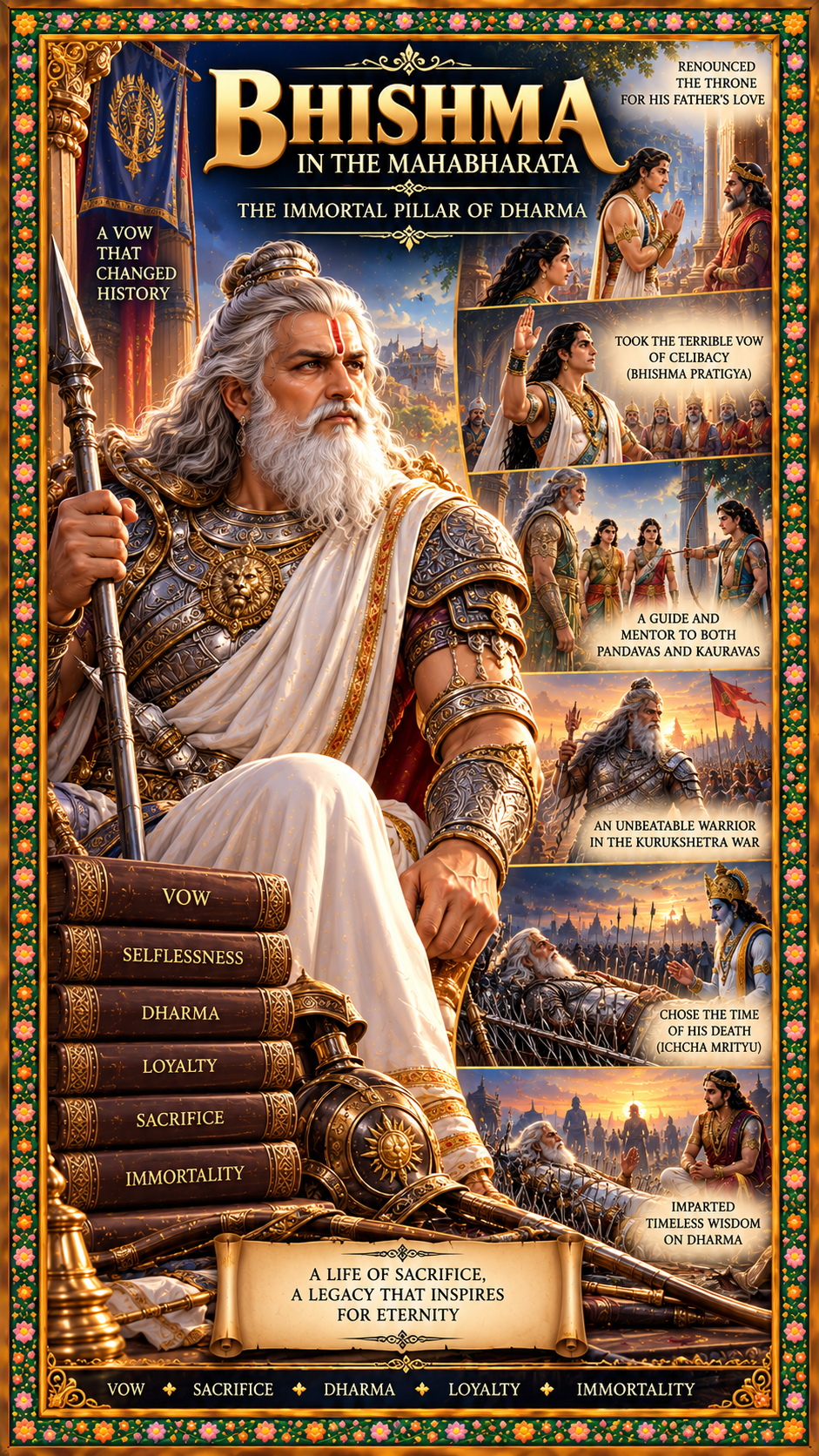
Vichitravirya’s life was deeply influenced by his half-brother, Bhishma, one of the most revered warriors in the Mahabharata.
Bhishma had taken a terrible vow of celibacy to ensure that Satyavati’s sons would inherit the throne. This sacrifice played a crucial role in Vichitravirya’s rise to power.
When Vichitravirya was still too young to rule, Bhishma acted as his guardian and protector. He ensured the kingdom remained stable and prepared Vichitravirya to become king.
Ascension to the Throne – Vichitravirya in Mahabharata
Vichitravirya became king of Hastinapura after Chitrangada died. However, due to his young age, Bhishma continued to manage the affairs of the kingdom.
Under Bhishma’s guidance, the kingdom flourished, and Vichitravirya enjoyed the privileges of royalty without bearing full responsibility in his early years.
Marriage to Ambika and Ambalika – Vichitravirya in Mahabharata

One of the most important events in Vichitravirya’s life was his marriage.
Bhishma attended the swayamvara of the princesses of Kashi and abducted three sisters:
- Amba
- Ambika
- Ambalika
Since Bhishma had vowed celibacy, he arranged the marriage of Ambika and Ambalika to Vichitravirya. Amba, however, had her own story and did not marry him.
These marriages were meant to ensure the continuation of the Kuru lineage.
Personality and Nature of Vichitravirya – Vichitravirya in Mahabharata
Vichitravirya is often portrayed as a king who was:
- Pleasure-loving
- Physically weak
- Dependent on others
Unlike Bhishma, who embodied discipline and strength, Vichitravirya lacked the same qualities. He spent much of his time enjoying royal luxuries and companionship rather than focusing on governance.
The Untimely Death of Vichitravirya – Vichitravirya in Mahabharata

Tragically, Vichitravirya’s life was very short. He died young, reportedly due to illness, often described as tuberculosis or a disease caused by excessive indulgence.
His death occurred without leaving any heirs, which created a major crisis for the Kuru dynasty.
The Crisis of Succession – Vichitravirya in Mahabharata
The death of Vichitravirya without children led to a dangerous power vacuum in Hastinapura.
With no direct heirs:
- The Kuru lineage was at risk
- The stability of the kingdom was threatened
- Satyavati was deeply worried about the future
This situation required an unconventional solution.
The Practice of Niyoga – Vichitravirya in Mahabharata
To preserve the royal lineage, Satyavati turned to an ancient practice called Niyoga.
She invited her first-born son, Vyasa, to father children with the widows of Vichitravirya:
- Ambika gave birth to Dhritarashtra
- Ambalika gave birth to Pandu
- A maid gave birth to Vidura
These three sons became central figures in the Mahabharata, ultimately leading to the Kurukshetra war.
Legacy of Vichitravirya
Though Vichitravirya did not have children directly, his legacy is profound.
Through the Niyoga practice:
- He became the link between the old Kuru kings and the next generation
- His wives became mothers of key Mahabharata figures
- His death triggered events leading to the Pandavas and Kauravas
Without Vichitravirya, the story of the Mahabharata would have been entirely different.
Importance in the Mahabharata – Vichitravirya in Mahabharata
Vichitravirya’s importance lies not in his actions but in the consequences of his life and death.
He represents:
- The fragility of royal succession
- The impact of personal weakness on a kingdom
- The importance of lineage in ancient India
His story also highlights how even seemingly minor characters can influence major historical events.
Symbolism of Vichitravirya’s Life – Vichitravirya in Mahabharata
Vichitravirya’s life carries symbolic meaning:
- His short life reflects impermanence
- His dependence shows the importance of leadership strength
- His death signifies the beginning of chaos in the Kuru dynasty
Lessons from Vichitravirya’s Story – Vichitravirya in Mahabharata
There are several lessons we can learn:
- Leadership requires discipline and responsibility
- Weak rulers can destabilize even strong kingdoms
- Decisions made for succession have long-term consequences
- Destiny often unfolds through unexpected events
Vichitravirya in Modern Interpretation
In modern storytelling and analysis, Vichitravirya is often viewed as a tragic figure.
He was born into power but lacked the strength to sustain it. His life reminds us that inheritance alone does not guarantee greatness.
Conclusion – Vichitravirya in Mahabharata
Vichitravirya may not be as famous as Bhishma, Arjuna, or Krishna, but his role in the Mahabharata is undeniably significant.
His life and death created a turning point in the Kuru dynasty, leading to the birth of Dhritarashtra, Pandu, and Vidura—figures who shaped the destiny of the epic.
In many ways, Vichitravirya is the silent catalyst behind the Mahabharata’s greatest conflict.
FAQs on Vichitravirya in the Mahabharata
1. Who was Vichitravirya?
Vichitravirya was a king of Hastinapura and the son of Shantanu and Satyavati.
2. Who were Vichitravirya’s parents?
His parents were King Shantanu and Queen Satyavati.
3. Who was his elder brother?
His elder brother was Chitrangada.
4. Who raised Vichitravirya?
Bhishma played a major role in raising and protecting him.
5. Who were his wives?
Ambika and Ambalika were his wives.
6. Why did Bhishma abduct the Kashi princesses?
To arrange marriages for Vichitravirya.
7. Did Vichitravirya have children?
No, he died childless.
8. How did Vichitravirya die?
He died young due to illness.
9. What is Niyoga?
An ancient practice where a designated person fathers children for a deceased man.
10. Who was Vyasa?
Vyasa was Satyavati’s son and the author of the Mahabharata.
11. Who were born through Niyoga?
Dhritarashtra, Pandu, and Vidura.
12. Why is Vichitravirya important?
In the Mahabharata, his death triggered major events.
13. Was Vichitravirya a strong king?
He is generally considered weak and pleasure-loving.
14. Who succeeded him?
There was no direct successor; the lineage continued through Niyoga.
15. What dynasty did he belong to?
The Kuru dynasty.
16. What was his personality like?
He was indulgent and less focused on governance.
17. How is he remembered?
As a tragic and pivotal figure.
18. What role did Satyavati play after his death?
She ensured continuation of the lineage through Niyoga.
19. What is his connection to the Pandavas and Kauravas?
He was their ancestor through his wives.
20. Why is his story significant today?
It teaches lessons about leadership, responsibility, and destiny.