Admin
Admin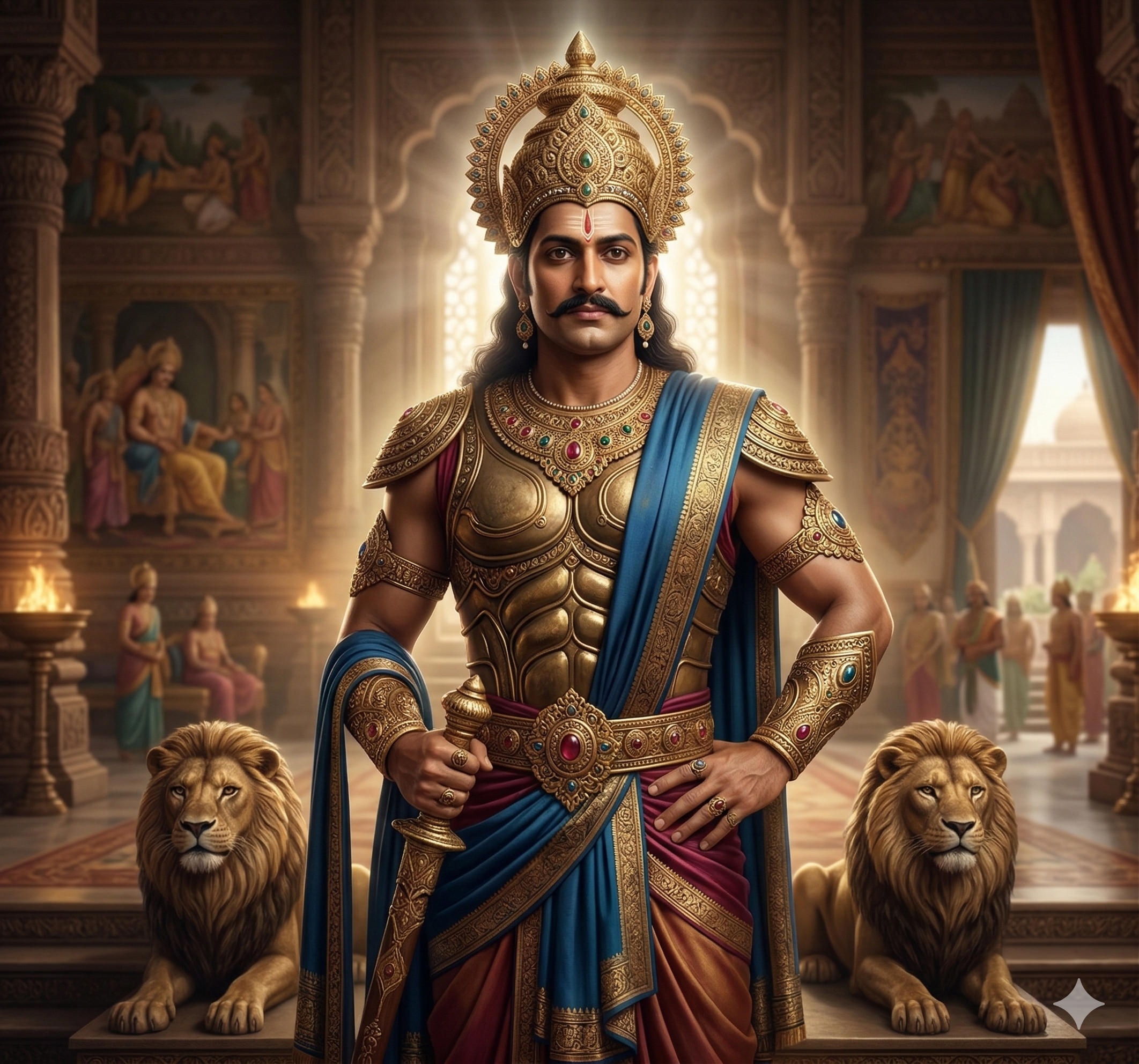
Panduraju in Mahabharata – The Tragic King Who Shaped Destiny
About the Author
Raja Ratnam is a passionate researcher and writer specialising in Indian mythology and epic stories.
With years of experience studying texts like Ramayana, Mahabharata, Panduraju, Festivals, Meaning and Significance of Maha Shivaratri – Lord Shiva, the Auspicious One, Navagrahas, Ketu Deva and other cultural scriptures,
he brings insightful interpretations and practical lessons from these timeless stories.
Raja Ratnam believes in making mythology accessible and meaningful for modern readers,
helping them understand the moral, ethical, and cultural significance behind characters like Rama, Laxman, Shani Deva, and many more.
Connect with the author: info@ratnamstrategy.com
Introduction -The Forgotten King Behind a Legendary War (Panduraju)
When we think of the Mahabharata, our minds immediately rush to great warriors…
The unmatched archer Arjuna…
The mighty Bhima…
The righteous Yudhishthira…
Or even the tragic hero Karna…
We remember their battles… their victories… their choices.
But have you ever wondered…
👉 Who set all of this into motion?
👉 Whose life silently shaped the greatest war in history?
The answer is not a warrior standing on the battlefield…
but a king who never even fought in the war.
Panduraju.
A King History Almost Forgot…
Panduraju was not just another ruler of Hastinapura…
He was a king of immense strength, discipline, and vision.
A man who conquered kingdoms…
A man who ruled with justice…
A man who had everything a king could ever desire.
And yet…
His story is not remembered for his victories.
It is remembered for his silence… his suffering… and his fate.
The Beginning of a Tragedy… Panduraju
At the peak of his power, when life seemed perfect…
Fate intervened.
Not through war.
Not through enemies.
But through a single moment—
a mistake that would change everything.
A curse.
A curse so powerful… that it took away not just his kingdom,
but his ability to live a normal life.
From that moment on…
The king of Hastinapura became a prisoner of his own destiny.
From Palace to Forest… From Power to Pain – Panduraju
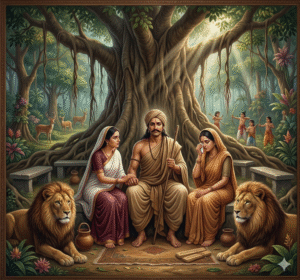
Imagine losing everything overnight…
The throne…
The crown…
The life you built with pride…
Panduraju walked away from it all.
Into the forest.
Into isolation.
Into a life filled with regret and unanswered questions.
But destiny had bigger plans.
Because in that very forest…
in that very suffering…
The seeds of the greatest story ever told were planted.
A Story That Changed the World
Panduraju’s life was not about what he achieved…
but about what he unknowingly created.
From his pain… came the birth of heroes.
From his curse… came divine destiny.
From his silence… came the roar of the Kurukshetra War.
And ultimately…
the timeless wisdom of the Bhagavad Gita.
Why This Story Matters Today
Panduraju’s life is not just mythology…
It is a mirror.
A reminder that:
- Even the strongest can fall
- Even a single moment can change everything
- And sometimes… our greatest struggles create the greatest impact
A Journey You Cannot Miss
This is not just the story of a king…
This is the story of:
- A man cursed by fate
- A father who never saw his sons rise
- And a silent force behind the greatest epic ever written
Welcome to the untold, emotional journey of Panduraju…
the king who lost everything—yet shaped eternity.
Who Was Panduraju?
Panduraju, also known as King Pandu, was the son of Vichitravirya through sage Vyasa. He was the younger brother of Dhritarashtra.
Due to Dhritarashtra’s blindness, Pandu became the king of Hastinapura, ruling with wisdom, strength, and fairness.
Panduraju’s Rule and Glory
Panduraju was a brave warrior and successful ruler. He expanded his kingdom through Digvijaya (conquest of all directions) and established peace and prosperity.
His leadership made Hastinapura powerful and respected across Bharatavarsha.
The Curse That Changed Everything-Panduraju
Panduraju’s life took a tragic turn when he accidentally killed a sage named Kindama, who was in the form of a deer.
As he died, the sage cursed Pandu:
“If you ever approach your wives with desire, you will die instantly.”
This curse forced Pandu to renounce his royal life and retreat into the forest with his wives:
- Kunti
- Madri
Birth of the Pandavas – A Divine Blessing
Since Pandu could not have children, Kunti revealed a divine boon given by sage Durvasa.
Using this mantra, she invoked gods to bear children:
- Yudhishthira – son of Dharma
- Bhima – son of Vayu
- Arjuna – son of Indra
Madri used the mantra to give birth to:
- Nakula
- Sahadeva
Thus, the mighty Pandavas were born.
Panduraju’s Death – A Heartbreaking End

Years later, unable to control his emotions, Pandu approached Madri.
The curse took effect instantly—and Panduraju died.
Madri, filled with guilt, chose to perform Sati, leaving Kunti to raise all five Pandavas alone.
Panduraju’s Legacy
Even though Panduraju did not live to see his sons grow, his legacy shaped the entire Mahabharata.
- He was the father of the Pandavas
- His curse led to divine births
- His life indirectly caused the Kurukshetra War
Without Pandu, there would be no story of dharma vs adharma.
Key Lessons from Panduraju’s Life
- Actions have consequences – even unintentional ones
- Desire can lead to downfall
- Destiny cannot be escaped
- Sacrifice shapes future generations
Conclusion – The Eternal Impact of Panduraju
Panduraju’s life is not just a story of a king—it is a profound reflection of human weakness, destiny, and divine purpose within the Mahabharata.
Despite being a powerful ruler, Pandu could not escape the consequences of a single moment of ignorance. His accidental mistake led to a curse that completely changed the course of his life. This reminds us that even the strongest individuals are vulnerable to fate, and one action can alter destiny forever.
Yet, Panduraju’s story is not only about tragedy—it is also about transformation and legacy.
When he renounced his kingdom and chose a life in the forest, he symbolized detachment from material power. In many ways, his life reflects the philosophical teachings of dharma—where acceptance of fate becomes a path to higher purpose.
Through Kunti and Madri, the birth of the Pandavas was not ordinary—it was divine. This shows that even in suffering, greater cosmic plans are at work.
Panduraju never witnessed the greatness of his sons:
- Yudhishthira becoming the embodiment of dharma
- Bhima showcasing unmatched strength
- Arjuna becoming the greatest archer
- Nakula and Sahadeva representing wisdom and beauty
But his absence itself became a crucial force—shaping their struggles, their unity, and their rise.
In a deeper sense, Panduraju represents a timeless truth:
“Sometimes, a person’s role in history is not in what they achieve personally, but in what they set into motion.”
Without Pandu:
- There would be no Pandavas without the Pandavas
- The conflict with the Kauravas would not have escalated
- The great Kurukshetra War would not have occurred
- And the world would not have received the sacred teachings of the Bhagavad Gita
His life teaches us that pain, loss, and limitations are often the seeds of something far greater than we can imagine.
Final Thought – Panduraju
Panduraju may not be remembered as a warrior of the battlefield, but he is undoubtedly one of the most important architects of destiny in the Mahabharata.
His story quietly reminds us:
“We may not control our fate, but our role in shaping the future is always significant.”