Trending News:Life of Bhima in Mahabharata – The Strongest PandavaKing Dharma Raju in the MahabharataWho Was Dronacharya in the Mahabharata? Complete GuideAshwatthama in Mahabharata – Tragic Warrior, Immortal Curse & Untold TruthsMeaning and Significance of Maha Shivaratri – Lord Shiva, the Auspicious OneKrishna in Mahabharata: The Divine Role of the Supreme GuideBhagavad Gita: Complete Story, Teachings & Timeless Life LessonsArjuna in Mahabharata The Greatest Archer and Hero of DharmaStory of Abhimanyu in the MahabharataUttara in Mahabharata: The Graceful Princess Who Became Mother of the Pandava LegacyShikhandi in Mahabharata: The Warrior Who Changed the Fate of KurukshetraRatha Saptami 2026: Meaning, Significance, Rituals, Benefits & Lord Surya WorshipMahabharata: Ghatotkacha and Kurukshetra War: The Mighty RakshasaA Model of Ethical Governance: Rama Rajya ExplainedMakar Sankranti: Significance, Traditions, Rituals, and Celebrations Across IndiaIn the Mahabharata, Vidura is seen as the wisest man and the voice of Dharma for all timeSatyavati in Mahabharatam – The Woman Who Shaped DestinyGoddess Ganga in Mahabharatam: Divine Mother, Sacred River & Symbol of LiberationKing Shantanu in the Mahabharata: Life, Love, Dharma, and LegacyBhishma in the Mahabharata – The Immortal Pillar of DharmaNavagrahas — Soul’s Journey is guided by the Cosmic TeacherKetu Deva — The Planet of Moksha, Detachment, and Spiritual AwakeningRahu Deva — The Shadow Planet of Illusion, Obsession, and TransformationShukra Deva(Venus) — The Planet of Love, Beauty, Desire & Divine GuidanceSurya Deva (Sun) — The Eternal Source of Light, Power, and Divine EnergyShani Deva (Saturn) – Karma, Justice, DisciplineGuru Deva (Brihaspati / Jupiter) — The Divine Teacher of Gods and the Light of WisdomBudha (Mercury) — The Planet of Intelligence, Communication & WitMangala (Mars) — The Fiery Planet of Power, Courage, and DisciplineChandra Deva – The Radiant Moon God of Mind, Peace, and EmotionKarthika Poornima 2025 – Significance, Rituals, and Celebration of the Sacred Full Moon DayMaa Mahagauri (Day 8 of Navratri): The Goddess of Purity and SerenityMaa Katyayani – Day 6 of Navratri | Story, Puja Vidhi, Significance & MantraMaa Chandraghanta – Navratri Day 3 Puja Vidhi, Mantra & SignificanceMaa Brahmacharini – Navratri Day 2 Puja, Mantra & SignificanceMaa Shailaputri – Navratri Day 1 Puja Vidhi, Mantra & SignificanceGajanana Avatar of Lord Ganesha – Story, Symbolism & SignificanceMahodara Avatar of Lord Ganesha – Story, Symbolism & SignificanceKhairatabad Ganesh – This Pandal is Legendary in HyderabadEkadanta (The One with a Single Tusk): Meaning, Symbolism & BenefitsVakratunda Ganapathi – The Symbol of Overcoming All ChallengesHanuman: The Ramayana – The Unmatched Hero of the RamayanaAbout Lord Ganesh – The Beloved Remover of Obstacles and God of WisdomVaralakshmi Vratam 2025 – Significance, Puja Vidhanam & Vrat KathaLakshmana from Ramayana: An Unsung Hero for Today’s YouthLord Rama: The Ideal Hero of the Ramayana – A Role Model for the Present GenerationHello world!
Trending News:Life of Bhima in Mahabharata – The Strongest PandavaKing Dharma Raju in the MahabharataWho Was Dronacharya in the Mahabharata? Complete GuideAshwatthama in Mahabharata – Tragic Warrior, Immortal Curse & Untold TruthsMeaning and Significance of Maha Shivaratri – Lord Shiva, the Auspicious OneKrishna in Mahabharata: The Divine Role of the Supreme GuideBhagavad Gita: Complete Story, Teachings & Timeless Life LessonsArjuna in Mahabharata The Greatest Archer and Hero of DharmaStory of Abhimanyu in the MahabharataUttara in Mahabharata: The Graceful Princess Who Became Mother of the Pandava LegacyShikhandi in Mahabharata: The Warrior Who Changed the Fate of KurukshetraRatha Saptami 2026: Meaning, Significance, Rituals, Benefits & Lord Surya WorshipMahabharata: Ghatotkacha and Kurukshetra War: The Mighty RakshasaA Model of Ethical Governance: Rama Rajya ExplainedMakar Sankranti: Significance, Traditions, Rituals, and Celebrations Across IndiaIn the Mahabharata, Vidura is seen as the wisest man and the voice of Dharma for all timeSatyavati in Mahabharatam – The Woman Who Shaped DestinyGoddess Ganga in Mahabharatam: Divine Mother, Sacred River & Symbol of LiberationKing Shantanu in the Mahabharata: Life, Love, Dharma, and LegacyBhishma in the Mahabharata – The Immortal Pillar of DharmaNavagrahas — Soul’s Journey is guided by the Cosmic TeacherKetu Deva — The Planet of Moksha, Detachment, and Spiritual AwakeningRahu Deva — The Shadow Planet of Illusion, Obsession, and TransformationShukra Deva(Venus) — The Planet of Love, Beauty, Desire & Divine GuidanceSurya Deva (Sun) — The Eternal Source of Light, Power, and Divine EnergyShani Deva (Saturn) – Karma, Justice, DisciplineGuru Deva (Brihaspati / Jupiter) — The Divine Teacher of Gods and the Light of WisdomBudha (Mercury) — The Planet of Intelligence, Communication & WitMangala (Mars) — The Fiery Planet of Power, Courage, and DisciplineChandra Deva – The Radiant Moon God of Mind, Peace, and EmotionKarthika Poornima 2025 – Significance, Rituals, and Celebration of the Sacred Full Moon DayMaa Mahagauri (Day 8 of Navratri): The Goddess of Purity and SerenityMaa Katyayani – Day 6 of Navratri | Story, Puja Vidhi, Significance & MantraMaa Chandraghanta – Navratri Day 3 Puja Vidhi, Mantra & SignificanceMaa Brahmacharini – Navratri Day 2 Puja, Mantra & SignificanceMaa Shailaputri – Navratri Day 1 Puja Vidhi, Mantra & SignificanceGajanana Avatar of Lord Ganesha – Story, Symbolism & SignificanceMahodara Avatar of Lord Ganesha – Story, Symbolism & SignificanceKhairatabad Ganesh – This Pandal is Legendary in HyderabadEkadanta (The One with a Single Tusk): Meaning, Symbolism & BenefitsVakratunda Ganapathi – The Symbol of Overcoming All ChallengesHanuman: The Ramayana – The Unmatched Hero of the RamayanaAbout Lord Ganesh – The Beloved Remover of Obstacles and God of WisdomVaralakshmi Vratam 2025 – Significance, Puja Vidhanam & Vrat KathaLakshmana from Ramayana: An Unsung Hero for Today’s YouthLord Rama: The Ideal Hero of the Ramayana – A Role Model for the Present GenerationHello world!
Raja Ratnam is a passionate researcher and writer specializing in Indian mythology and epic stories. With years of experience studying texts like Ramayana, Mahabharata, Bhishma Pitamaha, Navagraha’s Ketu Deva and other cultural scriptures, he brings insightful interpretations and practical lessons from these timeless stories.
Raja Ratnam believes in making mythology accessible and meaningful for modern readers, helping them understand the moral, ethical, and cultural significance behind characters like Rama, Laxman, Shani Deva, and many more.
Connect with the author: info@ratnamstrategy.com
Introduction
Bhishma, also known as Bhishma Pitamaha, stands as one of the most revered, tragic, and powerful figures in the Mahabharata. He is not merely a warrior but a symbol of unbreakable vows, sacrifice, loyalty, and dharma. His life story is both inspiring and heartbreaking, showing how even righteousness can lead to suffering when bound by rigid duty.
Birth of Bhishma – Devavrata, the Son of Destiny
Devavrata, the son of King Shantanu, ruler of the Kuru dynasty, and Ganga, the goddess of the River Ganga, was Bhishma’s birth name. Devavrata was no ordinary child. Trained by great sages and blessed by celestial beings, he mastered:
Advanced warfare
Statecraft and governance
Vedic knowledge and discipline
From a young age, he was destined to become a legendary protector of the Kuru dynasty.
The Terrible Vow – Why He Is Called Bhishma
The turning point of Devavrata’s life came when King Shantanu wished to marry Satyavati. In order to inherit the throne, her father demanded that only her children inherit it.
To fulfill his father’s happiness, Devavrata took a terrible (bhīṣaṇa) vow:
He renounced the throne forever
He vowed lifelong celibacy (Brahmacharya)
The gods themselves showered flowers from the heavens, and from that moment, Devavrata became Bhishma, the one who took an impossible vow.
This single decision shaped the entire future of the Mahabharata.
Bhishma as the Guardian of the Kuru Throne
Bhishma became the backbone of the Kuru kingdom. He:
Crowned kings
Protected Hastinapura
Maintained royal discipline
Acted as teacher, guardian, and moral authority
Even when the kings were weak or flawed, Bhishma stood firm as the protector of the throne, not the throne-holder.
Bhishma and His Inner Conflict
Despite his greatness, Bhishma’s life was filled with silent suffering.
He knew:
The injustice done to Pandavas
The cruelty of Duryodhana
The manipulation of Shakuni
Yet, bound by his vow to serve the throne of Hastinapura, he remained loyal—even when dharma was compromised.
This conflict makes Bhishma deeply human:
A man who knew what was right, yet was trapped by his own promise.
Role of Bhishma in the Kurukshetra War
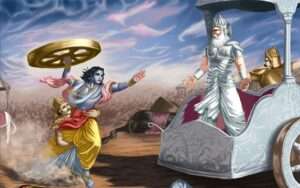
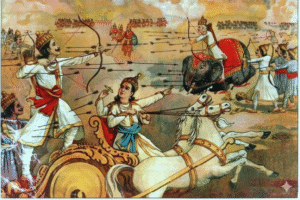
Bhishma became the Commander-in-Chief of the Kaurava army for the first ten days of the Kurukshetra war.
Key highlights:
He fought fiercely but never aimed to kill the Pandavas
His presence made the Kaurava army nearly invincible
Even Krishna acknowledged that Bhishma could not be defeated by ordinary means
Fall of Bhishma – The Bed of Arrows
Knowing Bhishma’s weakness, Krishna guided Arjuna to place Shikhandi in front of him. Bhishma, bound by his vow never to fight a woman or one born female, lowered his weapons.
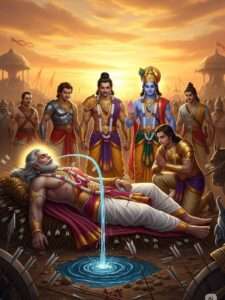
Arjuna then shot countless arrows, and Bhishma fell — resting on a bed of arrows, still alive.
This moment is one of the most powerful images in the Mahabharata:
A warrior who could choose the moment of his death
A teacher lying wounded, yet calm and wise
Ichha Mrityu – Choosing the Time of Death
Bhishma had a divine boon: Ichha Mrityu (death at will). He chose not to die immediately and waited for the auspicious Uttarayana.
During this time:
He taught Yudhishthira about rajadharma, moksha, and governance
These teachings later became the foundation of righteous kingship
Only after fulfilling his duty as a teacher did Bhishma leave his mortal body.
Dharma must be guided by compassion and wisdom, not just loyalty.
Why Bhishma Is Still Relevant Today
In modern life, Bhishma reminds us:
To think deeply before making lifelong commitments
To balance principles with humanity
To question authority when justice is at stake
He is not a symbol of failure, but of tragic greatness.
Conclusion
Bhishma is the moral axis of the Mahabharata — strong, pure, and unshaken, yet deeply wounded by destiny and duty. His story is not just ancient history but a timeless lesson on leadership, sacrifice, and ethical conflict.
Even today, Bhishma Pitamaha stands tall as one of the greatest characters ever written in world literature.
FAQs
Who was Bhishma in the Mahabharata? Bhishma was the grand patriarch of the Kuru dynasty, son of King Shantanu and Goddess Ganga, known for his unmatched devotion to duty and truth.
What was Bhishma’s original name? Bhishma’s original name was Devavrata, given at birth before he took his legendary vow.
Why did Devavrata become Bhishma? He became Bhishma after taking a terrible vow of lifelong celibacy and renouncing the throne to fulfill his father’s wish.
What is Bhishma’s terrible vow (Bhishma Pratigya)? Bhishma vowed never to marry and to serve the Kuru throne selflessly for life, ensuring Satyavati’s descendants ruled.
Who were Bhishma’s parents? King Shantanu and Goddess Ganga had a son named Bhishma.
Did Bhishma fight in the Kurukshetra war? Yes. Bhishma served as the Commander-in-Chief of the Kaurava army for the first ten days of the war.
Why didn’t Bhishma kill the Pandavas? Though fighting for the Kauravas, Bhishma loved the Pandavas and never intended to kill them, restraining his full power.
How was Bhishma defeated? Bhishma was defeated when Arjuna used Shikhandi as a shield, knowing Bhishma would not fight someone born female.
What is the “Bed of Arrows”? After being struck by countless arrows, Bhishma lay suspended on them, alive and conscious—this is known as the Bed of Arrows.
What is Ichha Mrityu? Ichha Mrityu is the boon that allowed Bhishma to choose the time of his death.
Why did Bhishma wait for Uttarayana to die? Uttarayana is considered spiritually auspicious. Bhishma chose this period to attain liberation (moksha).
What teachings did Bhishma give before his death? Bhishma taught Yudhishthira about:
Raja Dharma (duties of a king)
Ethics and governance
Compassion and justice
Was Bhishma right or wrong in supporting the Kauravas? Bhishma was morally right but bound by duty. His story shows how rigid loyalty can conflict with true dharma.
Is Bhishma considered immortal? No, but he had control over his death, making him appear almost immortal during his lifetime.
What does Bhishma symbolize? Bhishma symbolizes sacrifice, discipline, loyalty, and the tragic cost of inflexible vows.
Why is Bhishma called Pitamaha? He is called Pitamaha (grandfather) because he belonged to the elder generation of both Pandavas and Kauravas.
What is the spiritual lesson from Bhishma’s life? True dharma requires wisdom and compassion—blind duty without justice can lead to suffering.
Is Bhishma worshipped in Hindu tradition? Bhishma is revered as a righteous hero and teacher, though not worshipped as a deity.
Why is Bhishma important in the Mahabharata? He serves as the moral compass of the epic and represents the complexities of righteousness.
What makes Bhishma different from other warriors? His combination of supreme power, moral discipline, sacrifice, and self-control makes him unique.
Hi, I’m Raja Ratnam.
Based in Hydrabad, Telangana, I’m a content creator and strategist with a passion for Indian history, Hindu festivals and WordPress website design. Over the past X years I’ve developed high-impact GK quiz content in Telugu, written devotional blog posts in both English and Telugu (covering puja vidhanams, vrat kathas and festival traditions), and built easy-to-use Elementor/WordPress templates for service-oriented businesses.
I started this blog, Ratnam Strategy, because as a student I often struggled to find quality study material in my preferred language. At the same time, I felt there was a gap in how festival guides were shared online — so I decided to document detailed gaudy-free posts anyone can follow. With a background in website development, I also wanted to share templates and tips for small businesses who need a professional online presence without the hassle.
On this site you’ll find:
Full-length GK quiz packs in Telugu — especially focused on Indian history and competitive exam prep.
Devotional blogs in English (and sometimes Telugu) about major Hindu festivals, complete with puja steps, vrat stories and celebration ideas.
Ready-to-use Elementor/WordPress templates for service websites — including my own trailering service niche.
If you’re prepping for exams, exploring festival rituals or building a website for your service business — you’re in the right place. Feel free to browse my latest posts and templates, or get in touch at ratnampasalapudi@gmail.com
/ 7892211516 for custom help.
When I’m not writing quizzes or building templates, I love visiting historic sites around Secunderabad and experimenting with new design tools. Let’s make strategy simple, meaningful and fun!
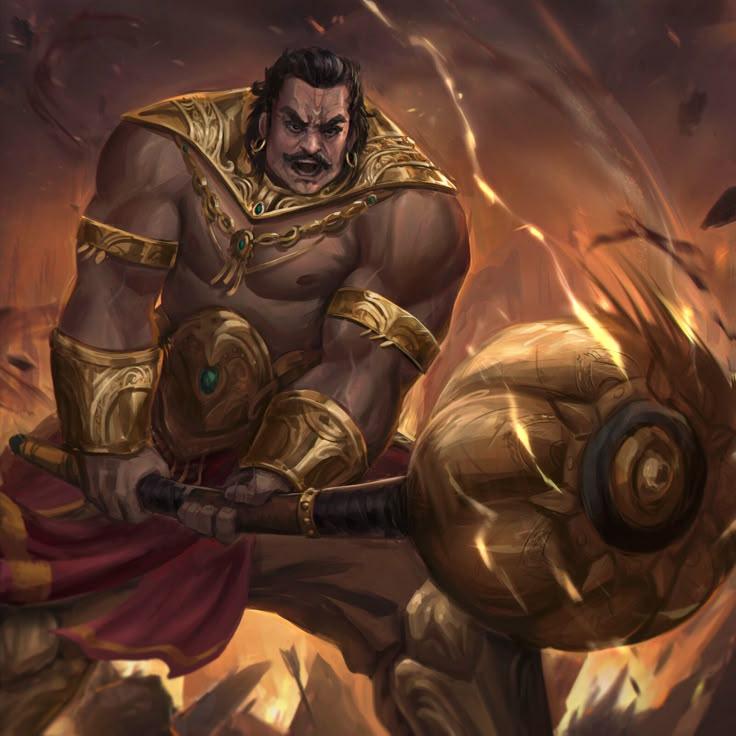
Life of Bhima in Mahabharata – The Strongest Pandava
Life of Bhima in Mahabharata – The Strongest Pandava About the Author Raja Ratnam is a passionate researcher and writer specialising in Indian mythology and epic stories.With years of experience studying texts like Ramayana, Mahabharata,Bhima in Mahabharata , Festivals, Meaning and Significance of Maha Shivaratri – Lord Shiva, the Auspicious One, Navagrahas, Ketu Deva and other cultural scriptures,he brings insightful interpretations and practical lessons from these timeless stories. Raja Ratnam believes in making mythology accessible and meaningful for modern readers,helping them understand the moral, ethical, and cultural significance behind characters like Rama, Laxman, Shani Deva, and many more. Connect with the author: info@ratnamstrategy.com Introduction : Bhima in Mahabharata In the epic Mahabharata, many warriors displayed extraordinary courage and strength. Among them, Bhima stands out as the most powerful warrior of the Pandavas. Known for his immense physical strength, fearless nature, and loyalty to his family, Bhima played a crucial role in the victory of the Pandavas during the Kurukshetra War. Bhima’s life is filled with heroic deeds, fierce battles, and unwavering dedication to justice. Birth of Bhima – Bhima in Mahabharata Bhima was one of the five Pandavas in the Mahabharata. He was born to Kunti through the blessings of Vayu, the…
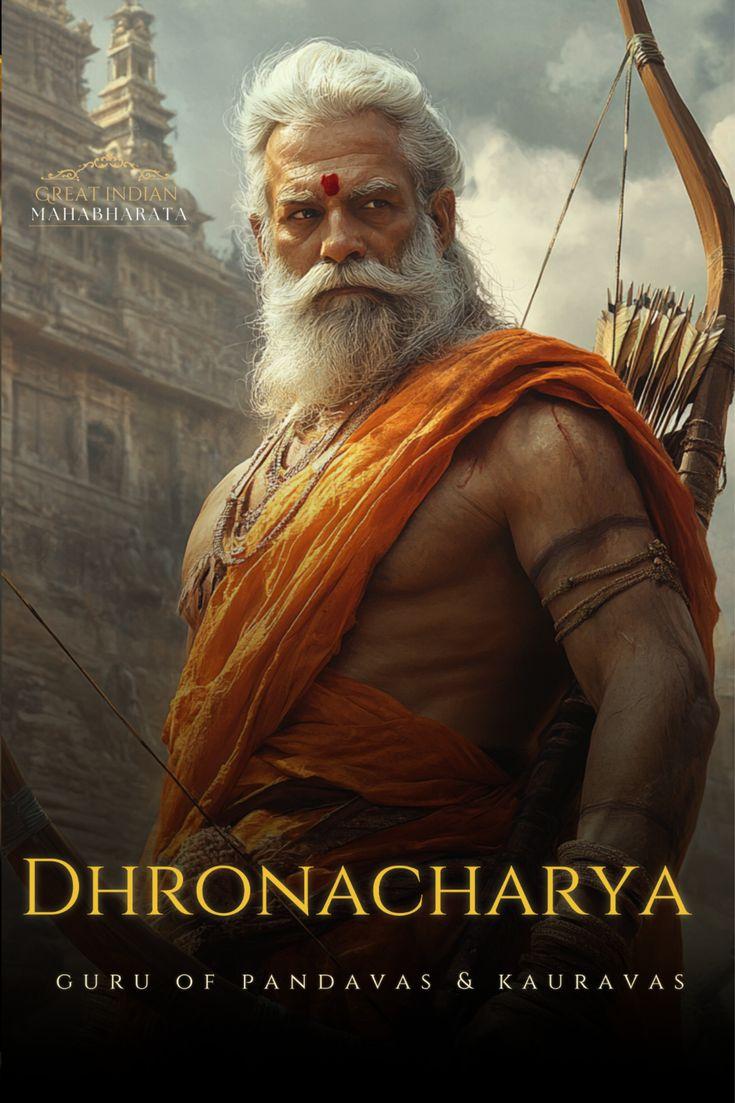
Who Was Dronacharya in the Mahabharata? Complete Guide
Who Was Dronacharya in the Mahabharata? Complete Guide About the Author Raja Ratnam is a passionate researcher and writer specialising in Indian mythology and epic stories.With years of experience studying texts like Ramayana, Mahabharata, Dronacharya in Mahabharata , Festivals, Meaning and Significance of Maha Shivaratri – Lord Shiva, the Auspicious One, Navagrahas, Ketu Deva and other cultural scriptures,he brings insightful interpretations and practical lessons from these timeless stories. Raja Ratnam believes in making mythology accessible and meaningful for modern readers,helping them understand the moral, ethical, and cultural significance behind characters like Rama, Laxman, Shani Deva, and many more. Connect with the author: info@ratnamstrategy.com Introduction : Dronacharya in Mahabharata Dronacharya in the Mahabharata was one of the greatest warriors and teachers (gurus) of ancient India. He played a crucial role in shaping the destiny of both the Pandavas and the Kauravas. Known for his unmatched knowledge of warfare and archery, Dronacharya trained legendary warriors like Arjuna and Duryodhana. His life is filled with loyalty, controversy, sacrifice, and tragedy. In this complete guide, we will explore his birth, education, role in the Kurukshetra War, and his dramatic death. Birth and Early Life of Dronacharya Dronacharya was the son of Sage Bharadwaja. The name “Drona”…
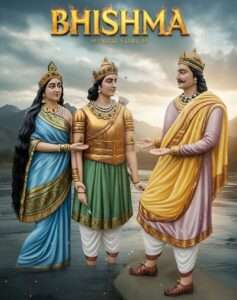
“…Devavrata grew into a peerless warrior and an ideal prince. Shantanu declared him the crown prince of Hastinapura, confident that his kingdom’s future was secure. However, destiny soon tested this certainty, as Shantanu’s deep love for Satyavati led to the momentous vow that would change Devavrata’s life forever, transforming him into the legendary Bhishma.”
 Admin
Admin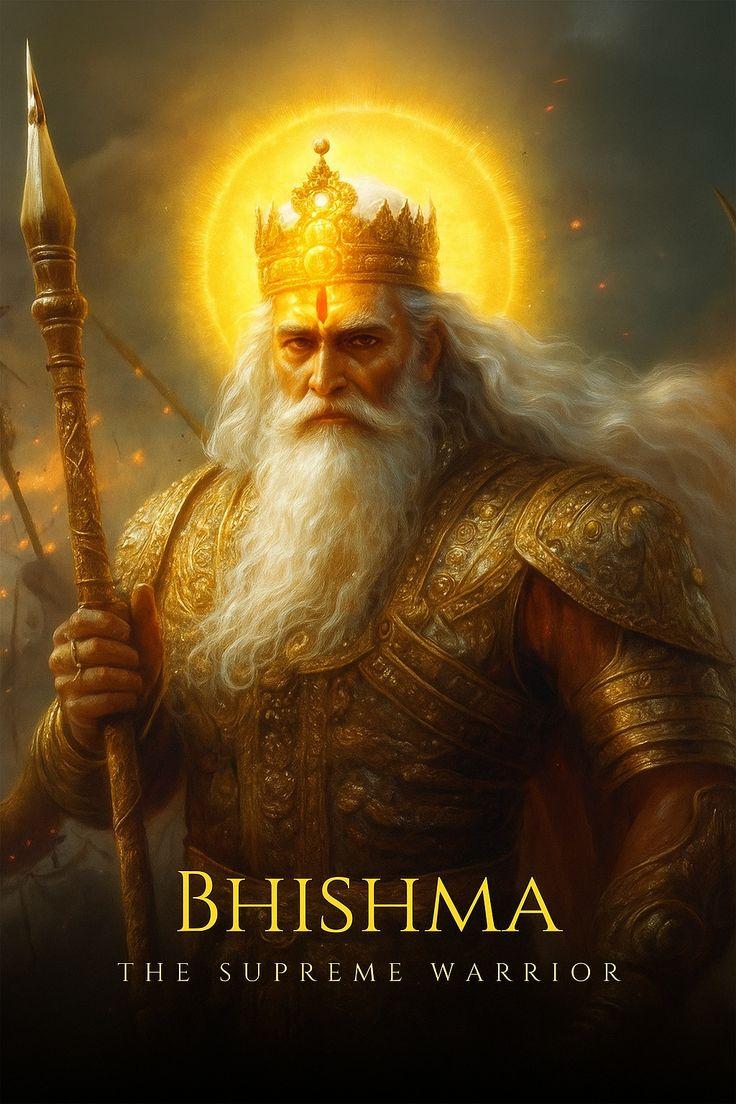

“…Devavrata grew into a peerless warrior and an ideal prince. Shantanu declared him the crown prince of Hastinapura, confident that his kingdom’s future was secure. However, destiny soon tested this certainty, as Shantanu’s deep love for Satyavati led to the momentous vow that would change Devavrata’s life forever, transforming him into the legendary Bhishma.”