Raja Ratnam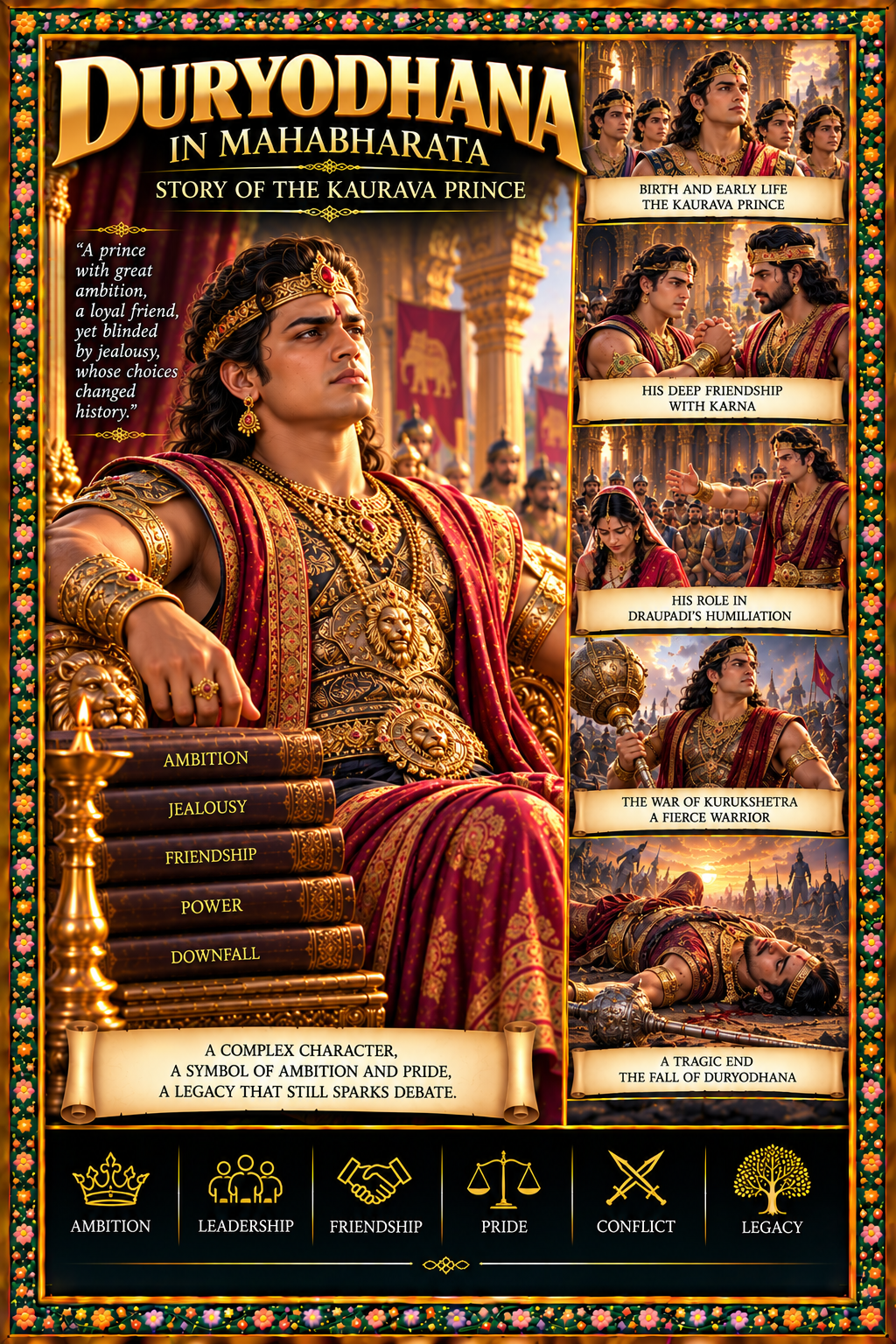
Duryodhana in Mahabharata: The Rise and Fall of a Warrior Prince
Introduction : Duryodhana in Mahabharata
Duryodhana in Mahabharata is one of the most powerful and controversial characters in Indian mythology. Known as the eldest son of King Dhritarashtra and Queen Gandhari, Duryodhana played a central role in shaping the events that led to the great Kurukshetra war.
While often portrayed as the villain, Duryodhana was not entirely evil. His character reflects ambition, pride, loyalty, and deep-rooted insecurity. Understanding Duryodhana in Mahabharata helps us see the epic not just as a battle between good and evil, but as a complex story of human emotions and choices.
For official cultural and historical archives, visit the Ministry of Culture, Government of India.
Duryodhana’s Birth and Early Life – Duryodhana in Mahabharata
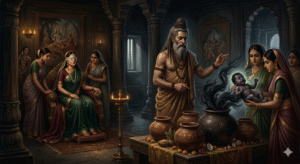
Duryodhana was born to Dhritarashtra, the blind king of Hastinapura, and Gandhari. His birth itself was considered ominous. According to legends, strange signs appeared at the time of his birth, and wise men advised that the child should be abandoned to avoid future destruction.
However, Dhritarashtra could not let go of his firstborn son. This decision later proved to be one of the key reasons for the downfall of the Kaurava dynasty.
From a young age, Duryodhana showed signs of jealousy, especially towards the Pandavas. His rivalry with Bhima and Yudhishthira began early and only intensified with time.
Duryodhana’s Friendship with Karna – Duryodhana in Mahabharata
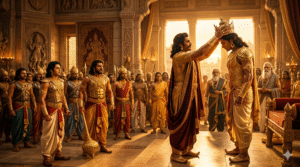
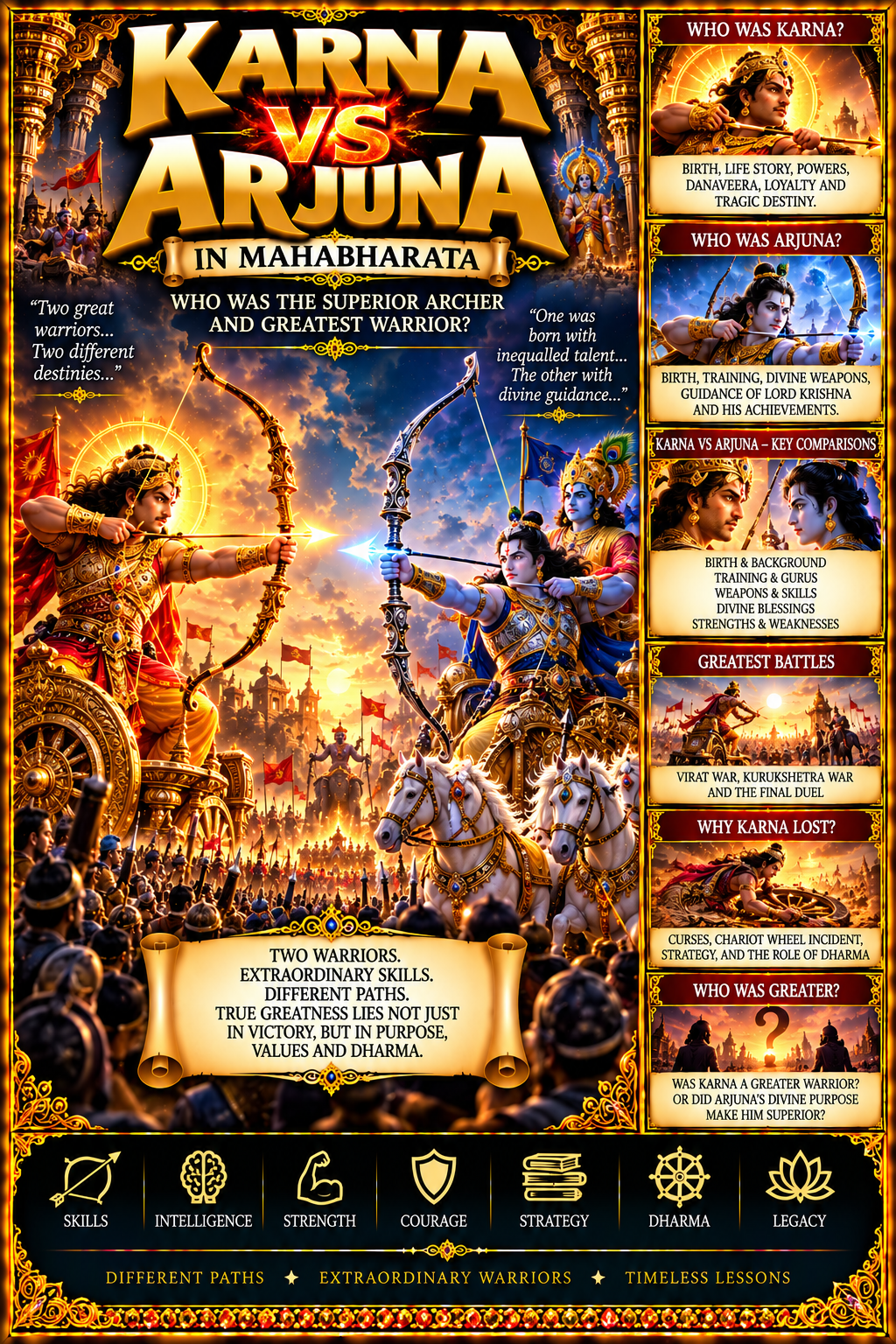
One of the most defining aspects of Duryodhana in Mahabharata is his friendship with Karna.
When Karna was insulted during a tournament due to his unknown lineage, Duryodhana stepped forward and crowned him the king of Anga. This act was not just strategic but also showed Duryodhana’s ability to value talent over birth.
This friendship became unbreakable. Karna remained loyal to Duryodhana until the very end, even knowing the consequences. This loyalty highlights that Duryodhana was capable of deep relationships and trust.
Draupadi’s Humiliation and the Dice Game – Duryodhana in Mahabharata
The turning point in the story of Duryodhana in Mahabharata came during the infamous dice game.
Duryodhana, along with his uncle Shakuni, planned to defeat the Pandavas through deceit. Yudhishthira was invited to gamble and lost everything—his kingdom, his brothers, and even Draupadi.
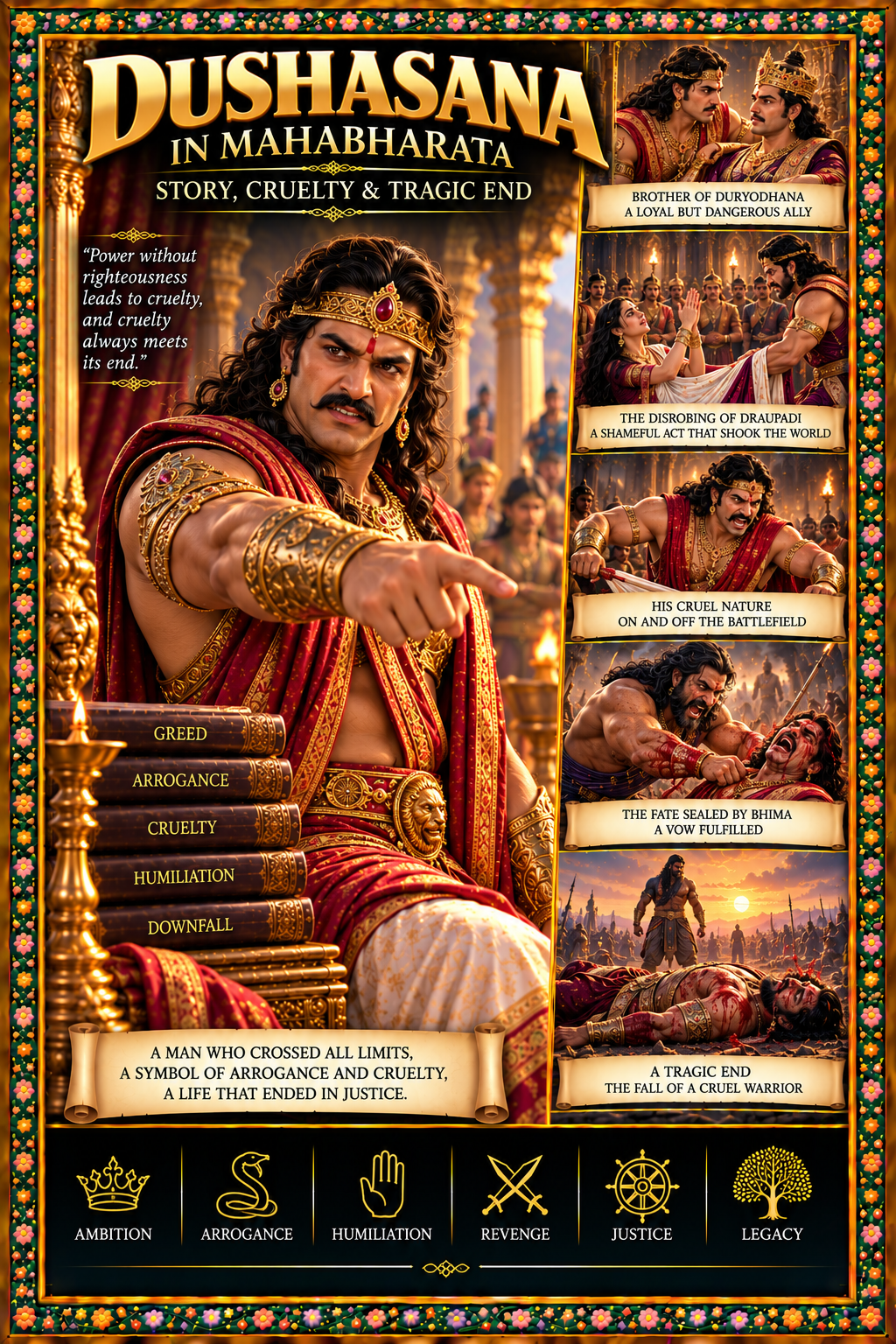
Draupadi’s humiliation in the royal court became one of the darkest moments in the epic. Duryodhana’s actions here cemented his image as a villain and set the stage for the eventual war.
Duryodhana’s Role in the Kurukshetra War – Duryodhana in Mahabharata
Duryodhana’s refusal to give even a small piece of land to the Pandavas led directly to the Kurukshetra war.
Despite several peace attempts by Lord Krishna, Duryodhana remained adamant. His famous declaration—refusing to give land even equal to a needle’s tip—shows his rigid mindset and pride.
During the war:
- He led the Kaurava army with determination
- Trusted great warriors like Bhishma, Dronacharya, and Karna
- Showed courage and leadership on the battlefield
However, his inability to accept compromise ultimately led to destruction.
Death of Duryodhana and His Legacy – Duryodhana in Mahabharata
Duryodhana’s end came in a mace fight (gada yuddha) with Bhima.
Although Duryodhana was a skilled warrior, Bhima defeated him by striking below the waist—a move considered against the rules. This act symbolized that even in war, dharma is often complicated.
After his death, Duryodhana is said to have attained heaven due to his bravery as a warrior. This again shows the complex nature of his character—he was not purely evil.
Duryodhana’s Personality: Villain or Misunderstood Hero?
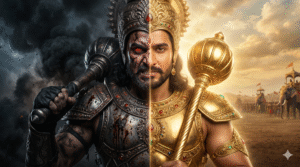
Duryodhana in Mahabharata is often seen as the antagonist, but his character is layered:
Positive Traits
- Loyal friend (especially to Karna)
- Brave and fearless warrior
- Strong leadership qualities
Negative Traits
- Jealousy towards Pandavas
- Arrogance and pride
- Inability to accept truth and compromise
This dual nature makes Duryodhana one of the most realistic and human characters in the Mahabharata.
Lessons from Duryodhana in Mahabharata – Duryodhana in Mahabharata
Duryodhana’s story teaches us several important life lessons:
- Unchecked ambition leads to downfall
- Jealousy destroys relationships
- Wrong decisions, even once, can change destiny
- Loyalty is valuable, but must be guided by wisdom
Conclusion : Duryodhana in Mahabharata
Duryodhana in Mahabharata is not just a villain but a powerful symbol of human flaws and strengths. His life reminds us that choices define destiny. While his ambition and pride led to destruction, his loyalty and bravery earned him respect even in defeat.
The story of Duryodhana continues to inspire discussions about dharma, morality, and human nature even today.
FAQs: Duryodhana in Mahabharata
1. Who was Duryodhana in Mahabharata?
Duryodhana was the eldest of the Kauravas and the main rival of the Pandavas.
2. Why is Duryodhana considered a villain?
Due to his jealousy, role in Draupadi’s humiliation, and refusal to make peace.
3. Who were Duryodhana’s parents?
King Dhritarashtra and Queen Gandhari.
4. Who was Duryodhana’s best friend?
Karna was his closest and most loyal friend.
5. What was Duryodhana’s main weakness?
Jealousy and arrogance.
6. How did Duryodhana die?
He died in a mace fight with Bhima during the Kurukshetra war.
7. Was Duryodhana a good warrior?
Yes, he was a highly skilled and brave warrior.
8. Why did Duryodhana hate the Pandavas?
He was jealous of their popularity and rightful claim to the throne.
9. What role did Shakuni play in Duryodhana’s life?
Shakuni influenced him negatively and guided him in deceitful strategies.
10. Did Duryodhana ever try to make peace?
No, he consistently refused peace offers.
11. What is the significance of the dice game?
It led to Draupadi’s humiliation and triggered the war.
12. Did Duryodhana respect Karna?
Yes, he respected and supported Karna immensely.
13. Why did Krishna oppose Duryodhana?
Because Duryodhana stood against dharma.
14. Was Duryodhana completely evil?
No, he had both good and bad qualities.
15. What is Duryodhana’s legacy?
A symbol of ambition, pride, and tragic downfall.
16. How many brothers did Duryodhana have?
He had 99 brothers, known as the Kauravas.
17. What was Duryodhana’s goal?
To rule Hastinapura and defeat the Pandavas.
18. Who trained Duryodhana in warfare?
Dronacharya and Balarama.
19. Why is Duryodhana still discussed today?
Because of his complex personality and moral dilemmas.
20. What can we learn from Duryodhana?
To control ego, avoid jealousy, and choose the right path.