Raja Ratnam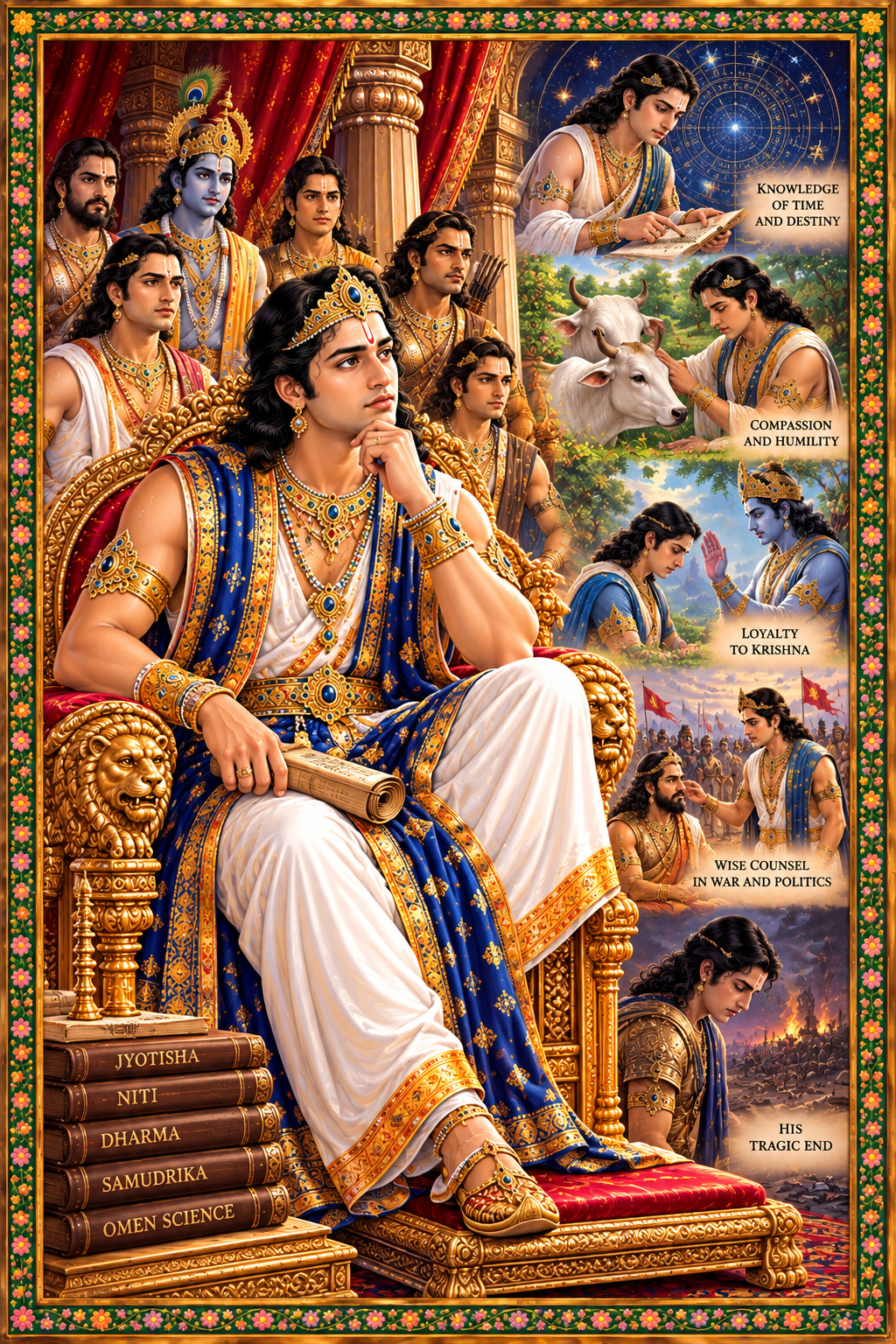
A wise Pandava prince in the Mahabharata – Sahadeva
Introduction – Sahadeva in Mahabharata
While Bhima conquered with unmatched physical strength and Arjuna with peerless archery, the youngest Pandava, Sahadeva, possessed a power far rarer: the gift of foreknowledge. A master of the stars and ancient medicine, Sahadeva knew the tragic outcome of the Kurukshetra war long before the conch shells were blown. Bound by a vow never to reveal the future unless asked, he was the quiet, introspective brother whose advice King Yudhishthira sought in the darkest hours of decision.
Sahadeva was the youngest of the Pandavas and the twin brother of Nakula. Even though he did not speak much, he understood many things that others could not. Many stories say that Sahadeva knew the future but chose to remain silent because of his promise and his respect for dharma.
His character teaches us that true knowledge does not always need loud words. Sometimes, silence itself shows greatness.
Birth of Sahadeva -Sahadeva in Mahabharata
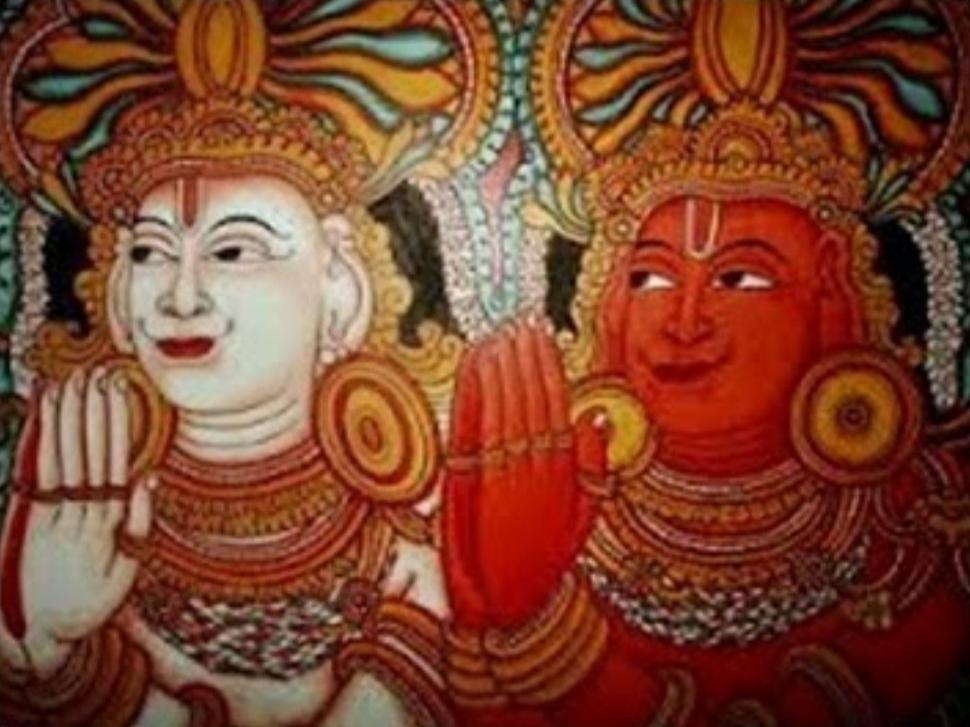
Sahadeva and Nakula were born to King Pandu’s second wife, Madri. Since Pandu was cursed and could not have children, Kunti shared a divine mantra with Madri. By using that mantra, Madri prayed to the Ashwini Kumaras, the twin gods known for healing and knowledge.
Nakula and Sahadeva, Madri’s twin sons, were born as a consequence of the blessing of these divine twins.
From childhood, Sahadeva showed signs of great intelligence. He learned quickly, spoke less, and observed everything carefully. Elders in the kingdom believed that the twins were not ordinary children but born with divine qualities.
Some legends also say that Sahadeva gained special knowledge after eating a piece of his father Pandu’s body during the funeral rituals, which gave him the ability to understand past, present, and future. However, he promised that he would never reveal the future unless someone asked the right question.
Sahadeva’s Personality and Nature
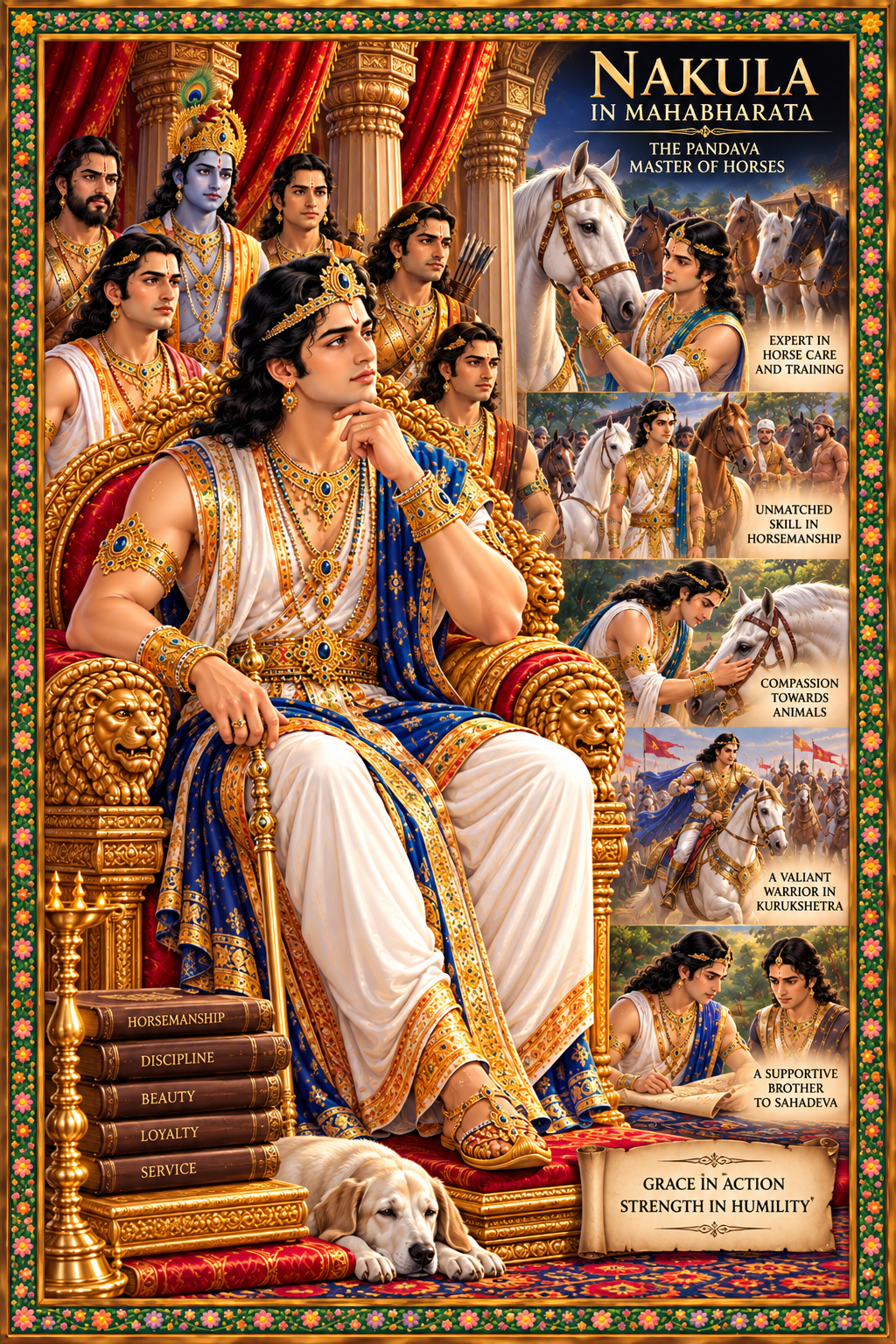
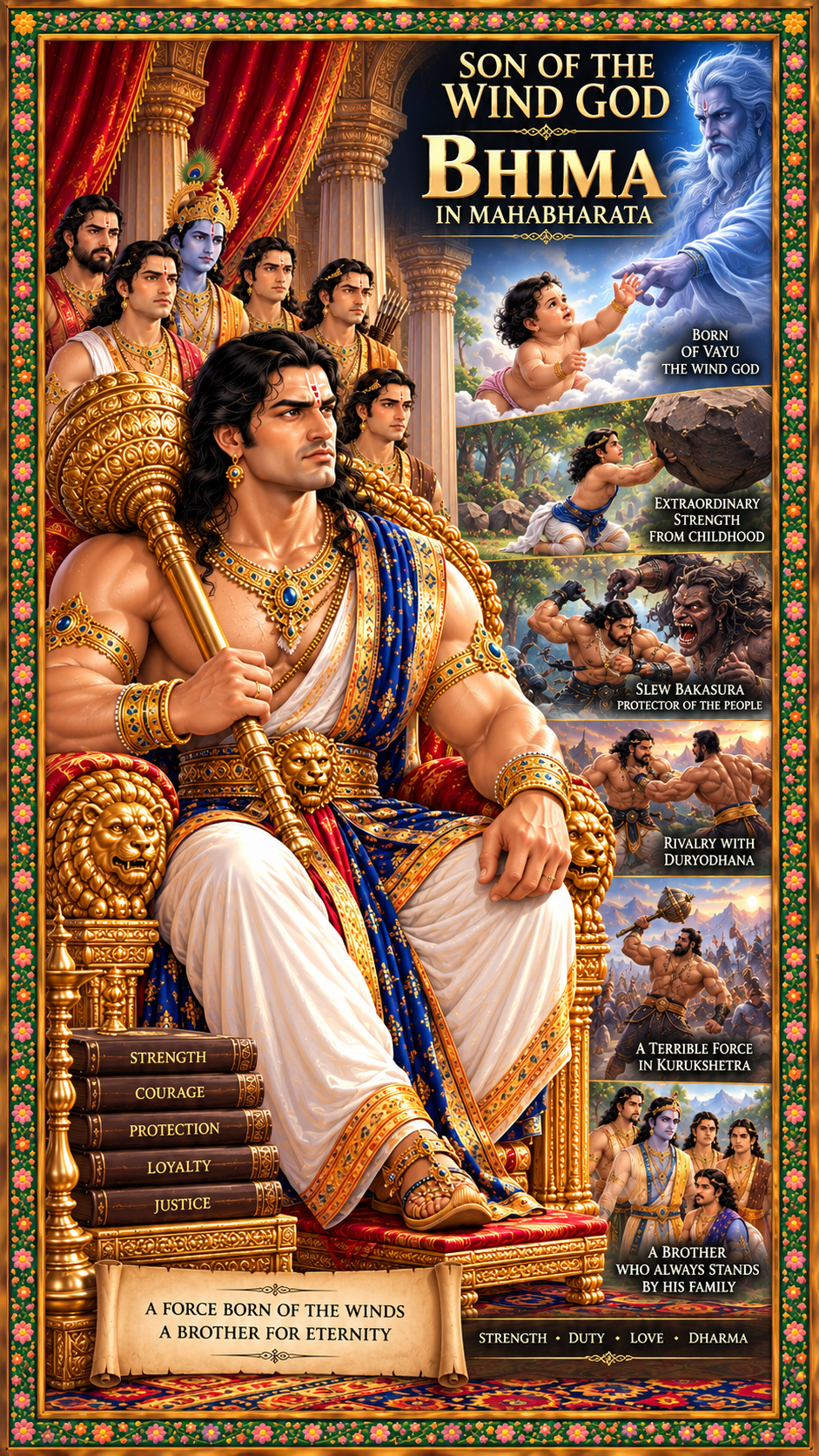
Among the five Pandavas, each brother had a special quality.
- Yudhishthira – truth and dharma
- Bhima – strength and courage
- Arjuna – skill and focus
- Nakula – beauty and sword fighting
- Sahadeva – wisdom and knowledge
Sahadeva was known for speaking only when necessary. He respected his elder brothers and always followed Yudhishthira without question. Even when he knew that something bad would happen, he did not break his promise.
His calm nature made him different from the other warriors. He believed that knowledge should be used carefully and at the right time.
Sahadeva’s Knowledge of Astrology
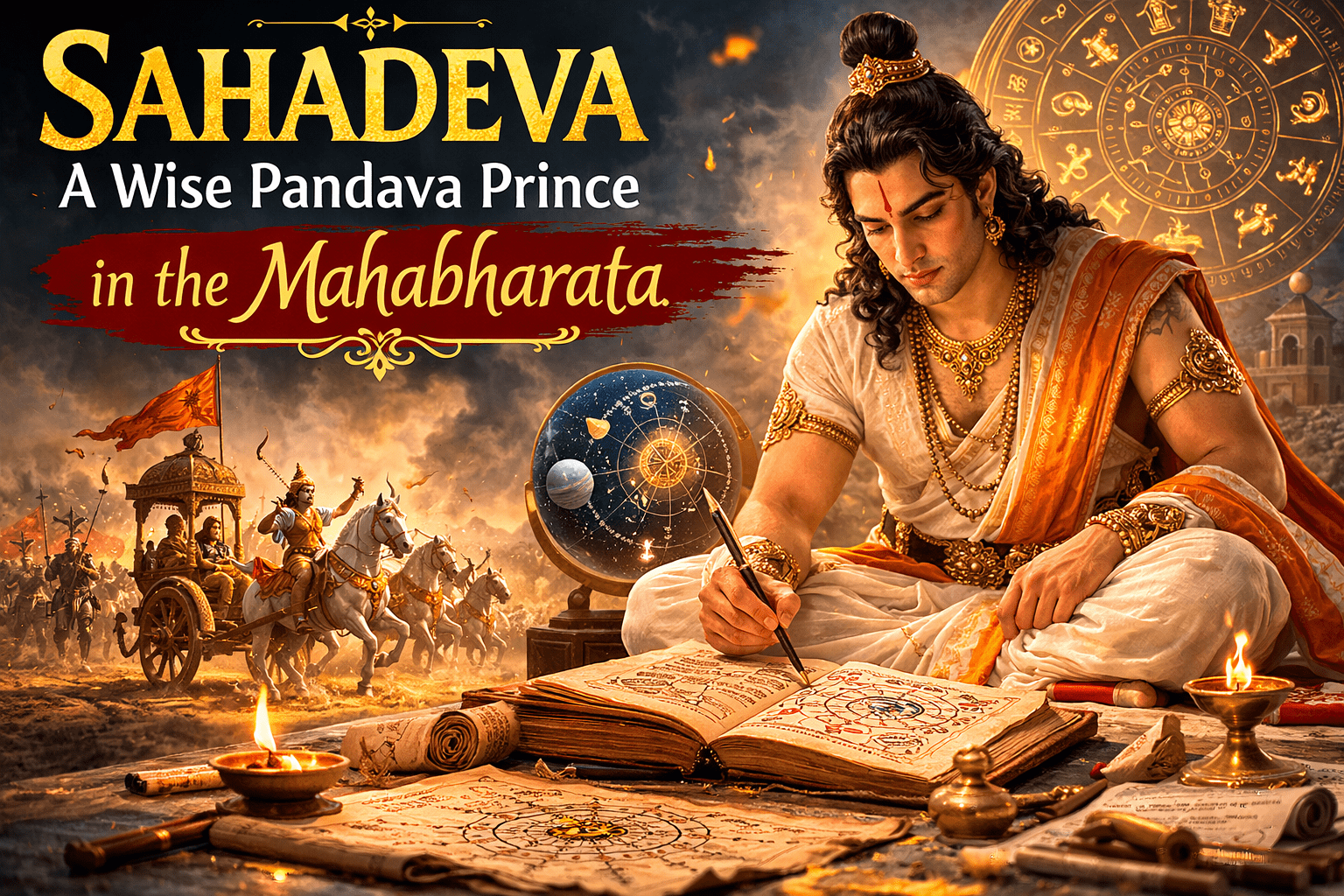
One of the most interesting things about Sahadeva is his knowledge of astrology.
He understood:
- movement of planets
- future events
- right time for war
- right time for rituals
It is said that before the Kurukshetra war, Duryodhana asked Sahadeva to tell the best time to start the war. Because Sahadeva never lied, he told the correct time even though it would help the Kauravas.
This shows how strongly he followed truth and dharma.
Sahadeva in the Kurukshetra War
During the great war of Kurukshetra, Sahadeva fought bravely along with his brothers. Even though he was not as famous as Arjuna or Bhima, he defeated many powerful warriors.
Sahadeva had taken a vow that he would kill Shakuni, the uncle of Duryodhana. Shakuni was the one who planned the dice game that caused the suffering of the Pandavas.
On the battlefield, Sahadeva finally faced Shakuni and killed him, completing his promise. This moment is considered one of the most important achievements of Sahadeva in the Mahabharata.
Special Powers of Sahadeva
In the Mahabharata, Sahadeva is often described as a warrior who possessed not only physical strength but also extraordinary knowledge. Many stories mention that he had the ability to understand events before they happened. As a result, he was considered one of the wisest princes of his time.
According to traditional stories, Sahadeva gained divine knowledge after the death of King Pandu. It is believed that when he performed the last rites, he received a blessing that allowed him to understand the past, present, and future. However, this knowledge came with a condition. He could not reveal what he knew unless someone asked the right question.
This made Sahadeva a very silent person. He often knew what would happen, but he chose not to speak because he believed that destiny should not be changed unnecessarily.
His knowledge included:
- Astrology
- War strategies
- Time calculation
- Spiritual understanding
- Political wisdom
Because of these qualities, many elders respected Sahadeva even though he was the youngest among the Pandavas.
Sahadeva’s Role During Exile
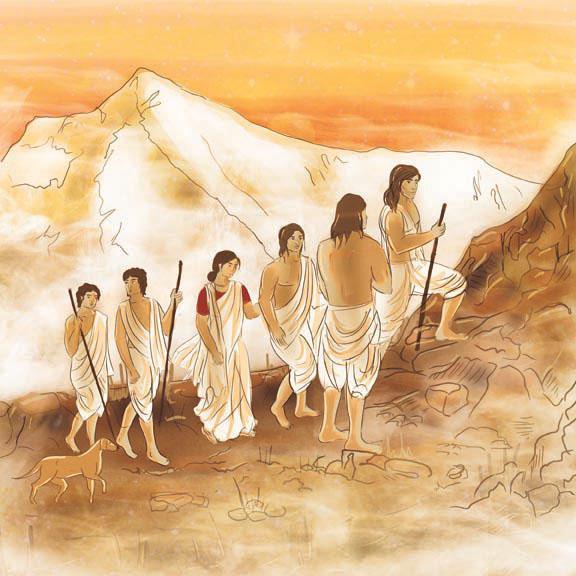
When the Pandavas lost the dice game and went to the forest for exile, Sahadeva stayed with his brothers and supported them in every situation. Life in the forest was not easy, but Sahadeva never complained.
During the exile, the Pandavas met many sages and learned many lessons. Sahadeva spent much of his time learning from rishis and improving his knowledge. He believed that difficult times are the best time to gain wisdom.
In the last year of exile, the Pandavas lived in the kingdom of Virata in disguise. During this time, Sahadeva worked as a caretaker of cows. Even though he was a prince, he performed this work sincerely without pride.
This shows his humility and discipline.
Sahadeva’s Promise to Kill Shakuni
One of the most important moments in Sahadeva’s life was his vow to kill Shakuni.
Shakuni, the uncle of Duryodhana, was the mastermind behind the dice game that caused the Pandavas to lose their kingdom. Because of his trickery, Draupadi was insulted and the Pandavas were forced into exile.
Sahadeva decided that he would punish Shakuni for his actions.
During the Kurukshetra war, Sahadeva finally got the chance to face him. A fierce battle took place, and Sahadeva killed Shakuni, fulfilling his promise. This victory was not only personal but also important for the Pandavas.
It showed that patience and determination always bring results.
Sahadeva After the War
After the war ended, the Pandavas became the rulers of Hastinapura. Sahadeva continued to serve his elder brother Yudhishthira with loyalty.
He helped in administration, decision-making, and planning rituals. Because of his knowledge of time and astrology, he was often asked to decide the correct time for important ceremonies.
Even after becoming kings, the Pandavas lived a simple and disciplined life, and Sahadeva remained the same humble person.
Death of Sahadeva
In the final part of the Mahabharata, the Pandavas decided to leave the kingdom and go on their last journey towards the Himalayas. This journey is known as the Mahaprasthanika Parva.
One by one, the brothers fell during the journey.
Sahadeva was the first among the twins to fall. According to the story, the reason for his fall was that he was proud of his knowledge. Even though he was wise, he had a small amount of pride about being the most intelligent.
This teaches an important lesson – even wisdom should come with humility.
Qualities of Sahadeva – Sahadeva in Mahabharata
Sahadeva represents many good qualities that people can learn from.
- Intelligence without arrogance
- Silence with wisdom
- Loyalty to family
- Respect for elders
- Patience in difficult times
- Courage in war
- Discipline in life
Even though he is not as famous as Arjuna or Bhima, Sahadeva is one of the most balanced characters in the Mahabharata.
Life Lessons from Sahadeva – Sahadeva in Mahabharata
- Knowledge is powerful, but silence is also strength
- Loyalty to family is very important
- Pride can destroy even the wisest person
- Patience always gives results
- Truth should be followed even in difficult times
- Discipline makes a person strong
- Wisdom should be used at the right time
FAQs About Sahadeva in Mahabharata
1. Who was Sahadeva in Mahabharata?
Sahadeva was the youngest Pandava and the twin brother of Nakula.
2. Who were Sahadeva’s parents?
King Pandu and Queen Madri.
3. Which god blessed Sahadeva?
Ashwini Kumaras.
4. What was Sahadeva famous for?
Wisdom and astrology.
5. Was Sahadeva the youngest Pandava?
Yes.
6. Who was Sahadeva’s twin brother?
Nakula.
7. Did Sahadeva know the future?
According to stories, yes.
8. Why did Sahadeva stay silent?
Because of his promise and dharma.
9. Whom did Sahadeva kill in war?
Shakuni.
10. What was Sahadeva’s role in exile?
He lived with Pandavas and learned from sages.
11. Where did Pandavas hide in last year?
Virata kingdom.
12. What work did Sahadeva do in Virata?
Cow caretaker.
13. Was Sahadeva a good warrior?
Yes.
14. What was Sahadeva proud of?
His knowledge.
15. How did Sahadeva die?
During the final journey to Himalayas.
16. Who was the wisest Pandava?
Sahadeva is often considered the wisest.
17. Did Sahadeva follow Yudhishthira?
Always.
18. What does Sahadeva represent?
Wisdom and discipline.
19. Was Sahadeva important in Mahabharata?
Yes, very important.
20. What can we learn from Sahadeva?
Humility and patience.
Conclusion – Sahadeva in Mahabharata
Sahadeva may not be the most talked-about hero of the Mahabharata, but his character is full of depth and meaning. He shows that true greatness does not always come from strength or fame. Sometimes it comes from knowledge, silence, and discipline.
His life teaches us that wisdom must be used carefully, promises must be respected, and pride should never enter the mind.
The Mahabharata’s most respected Pandava, Sahadeva, embodies these qualities.