 Raja Ratnam
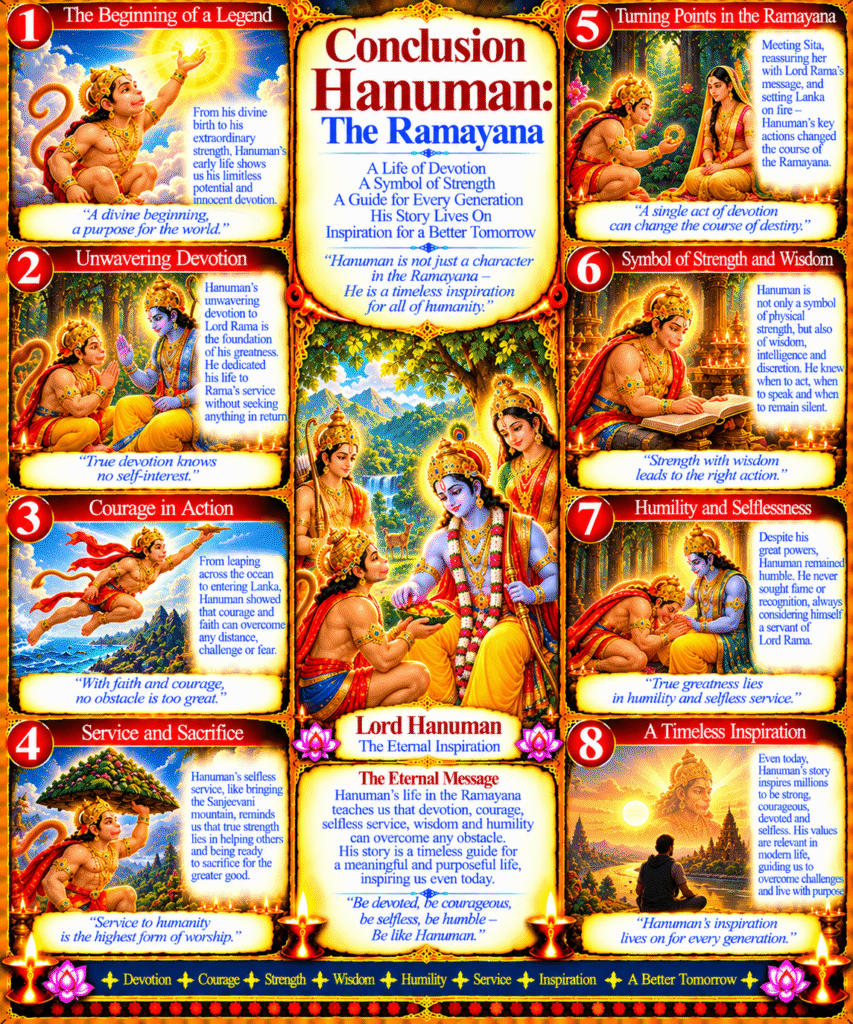
Hanuman: The Ramayana The Hindu god Hanuman, also known as Anjaneya, Bajrangbali, and Pavanputra, is one of the most beloved and revered figures in Hindu mythology. Celebrated for his unwavering devotion to Lord Rama, unparalleled strength, and selfless service, Hanuman plays a pivotal role in the epic Ramayana. From leaping across the ocean to Lanka in search of Sita to burning down the city of Ravana, his courage and loyalty continue to inspire millions.
Hanuman: The Ramayana – In this comprehensive article, we explore Hanuman’s origins, key exploits, symbolism, and spiritual significance, uncovering why he remains a timeless symbol of devotion and heroism.
Hanuman: The Ramayana in Modern Devotion
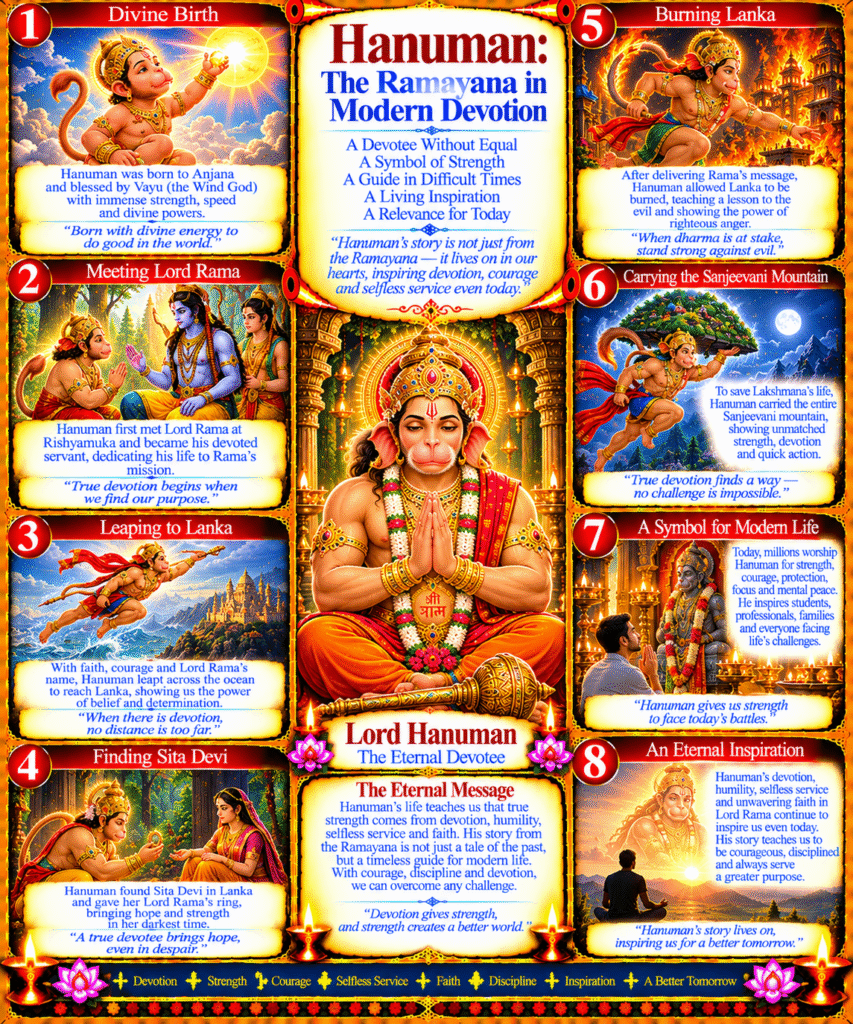
The Hindu deity Hanuman is one of the most widely venerated in modern Hinduism. It is considered auspicious to perform special prayers and recite the Hanuman Chalisa on Tuesdays and Saturdays. Beyond religious rituals, Hanuman also inspires popular culture, from temple festivals to television adaptations of the Ramayana.
His image carrying the mountain with Sanjeevani herb or leaping across the ocean continues to symbolize perseverance, service, and unwavering faith.
Hanuman: The Ramayana Lessons from the Life
Hanuman’s life imparts timeless lessons that resonate beyond religious boundaries:
- True devotion requires selflessness.
- Strength must be guided by humility and purpose.
- Loyalty and integrity are the highest virtues.
- The power of faith can enable one to overcome any obstacle.
Hanuman: The Ramayana – His legendary deeds in the Ramayana remind us that inner courage, discipline, and faith can lead to extraordinary accomplishments.
Hanuman: The Ramayana -The Divine Birth
According to Hindu mythology, Hanuman is the son of Anjana and Kesari, and the spiritual son of Vayu, the wind god. His birth is often described as divinely ordained to assist Lord Rama in his quest to defeat Ravana. Blessed by various gods, Hanuman possessed extraordinary powers:
- Limitless strength and agility
- Ability to change form and size
- Immortality through divine blessings
- Unmatched wisdom and devotion
These divine gifts equipped Hanuman for the heroic feats he would later perform in the Ramayana, making him a vital protector of dharma.
Hanuman’s First Meeting with Lord Rama
Lord Rama’s destiny became intertwined with Hanuman’s when he first met him in the Kishkindha forest. At the time, Rama and Lakshmana were searching for Sita, who had been abducted by Ravana. As a humble minister of Sugriva, Hanuman immediately recognized Rama’s divinity and pledged his lifelong devotion to him. This encounter marked the beginning of a divine partnership, with Hanuman emerging as Rama’s most loyal devotee and trusted ally.
Hanuman’s Epic Leap to Lanka
One of the most iconic episodes in the Ramayana is Hanuman’s daring leap across the ocean to Lanka. As a result of being entrusted with the mission to find Sita, he displayed his incredible strength, determination, and intelligence:
- Overcoming Obstacles: Hanuman faced challenges such as Surasa, the sea serpent, and Simhika, the demoness, proving his courage and strategic thinking.
- Finding Sita: Upon reaching Ashoka Vatika, Hanuman delivered Rama’s message to Sita, offering hope and reassurance.
- Defiance in Lanka: Captured by Ravana’s soldiers, Hanuman’s tail was set ablaze, which he used to burn parts of Lanka, demonstrating his invincibility and fearless devotion.
This mission not only reaffirmed his loyalty but also changed the course of the Ramayana, as it provided crucial intelligence for the upcoming battle against Ravana.
Hanuman’s Role in the Battle of Lanka
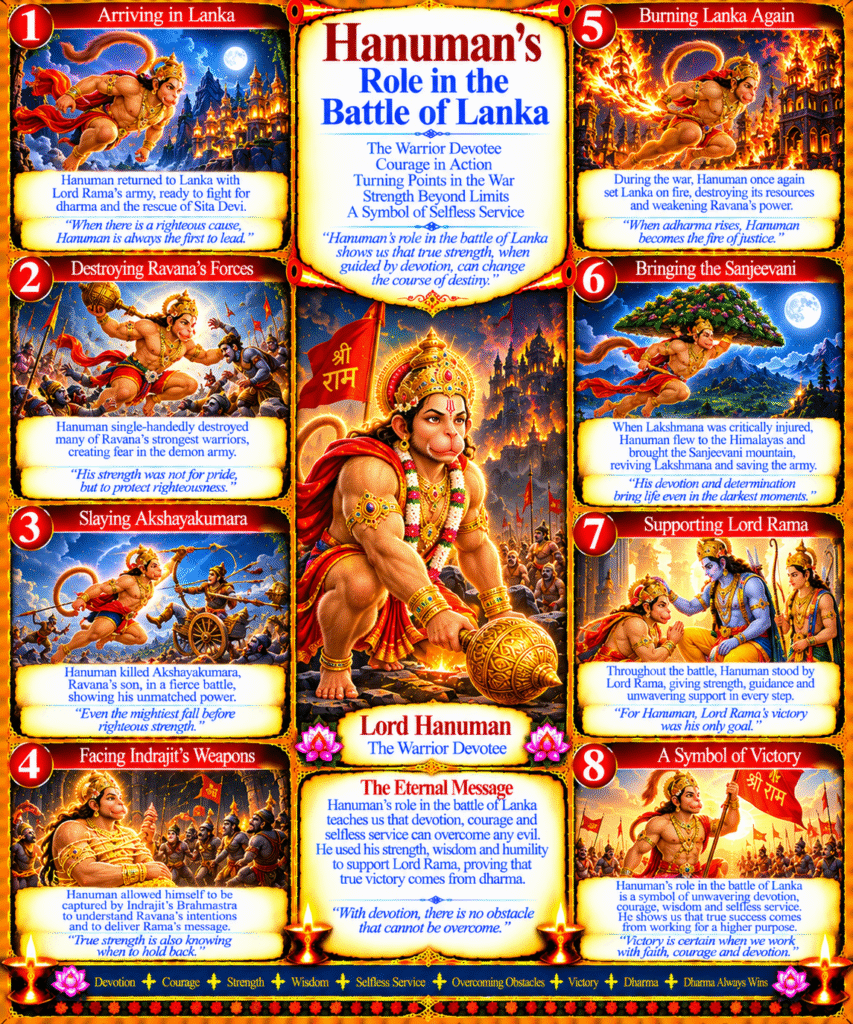
Hanuman exhibited unparalleled valor and strength during Rama‘s battle with Ravana. As Hanuman flew to the Himalayas, he brought back the Sanjeevani herb, which revived Lakshmana and ensured the war would continue.
In addition to his contributions to Rama’s victory, his selfless service without expectation of reward made him a model for ultimate devotion.
Symbolism and Spiritual Significance of Hanuman
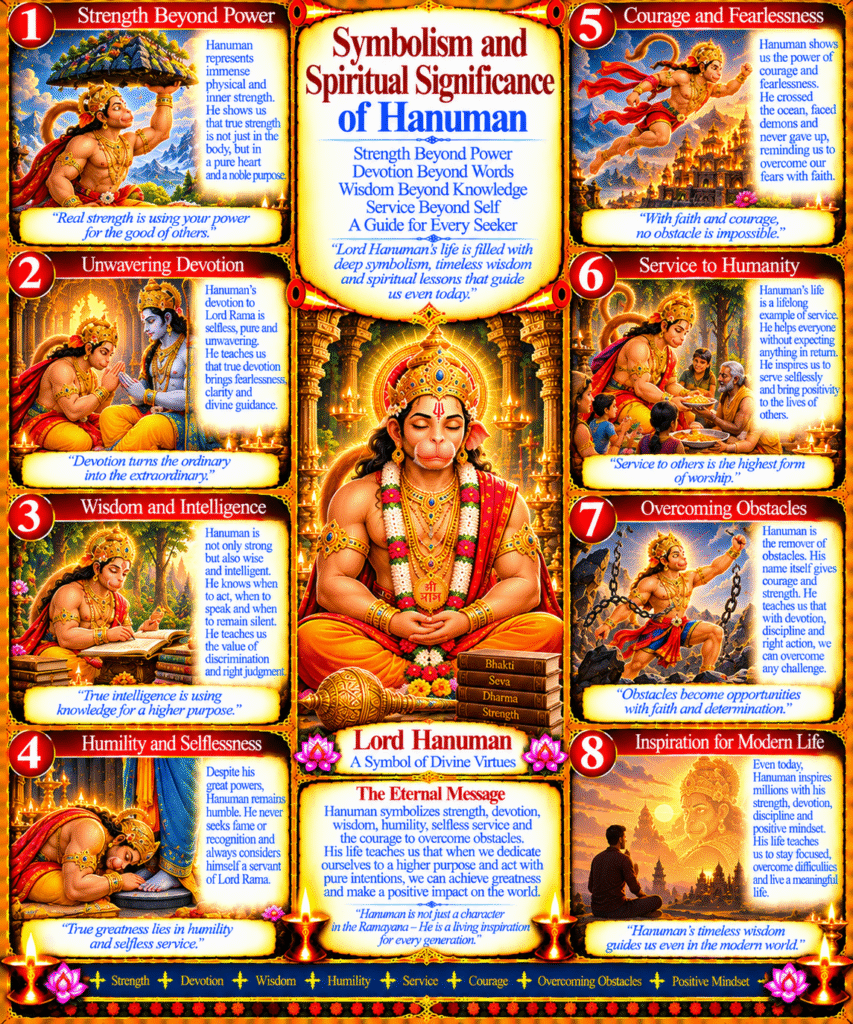
Hanuman is not just a heroic character in a mythological story—he embodies profound spiritual ideals:
- Devotion (Bhakti): His love for Lord Rama is pure, selfless, and unconditional.
- It is through faith and humility that Hanuman demonstrates true strength and courage..
- Wisdom and Humility: Despite his immense power, he remains humble and devoted.
- Protector from Evil: Devotees believe that chanting Hanuman Chalisa wards off negative energies and obstacles.
Even today, Hanuman temples across India remain centers of spiritual strength and hope, drawing millions of devotees who seek courage, success, and protection in their lives.
Conclusion Hanuman: The Ramayana
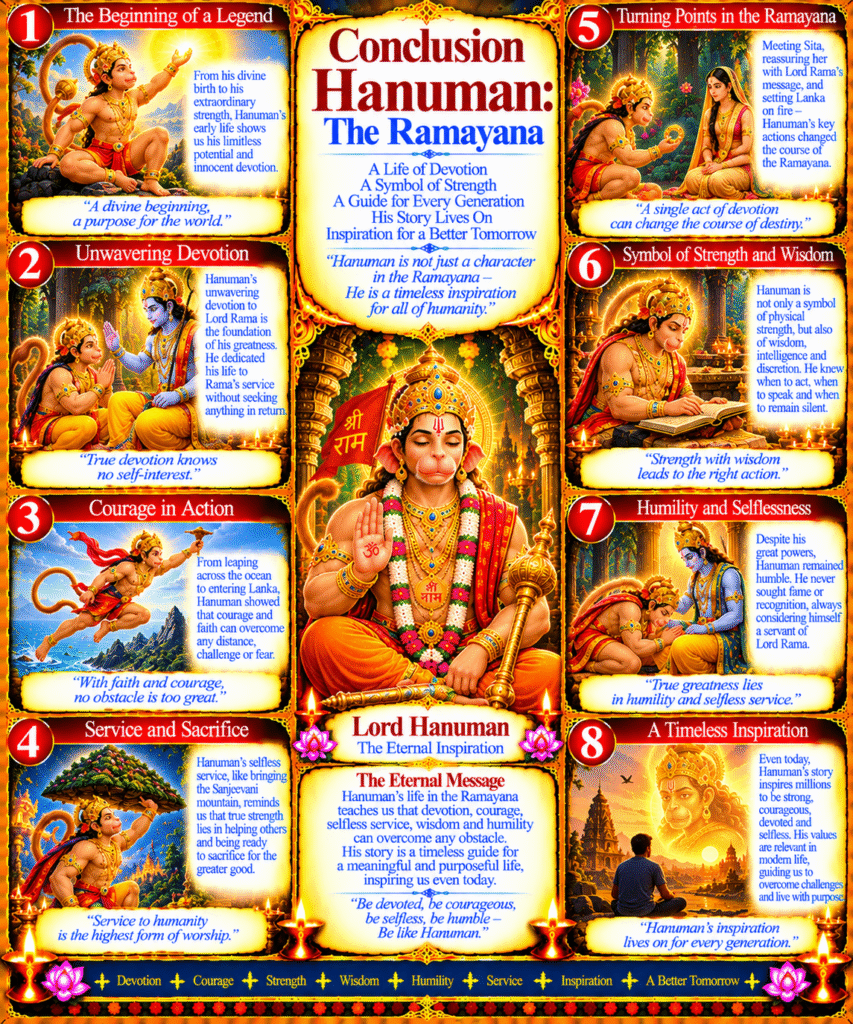
It is Lord Hanuman‘s heroic exploits, selfless loyalty, and unshakable devotion to Lord Rama that make him an eternal symbol of strength and righteousness. The Ramayana’s story is both a story of battles and miracles, as well as a spiritual guide to living an unwavering life of courage, humility, and faith.
Whether we seek protection, strength, or spiritual growth, invoking Hanuman’s name and remembering his deeds can inspire us to face life’s challenges fearlessly.
Hanuman: The Ramayana About FAQs
1. Q .Who is Hanuman in the Ramayana?
A . In the Ramayana, Hanuman is Lord Rama’s devoted servant and a key hero known for his strength and loyalty.
2. Q .Who were Hanuman’s parents?
Hanuman was the son of Kesari and Anjana, and the spiritual son of Vayu, the wind god.
3. Q .What is Hanuman famous for in the Ramayana?
The Sanjeevani mountain was carried by him; he leapt across the ocean in order to find Sita, he burned Lanka, and he found Sita.
4. Q .How did Hanuman meet Lord Rama?
He met Rama in Kishkindha while serving Sugriva, the monkey king.
5. Q .Why did Hanuman go to Lanka?
He went looking for Sita after Ravana took her away.
6. Q . Where did Hanuman find Sita in Lanka?
He found her in Ashoka Vatika, the garden where she was being held.
7. Q .What message did Hanuman give to Sita?
He *reassured her of Rama’s love and promised her rescue.
8. Q .Why did Hanuman burn Lanka?
As a warning to Ravana, he burned parts of Lanka after he was captured and his tail was set on fire.
9. Q .What is the Sanjeevani mountain story?
Hanuman brought the entire mountain containing the Sanjeevani herb to save Lakshmana’s life.
10. Q .What powers did Hanuman have?
Hanuman had some amazing powers. Besides flying, he could change his size—become super tiny or grow huge—had incredible strength, and was blessed with protection from many divine beings.
For official cultural and historical archives, visit the Ministry of Culture, Government of India.
What does Hanuman symbolize?
The symbols he represents are devotion, courage, strength, humility, and selfless service.
11. Q .Why is Hanuman considered immortal?
He was blessed by gods with longevity and protection from death for his devotion to Rama.
12. Q .What is the importance of Hanuman Chalisa?
The Hanuman Chalisa is a devotional hymn believed to remove obstacles, fears, and negative energies.
13. Q .On which days is Hanuman worshipped?
For Hanuman worship, Tuesdays and Saturdays are considered the most auspicious days
14. Q .Why did Hanuman tear his chest?
He tore his chest to show that Rama and Sita resided in his heart, proving his ultimate devotion.
15. Q .What lesson does Hanuman teach us?
He teaches loyalty, selflessness, courage, and unwavering faith in God.
16. Q .Which weapon did Hanuman carry?
Hanuman often carries a gada (mace), symbolizing strength and valor.
D17. Q .id Hanuman ever receive rewards from Rama?
His service was purely devotional; he never sought rewards.
18. Q .How is Hanuman worshipped today?
To seek strength and protection, devotees recite Hanuman Chalisa, visit temples, and offer sindoor, flowers, and laddus.





I got what you mean , thankyou for posting.
I’m impressed, I need to say. Really not often do I encounter a blog that’s each educative and entertaining, and let me inform you, you’ve got hit the nail on the head. Your concept is outstanding; the problem is something that not sufficient individuals are speaking intelligently about. I’m very comfortable that I stumbled across this in my seek for one thing relating to this.
Thank you so much for your thoughtful words! I truly appreciate you taking the time to share this feedback. It means a lot to know that the content here feels both useful and enjoyable. I’m glad you found the topic meaningful, and I hope to keep creating posts that spark more such conversations. Thanks again for stopping by!
Nice blog right here! Also your web site quite a bit up fast!
What host are you the use of? Can I get your affiliate link to your host?
I want my site loaded up as quickly as yours lol
thank you
Very soon this web site will be famous among all
blogging and site-building users, due to it’s good content
Reply:
Thank you so much for the kind words! 😊
I truly appreciate your support and encouragement. I’m glad you’re finding the content valuable—it really motivates me to keep improving and sharing more useful insights.
Looking forward to having you here more often! 🚀
Hi there, just became aware of your blog through Google,
and found that it’s really informative. I am gonna watch out for brussels.
I’ll appreciate if you continue this in future. A lot of people will
be benefited from your writing. Cheers!
Thank you so much for your kind words and for finding the blog through Google! I’m really glad you found it informative and helpful.
I truly appreciate your support, and I’ll definitely keep sharing valuable content going forward. It’s great to know it’s making a difference!
Thanks again, and cheers! 🚀
I was very pleased to find this internet-site.I wished to thanks in your time for this wonderful learn!! I positively having fun with each little bit of it and I have you bookmarked to take a look at new stuff you weblog post.
Here’s a warm and natural reply you can use:
Thank you so much for your kind words and support! 😊 I’m really happy to hear that you’re enjoying the content and finding it valuable. It means a lot that you’ve bookmarked the site and look forward to new posts. I truly appreciate you being a reader, and I’ll keep working to bring you more useful and interesting content! 🙏✨
Thanks for every one of your labor on this web site. My daughter really likes participating in research and it’s simple to grasp why. A number of us know all about the lively ways you deliver simple guidelines via your web blog and as well attract response from people on that issue while our princess is without question becoming educated a great deal. Enjoy the remaining portion of the new year. Your carrying out a superb job.
Here’s a warm and appreciative reply you can use:
Thank you so much for your thoughtful and encouraging words! 😊 It truly means a lot to know that the content is helpful and easy to understand. I’m especially happy to hear that your daughter enjoys learning and participating in research. Wishing her continued curiosity and success in all her learning adventures! 📚✨
Thank you again for your wonderful support. Have a fantastic rest of the year, and I’m grateful to have you as a reader! 🙏