 Admin
Admin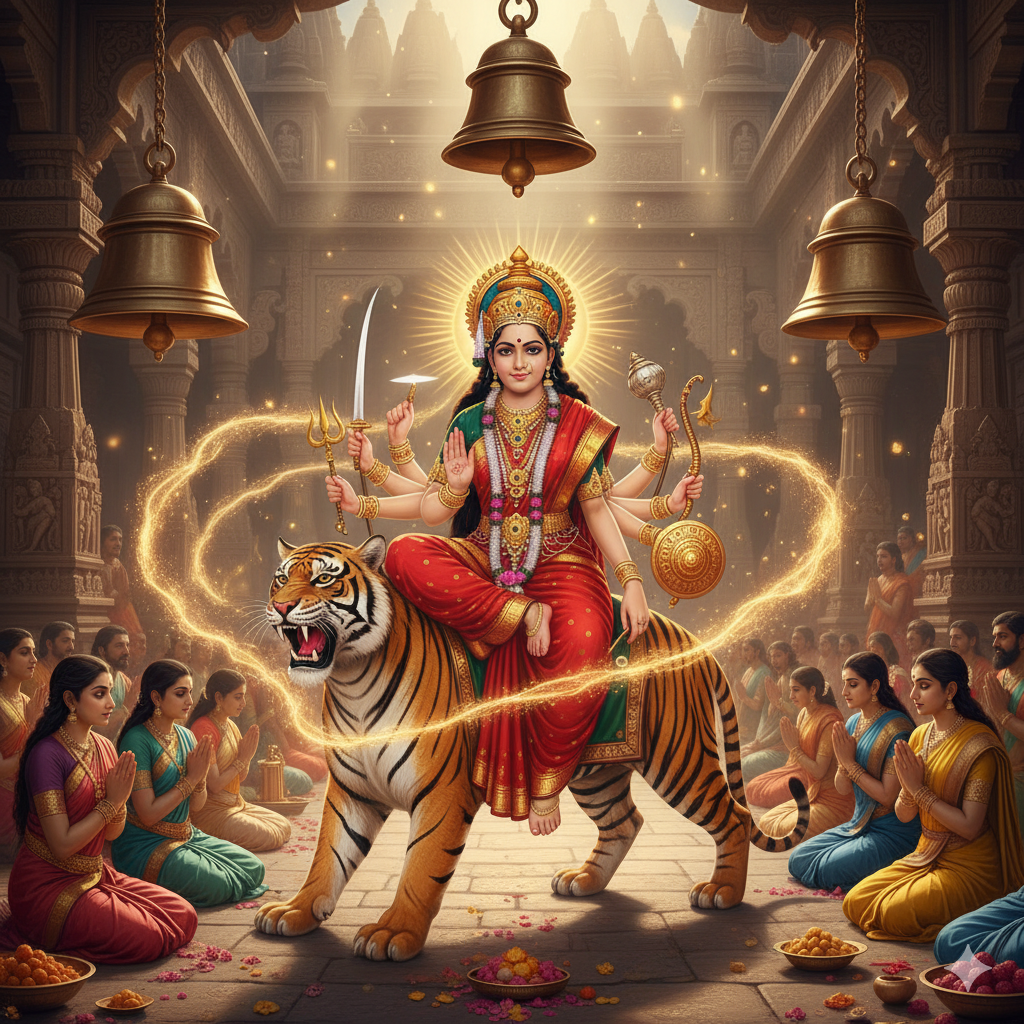
About the Author
Raja Ratnam is a passionate researcher and writer specializing in Indian mythology and epic stories.
With years of experience studying texts like Ramayana, Mahabharata, and other cultural scriptures,
he brings insightful interpretations and practical lessons from these timeless stories.
Raja Ratnam believes in making mythology accessible and meaningful for modern readers,
helping them understand the moral, ethical, and cultural significance behind characters like
Ramudu, Laxman, Shani Deva, and many more.
Connect with the author: info@ratnamstrategy.com
Introduction
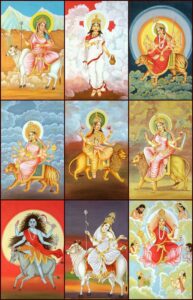
Maa Chandraghanta – Navratri Day 3 .On the third day of Navratri, devotees worship Maa Chandraghanta, the warrior goddess who represents courage, strength, and grace. Her name comes from the crescent moon (Chandra) that adorns her forehead in the shape of a bell (Ghanta).
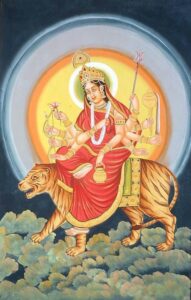
She is believed to ride a tiger, symbolising bravery, and carries weapons in her ten hands. Worshipping Maa Chandraghanta removes fear, grants courage, and fills life with peace and harmony.
Who is Maa Chandraghanta – Navratri Day 3?
Maa Chandraghanta is the married form of Goddess Parvati, after she wed Lord Shiva. With a crescent moon on her forehead resembling a bell, she is both compassionate to her devotees and fierce toward evil forces.
She is often described as a goddess who can bring tranquility in her calm form and immense destruction in her warrior form. Thus, she is the perfect balance of serenity and strength.
Iconography of Maa Chandraghanta
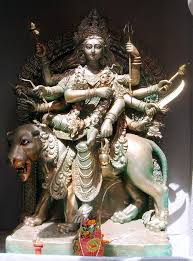
- Mount: Tiger, symbolizing courage and power.
- Appearance: Golden complexion with a crescent moon on her forehead.
- Hands: Ten hands holding weapons such as a sword, trident, mace, bow, arrow, lotus, and a rosary, while one hand remains in blessing (Abhaya Mudra).
- Aura: Radiates bravery and energy, yet filled with kindness.
Maa Chandraghanta Puja Vidhi (Step-by-Step)
Morning Preparation
- Take a bath early and wear yellow clothes, the auspicious color for Day 3.
- Decorate the altar with fresh marigolds and yellow flowers.
- Ghatasthapana Continuation
Ghatasthapana Continuation
- Worship the Kalash established on Day 1 along with Maa Chandraghanta’s idol or picture.
Invocation
- Apply kumkum, sandalwood paste, and turmeric to the idol or image.
- Light a ghee lamp and incense sticks.
- Mantra Chanting
Chant:
“Om Devi Chandraghantayai Namah” Devotees may also recite her Dhyana Mantra to meditate on her golden form. - Offerings (Naivedyam & Bhog)
- Offer kheer, jaggery, bananas, and sweets.
- Milk-based offerings are considered highly auspicious.
- Aarti
- Perform aarti while ringing bells, symbolizing the sound that removes negative energies.
Significance of Maa Chandraghanta Worship
- Represents bravery, strength, and protection.
- Removes fear, negativity, and mental stress.
- Encourages harmony, inner peace, and courage in life.
- Fills devotees’ lives with confidence and self-belief.
Benefits of Worshipping Maa Chandraghanta
- Eliminates fear, anger, and doubts.
- Protects devotees from enemies and negative forces.
- Grants courage, confidence, and determination.
- Improves mental clarity and emotional balance.
- Blesses married couples with happiness and peace.
Legends of Maa Chandraghanta – Navratri Day 3
- After her marriage to Lord Shiva, Goddess Parvati adorned her forehead with a half-moon shaped like a bell.
- When demons attacked, she transformed into her fierce form, riding a tiger and fighting with her weapons to protect the universe.
- The sound of her bell is believed to destroy evil and negative vibrations.
Regional Traditions : Maa Chandraghanta – Navratri Day 3
- In North India, devotees perform special puja with yellow flowers and kheer.
- In Bengal, she is worshipped as part of Durga Puja rituals with grandeur.
- In Tamil Nadu, devotees prepare jaggery-based sweets and chant Durga stotras.
Maa Chandraghanta Mantra & Stotra :Maa Chandraghanta – Navratri Day 3
- Navratri Day 3 Mantra:
“Om Devi Chandraghantayai Namah” - Beej Mantra:
“Om Hreem Shreem Chandraghantayai Namah” - Dhyana Mantra (for meditation):
Describes her golden form, tiger mount, and weapons, inspiring courage and protection. 20 FAQs About Maa Chandraghanta
Q1. Who is Maa Chandraghanta?
A1. She is the third form of Navadurga, symbolizing courage and protection.
Q2. Why is she called Chandraghanta?
A2. Because she wears a crescent moon on her forehead shaped like a bell.
Q3. What is the color of Day 3 of Navratri?
A3. Yellow, symbolizing brightness, energy, and positivity.
Q4. What is Maa Chandraghanta’s mount?
A4. A tiger, representing strength and bravery.
Q5. How many hands does she have?
A5. Ten hands holding weapons, a rosary, and a lotus.
Q6. What does she symbolize?
A6. Courage, serenity, and destruction of evil.
Q7. What is the mantra of Maa Chandraghanta?
A7. “Om Devi Chandraghantayai Namah.”
Q8. What food is offered to her?
A8. Kheer, jaggery sweets, bananas, and milk.
Q9. What is the significance of her bell (ghanta)?
A9. The sound removes negativity and evil forces.
Q10. Which flower is offered to Maa Chandraghanta?
A10. Yellow marigold is considered auspicious.
Q11. Can worshipping her remove fear?
A11. Yes, she blesses devotees with confidence and removes fear.
Q12. Why is she shown with a golden complexion?
A12. To symbolize radiance, energy, and prosperity.
Q13. What does the lotus in her hand represent?
A13. Purity, wisdom, and spiritual awakening.
Q14. What does the Abhaya Mudra mean?
A14. It represents blessings, assurance, and protection.
Q15. Is fasting important on Day 3?
A15. Yes, many devotees fast with fruits and milk.
Q16. Can Maa Chandraghanta be worshipped at home?
A16. Yes, with devotion, mantra chanting, and simple offerings.
Q17. What blessings does she give to married couples?
A17. Peace, love, and harmony in family life.
Q18. Is she gentle or fierce?
A18. Both – compassionate to devotees and fierce toward evil.
Q19. What does her tiger symbolize?
A19. Bravery, courage, and control over fear.
Q20. What is the ultimate blessing of Maa Chandraghanta?
A20. Courage, peace, fearlessness, and success.
Conclusion : Maa Chandraghanta – Navratri Day 3
Maa Chandraghanta, the third form of Navadurga, teaches us the importance of bravery and balance. While she blesses devotees with peace and harmony, she also empowers them with courage to face challenges.
🌙 Worshipping her on Navratri Day 3 removes fear and fills life with confidence, positivity, and protection. 🌙

thank you very much. much