 Raja Ratnam
Introduction — The Silent Force of Liberation
Among the Navagrahas, Ketu is the most silent, mysterious, and spiritually potent graha.
He does not create noise, fame, or desire — instead, he cuts attachments, dissolves ego, and pushes the soul toward liberation (Moksha).
If Rahu binds the soul to illusion and desire,
Ketu frees the soul through detachment and realization.
Ketu represents:
- Past-life karma
- Renunciation & detachment
- Spiritual wisdom
- Sudden separation
- Mysticism & occult knowledge
- Enlightenment through loss
Ketu does not give pleasure —
he gives truth.
Mythological Origin of Ketu Deva
The origin of Ketu is inseparable from Rahu and the great event of Samudra Manthan.
When the Asura Svarbhanu disguised himself and drank Amrita,
Lord Vishnu severed his body with the Sudarshana Chakra.
- The head became Rahu
- The headless body became Ketu
Unlike Rahu, who retained desire and hunger,
Ketu was left without a head — symbolizing ego-less existence.
Thus, Ketu became:
- Detached from worldly cravings
- Free from identity
- Oriented toward liberation
Scriptures describe Ketu as a flag without a pole —
present, powerful, but unattached.
Ketu Deva in Hindu Scriptures
Ketu appears in:
- Bhagavata Purana
- Vishnu Purana
- Brahmanda Purana
- Mahabharata
Ancient sages describe Ketu as:
- A spiritual graha
- A force of renunciation
- A giver of hidden wisdom
- A destroyer of illusion
Unlike other planets, Ketu does not follow worldly dharma.
He follows cosmic truth.
For official cultural and historical archives, visit the Ministry of Culture, Government of India.
Mythological Origin of Ketu Deva
The origin of Ketu is inseparable from Rahu and the great event of Samudra Manthan.
When the Asura Svarbhanu disguised himself and drank Amrita,
Lord Vishnu severed his body with the Sudarshana Chakra.
- The head became Rahu
- The headless body became Ketu
Unlike Rahu, who retained desire and hunger,
Ketu was left without a head — symbolizing ego-less existence.
Thus, Ketu became:
- Detached from worldly cravings
- Free from identity
- Oriented toward liberation
Scriptures describe Ketu as a flag without a pole —
present, powerful, but unattached.
Ketu Deva in Hindu Scriptures
Ketu appears in:
- Bhagavata Purana
- Vishnu Purana
- Brahmanda Purana
- Mahabharata
Ancient sages describe Ketu as:
- A spiritual graha
- A force of renunciation
- A giver of hidden wisdom
- A destroyer of illusion
Unlike other planets, Ketu does not follow worldly dharma.
He follows cosmic truth.
“Ketu destroys what binds the soul, even if the destruction feels painful.”
Astrological Significance of Ketu Deva
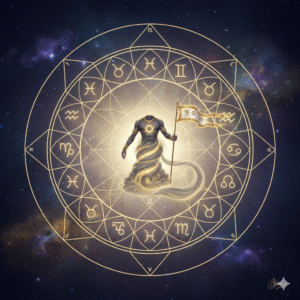
In Vedic astrology, Ketu is a Chhaya Graha (shadow planet) — the South Lunar Node.
Ketu governs:
- Spirituality
- Detachment
- Past-life mastery
- Intuition
- Occult sciences
- Isolation
- Sudden endings
- Moksha
A strong Ketu can make someone:
✔ Highly spiritual
✔ Intuitive & psychic
✔ Detached from materialism
✔ Master of occult or healing sciences
An afflicted Ketu can cause:
✘ Confusion
✘ Depression
✘ Isolation
✘ Identity loss
✘ Sudden separations
Ketu does not reward effort —
he reveals what the soul already knows.
The Twelve Houses of Ketu – The Path to Liberation
1️⃣ 1st House: Identity confusion, spiritual ego dissolution
2️⃣ 2nd House: Detachment from wealth & family ties
3️⃣ 3rd House: Fearlessness, spiritual courage
4️⃣ 4th House: Emotional detachment, inner restlessness
5️⃣ 5th House: Past-life intelligence, mantra siddhi
6️⃣ 6th House: Victory over enemies, karmic cleansing
7️⃣ 7th House: Detachment in relationships
8️⃣ 8th House: Highest spiritual awakening, occult mastery
9️⃣ 9th House: Loss of blind belief, true wisdom
🔟 10th House: Detachment from status & career
1️⃣1️⃣ 11th House: Desirelessness despite gains
1️⃣2️⃣ 12th House: Moksha, liberation, enlightenment
Ketu Deva Dosha (Affliction of Ketu)
Ketu Dosha may result in:
- Sudden losses
- Loneliness
- Confusion
- Health issues
- Spiritual fear
- Loss of direction
Ketu Deva Remedies
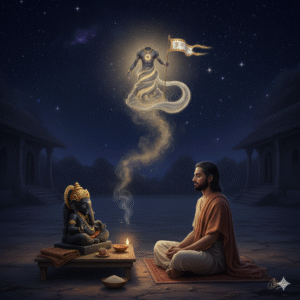
- Worship Lord Ganesha
- Chant Ketu mantra: “ॐ स्रां स्रीं स्रौं सः केतवे नमः”
- Donate brown cloth, sesame seeds
- Feed stray dogs
- Practice meditation & silence
Ketu calms with humility, surrender, and spiritual discipline.
Scientific Perspective — Ketu Deva as the South Lunar Node
Scientifically, Ketu represents the South Lunar Node —
the point where the Moon’s orbit intersects Earth’s path.
Eclipses occur along the Rahu–Ketu axis,
showing how ancient sages mapped celestial mechanics long before modern science.
Ketu = karmic memory of the soul.
Spiritual Meaning of Ketu Deva
Spiritually, Ketu is the final teacher.
He strips away:
- Ego
- Identity
- Attachments
- Fear
Ketu leads the soul toward:
Silence
Awareness
Inner truth
Liberation
If Rahu pulls outward,
Ketu pulls inward.
Modern Lessons from Ketu Deva
In the modern world, Ketu teaches:
- Letting go of toxic attachments
- Finding peace beyond achievements
- Understanding emptiness as freedom
- Spiritual growth through solitude
- Meaning beyond material success
Ketu energy is strong in:
- Yogis
- Monks
- Healers
- Researchers
- Minimalists
20 FAQs About Ketu Deva
- Who is Ketu?
Detachment and Moksha planet. - Is Ketu a malefic?
Spiritually benefic, materially challenging. - Which day is for Ketu?
Tuesday or Thursday. - What color is Ketu?
Smoky brown, ash, grey. - What gemstone suits Ketu?
Cat’s Eye (Lehsunia). - Which deity rules Ketu?
Lord Ganesha. - What does Ketu represent?
Past-life karma. - Is Ketu spiritual?
Extremely. - Does Ketu cause separation?
Yes, for spiritual evolution. - Does Ketu give moksha?
Indirectly. - Which chakra is Ketu linked to?
Sahasrara (Crown). - Can Ketu cause confusion?
Yes, if resisted. - Is Ketu linked to occult?
Yes. - Does Ketu give sudden events?
Yes. - Ketu vs Rahu?
Detachment vs desire. - Does Ketu affect marriage?
Yes, causes emotional distance. - Can Ketu give enlightenment?
Yes. - Is Ketu good for meditation?
Very. - How to balance Ketu?
Surrender, prayer, discipline. - Ketu’s ultimate lesson?
Freedom through letting go.
Related Sacred Topics & Cultural Heritage: For further spiritual exploration, read about Lord Rama’s ideal life story. For further spiritual exploration, read about the 14-year exile of Lord Rama. For further spiritual exploration, read about Ravana’s story in the Ramayana.
Conclusion — The Path Beyond Desire
Ketu does not promise comfort.
He promises truth.
He takes away what binds you
so you may discover who you truly are.
Ketu is not loss — he is liberation.
May Ketu Deva guide your soul toward silence, wisdom, and moksha.

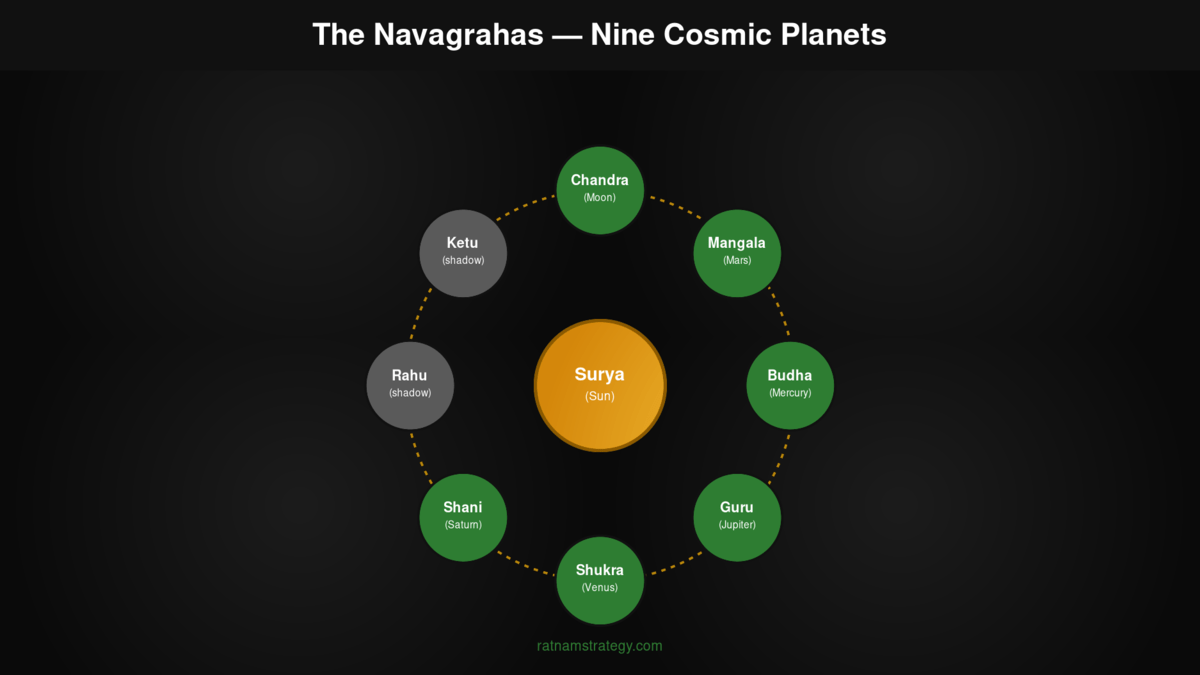

“…May Guru bless you with wisdom.
May Shukra fill your life with love and harmony.
May Rahu awaken higher awareness and ambition.
May Ketu guide you toward spiritual growth and liberation.
May Surya grant you confidence,
Chandra bring peace of mind,
Mangal give you strength,
and Shani bless you with patience and discipline.
May the Navagrahas always protect and uplift your life.”
“…Devavrata, the son of King Shantanu, ruler of the Kuru dynasty, and Ganga, the goddess of the River Ganga, was Bhishma’s birth name. Devavrata was no ordinary child. Trained by great sages and blessed by celestial beings, he mastered:
Archery and warfare under Parashurama and other legendary teachers
Vedas and scriptures, gaining deep spiritual wisdom
Statecraft and diplomacy, becoming a wise future ruler
Self-discipline and austerity, shaping his unbreakable character
His extraordinary education and divine blessings prepared him for the epic destiny that would make him one of the greatest warriors in the Mahabharata.”