 Raja Ratnam
Introduction
Maa Shailaputri (Day 1 of Navratri):
Maa Shailaputri symbolizes fresh starts and helps for your spiritual journey. Praying to her is believed to clear obstacles and bring peace and stability into life. She boosts mental strength, purity, and devotion and she protects the devotees from illnesses and bad luck.
Her name explains that —Shaila means “mountain,” and Putri means “daughter.” She is for purity, strength, and staying grounded. Praying to this goddess on the first day is considered very important because she sets the spiritual tone for the rest of the days.
Who is Maa Shailaputri (Day 1 of Navratri)?
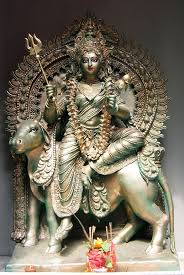
Maa Shailaputri (Day 1 of Navratri) :Maa Shailputri is the first manifestation of Goddess Durga. According to Hindu scriptures, she is the rebirth of Goddess Sati, who immolated herself during Daksha’s yajna (sacrifice). In her new life, she was born as the daughter of King Himavan, the lord of the Himalayas, and thus came to be called “Shailputri.”
She is also identified with Goddess Parvati, who later marries Lord Shiva. As a result, Maa Shailputri represents divine motherhood, endurance, and strength.
Iconography of Maa Shailaputri (Day 1 of Navratri)
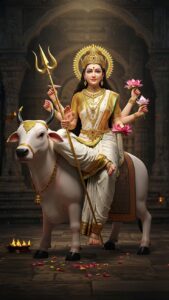
- Mount: She rides the bull (Nandi), symbolizing dharma (righteousness) and steadiness.
- Appearance: A radiant face reflecting innocence, courage, and strength.
- Weapons: She holds a trident (Trishul) in her right hand and a lotus flower in her left.
- Symbolism: The trident represents power and the ability to destroy evil, while the lotus represents purity and spiritual growth.
Maa Shailaputri Puja Vidhi (Step-by-Step)
- Morning Preparation
- Wake up early, bathe, and wear orange clothes (the color of Day 1).
- Clean the puja space and decorate with rangoli and flowers.
- Ghatasthapana (Kalash Sthapana)
- Place a Kalash (sacred pot) filled with water, betel nut, and coins.
- Cover it with mango leaves and a coconut tied with red cloth.
- Place it on soil with sown barley or seven types of grains.
- Installation of Maa Shailputri’s Idol or Picture
- Place the idol/picture on the altar, adorned with kumkum, turmeric, and flowers.
- Mantra Chanting
Recite:
“Om Devi Shailaputryai Namah” (108 times if possible). - Offerings (Naivedyam)
- Offer desi ghee, fruits, and flowers.
- Light a ghee lamp (deepam) for positivity and blessings.
- Aarti
- Perform aarti with incense, lamp, and bells while chanting hymns like “Durga Aarti” or “Ya Devi Sarvabhuteshu.”
Significance of Worshipping Maa Shailaputri
- She symbolises fresh starts and helps you lay a strong base for your spiritual journey.
- Praying to her is believed to clear obstacles and bring peace and stability into life.
- She boosts mental strength, purity, and devotion.
- Devotees believe she protects them from illnesses and bad luck.
Benefits of Worshipping Maa Shailaputri (Day 1 of Navratri)
- Brings balance and calmness to life.
- Enhances willpower, courage, and determination.
- Helps in overcoming negativity and bad karma.
- Strengthens the bond with Mother Nature and cosmic energy.
Legends Associated with Maa Shailputri
- Rebirth of Sati: After Sati sacrificed her life, she was reborn as Shailputri, beginning a new divine journey.
- Marriage to Shiva: As Parvati/Shailputri, she performed penance to marry Lord Shiva, representing the union of Shakti and Shiva.
Regional Worship Traditions : Maa Shailputri (Day 1 of Navratri)
- In North India, Maa Shailputri is invoked during Ghatasthapana.
- In Tamil Nadu and South India, she is worshipped as part of Golu traditions.
- In West Bengal, she is honored during Durga Puja rituals.
Maa Shailputri Mantra & Stotra Maa Shailputri (Day 1 of Navratri)
- Beej Mantra: “Om Hreem Shreem Shailaputriyai Namah”
- Navratri Day 1 Chant: “Om Devi Shailaputryai Namah”
20 FAQs About Maa Shailaputri
Q1. Who is Maa Shailputri?
A1. She is the first form of Navadurga, daughter of the Himalayas, and a reincarnation of Goddess Sati.
Q2. What is the color of Day 1 of Navratri?
A2. Orange, symbolizing enthusiasm and positivity.
Q3. What does Maa Shailputri ride on?
A3. She rides a bull, symbolizing strength and dharma.
Q4. Which weapon does she hold?
A4. A trident (Trishul).
Q5. What flower is offered to Maa Shailputri?
A5. Red hibiscus, jasmine, or lotus flowers.
Q6. What is the mantra of Maa Shailputri?
A6. “Om Devi Shailaputryai Namah.”
Q7. What food is offered to her?
A7. Desi ghee and fruits.
Q8. What is Ghatasthapana?
A8. It is the ritual of Kalash installation marking the start of Navratri.
Q9. Why is she called Shailputri?
A9. Because she was born as the daughter of the Himalaya king (Shail = mountain).
Q10. What blessings does Maa Shailputri grant?
A10. Stability, courage, purity, and protection.
Q11. Can unmarried girls worship Maa Shailaputri?
A11. Yes, it is highly auspicious for young women to seek her blessings.
Q12. What is the significance of the bull (Nandi)?
A12. It represents dharma, strength, and patience.
Q13. Which grain is offered during Ghatasthapana?
A13. Barley or a mix of seven grains.
Q14. Can Maa Shailputri be worshipped at home?
A14. Yes, with simple rituals, devotion, and chanting of her mantra.
Q15. What does the lotus in her hand symbolize?
A15. Purity, spiritual awakening, and peace.
Q16. What does the Trishul symbolize?
A16. The destruction of evil and balance of creation, preservation, and destruction.
Q17. Is fasting compulsory on Day 1 of Navratri?
A17. It is optional but recommended for spiritual discipline.
Q18. What time should the puja be performed?
A18. Ideally, early morning after sunrise.
Q19. Can men worship Maa Shailputri?
A19. Yes, devotion is open to all genders.
Q20. What is the ultimate blessing of Maa Shailputri?
A20. She grants a stable spiritual foundation for life and devotion.
Related Sacred Topics & Cultural Heritage: For further spiritual exploration, read about Lord Rama’s ideal life story. For further spiritual exploration, read about the 14-year exile of Lord Rama. For further spiritual exploration, read about Ravana’s story in the Ramayana.
Conclusion :Maa Shailaputri (Day 1 of Navratri)
Maa Shailputri, the first form of Navadurga, represents strength, purity, and the beginning of spiritual awakening. By worshipping her on the first day of Navratri with devotion, chanting her mantras, and offering simple puja rituals, devotees invite stability, peace, and divine energy into their lives.
🌸 May Maa Shailaputri bless you with health, happiness, and spiritual growth this Navratri! 🌸




thank you so much
Everything is very open with a clear clarification of the issues.
It was truly informative. Your site is very useful.
Thanks for sharing!
Thank you so much for your wonderful feedback! I’m really happy to hear that the content felt clear and genuinely helpful. Comments like yours keep me motivated to create more valuable posts. I’m glad you found the site useful, and I hope you’ll keep exploring—there’s lots more to come!
Expanded article here: https://sarapang.com
thank you
Hey! This is my first visit to your blog!
We are a team of volunteers and starting a new initiative in a community
in the same niche. Your blog provided us valuable information to work on. You have done a marvellous job!
Thank you so much for visiting our blog and for your wonderful feedback! We’re truly happy to hear that our content has been valuable for your new community initiative.
It’s inspiring to know that a team of passionate volunteers like yours is working in the same niche to make a positive impact. We sincerely wish you great success in your project and hope our articles continue to support and inspire your journey.
Thank you once again for your kind words and encouragement. We look forward to seeing you here again soon!
What an adventure this platform offers every day. The tournament brackets are competitive and rewards show up on time without any drama. I am definitely recommending it to all my friends. awintura
Here’s a friendly and engaging reply you can post:
Thank you so much for sharing your experience! 😊 It’s great to hear that you’re enjoying the platform and finding the tournaments competitive and rewarding. Your recommendation truly means a lot! 🙌 Wishing you many more exciting wins and adventures ahead! 🏆✨