 Admin
Admin
About the Author
Raja Ratnam is a passionate researcher and writer specialising in Indian mythology and epic stories.
With years of experience studying texts like Ramayana, Mahabharata, Shikhandi in Mahabharata: The Warrior Who Changed the Fate of Kurukshetra, Festivals, Ratha Saptami 2026, Navagrahas, Ketu Deva and other cultural scriptures,
he brings insightful interpretations and practical lessons from these timeless stories.
Raja Ratnam believes in making mythology accessible and meaningful for modern readers,
helping them understand the moral, ethical, and cultural significance behind characters like Rama, Laxman, Shani Deva, and many more.
Connect with the author: info@ratnamstrategy.com
Introduction
The Mahabharata is not just a tale of war but a profound epic filled with complex characters, moral dilemmas, and destiny-driven events. Among these powerful figures, Shikhandi stands out as one of the most unique and influential characters. Often misunderstood and sometimes overlooked, Shikhandi played a crucial role in the fall of Bhishma, one of the greatest warriors of all time.
This blog explores who Shikhandi was, the story behind their birth, their transformation, and their importance in the Mahabharata war.
Who Was Shikhandi?
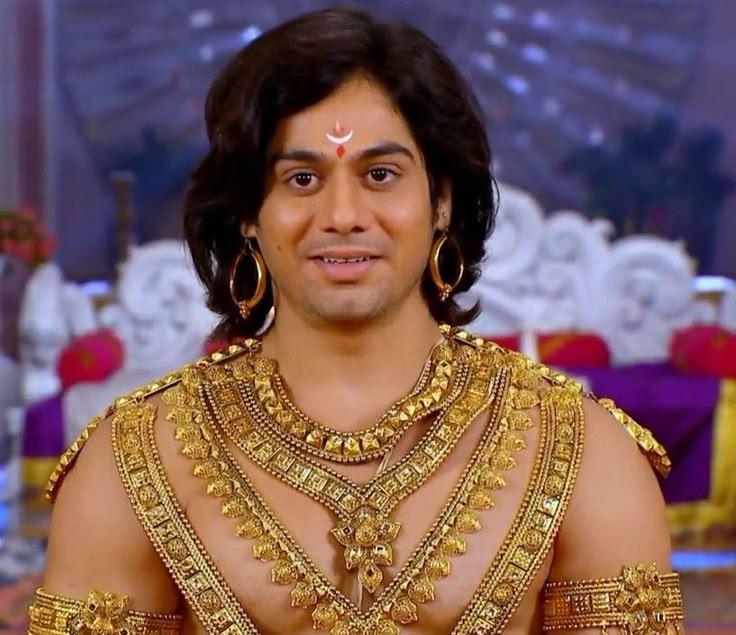
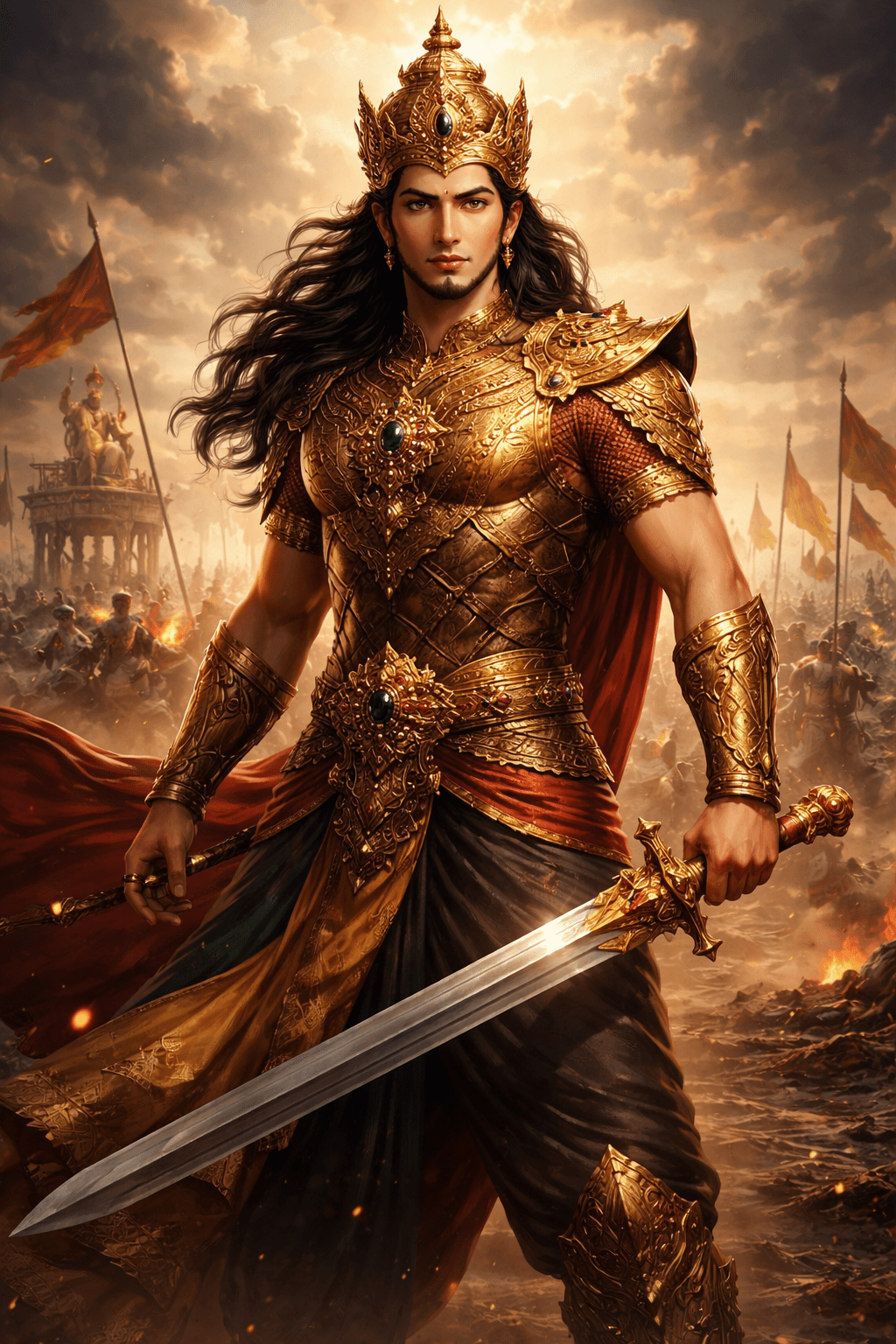
Shikhandi was a warrior in the Mahabharata who fought on the side of the Pandavas during the Kurukshetra War. However, Shikhandi’s identity goes beyond a simple warrior role. Their life story involves themes of rebirth, destiny, gender identity, revenge, and divine justice.
Shikhandi was born as Shikhandini, the daughter of King Drupada of Panchala, and later became Shikhandi through divine intervention.
The Past Life of Shikhandi – Amba’s Story
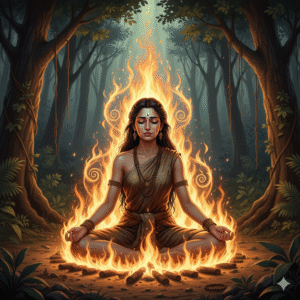
To understand Shikhandi, we must first understand Amba.
Amba was a princess who was abducted by Bhishma along with her sisters Ambika and Ambalika for the prince of Hastinapura. However, Amba revealed that she loved another king and wanted to marry him. Bhishma released her with honor, but tragedy followed.
- Her lover refused to accept her.
- Society rejected her.
- Bhishma refused to marry due to his vow of celibacy.
Broken and humiliated, Amba performed severe penance and received a boon that she would be the cause of Bhishma’s death in her next life. She then sacrificed her life in fire.
She was reborn as Shikhandini, the child of King Drupada.
Birth of Shikhandini and Transformation into Shikhandi
King Drupada needed a powerful warrior to defeat Drona and support the Pandavas. When Shikhandini was born, a divine voice declared that this child would become a great warrior.
However, Shikhandini was biologically female. This became a challenge when Drupada arranged Shikhandini’s marriage to a princess of another kingdom. When the truth was discovered, conflict arose between kingdoms.
To resolve this, Shikhandini went into the forest and encountered a Yaksha (a celestial being) who agreed to exchange genders temporarily. Through this divine exchange, Shikhandini became Shikhandi, a male warrior.
Later, Kubera allowed the gender transformation to remain permanent as a blessing.
Shikhandi’s Role in the Kurukshetra War
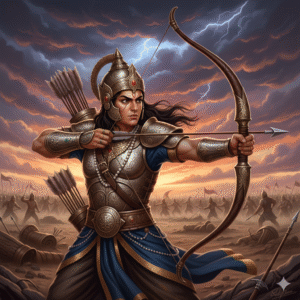
Shikhandi’s most important role came on the 10th day of the Kurukshetra War.
Why Bhishma Refused to Fight Shikhandi
Bhishma recognized Shikhandi as the reincarnation of Amba. Because Shikhandi had been born female in this life, Bhishma refused to raise weapons against Shikhandi, considering it against his warrior ethics.
How Shikhandi Became the Key to Bhishma’s Fall
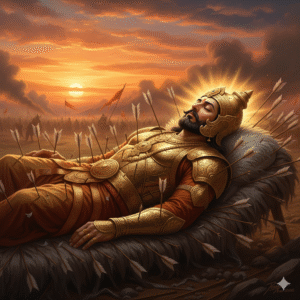
Knowing this weakness, Lord Krishna and Arjuna used strategy:
- Shikhandi stood in front of Arjuna on the battlefield.
- Bhishma refused to attack Shikhandi.
- Using Shikhandi as a shield, Arjuna fired countless arrows at Bhishma.
- Bhishma fell on a bed of arrows, marking a turning point in the war.
Without Shikhandi, defeating Bhishma would have been nearly impossible.
Symbolism and Importance of Shikhandi’s Character
Shikhandi is not just a warrior; the character represents powerful themes:
1. Destiny and Karma
Shikhandi’s life shows how past actions (Amba’s suffering) shaped future destiny.
2. Justice Beyond a Single Lifetime
The Mahabharata teaches that justice may be delayed but never denied.
3. Gender Identity and Social Boundaries
Shikhandi’s story challenges traditional roles and shows that courage, purpose, and dharma matter more than gender.
4. Strategy Over Strength
Shikhandi’s presence proves that intelligence and planning can defeat even the strongest warriors.
Lessons We Learn from Shikhandi
- Every individual has a purpose in the grand design of life.
- Pain can transform into power.
- Society’s labels cannot define true destiny.
- Even the mightiest (like Bhishma) can fall when destiny aligns.
Why Shikhandi Remains Relevant Today

In modern times, Shikhandi’s story is often seen as:
- A symbol of identity and self-realization
- A voice for those who feel marginalized
- A reminder that truth and justice transcend physical form
Shikhandi teaches us that your past does not define your limits—your purpose does.
Conclusion
Shikhandi is one of the most powerful yet underrated characters in the Mahabharata. From Amba’s suffering to Shikhandi’s destiny as Bhishma’s downfall, this story is filled with emotion, purpose, and divine justice.
The Mahabharata is not just about heroes like Arjuna or Krishna; it is also about characters like Shikhandi, whose silent strength changed the course of history.
FAQs about Shikhandi
Here are 20 SEO-friendly FAQs for your blog
“Shikhandi in Mahabharata: The Warrior Who Changed the Fate of Kurukshetra” 👇
Frequently Asked Questions (FAQs)
1. Who was Shikhandi in the Mahabharata?
Shikhandi was a warrior of the Panchala kingdom who played a crucial role in the fall of Bhishma during the Kurukshetra war.
2. Was Shikhandi born a man or a woman?
Shikhandi was born as a woman named Shikhandini and later became a man through divine intervention.
3. Why is Shikhandi important in the Mahabharata?
Shikhandi was the key reason Bhishma laid down his weapons, leading to Bhishma’s defeat.
4. Who was Shikhandi in their previous birth?
In the previous birth, Shikhandi was Amba, who vowed to destroy Bhishma.
5. Why did Amba hate Bhishma?
Bhishma rejected Amba after abducting her for marriage, which ruined her life and honor.
6. How did Amba die?
Amba performed severe penance and later immolated herself to be reborn as Shikhandi.
7. Who was Shikhandi’s father?
Shikhandi was the child of King Drupada of Panchala.
8. Why did Drupada raise Shikhandini as a male?
A divine prophecy stated that Shikhandini would kill Bhishma, so Drupada raised the child as a prince.
9. How did Shikhandi become male?
A Yaksha named Sthunakarna exchanged genders with Shikhandi through divine blessing.
10. Did Bhishma know Shikhandi’s past?
Yes, Bhishma knew Shikhandi was born female and therefore refused to fight him.
11. Why would Bhishma not fight Shikhandi?
Bhishma followed strict warrior ethics and would not raise weapons against a woman or someone born female.
12. Who actually killed Bhishma?
Arjuna shot the arrows, but only because Shikhandi stood in front, making Bhishma defenseless.
13. Was Shikhandi a great warrior?
Yes, Shikhandi was a trained and capable warrior, though remembered mainly for his strategic role.
14. Which side did Shikhandi fight for?
Shikhandi fought on the Pandavas’ side during the Kurukshetra war.
15. Did Shikhandi fight directly with Bhishma?
Shikhandi confronted Bhishma, but Bhishma refused to attack him.
16. What happened to Shikhandi after Bhishma’s fall?
Shikhandi continued fighting in the war and was later killed by Ashwatthama.
17. Who killed Shikhandi?
Shikhandi was killed by Ashwatthama during the later days of the war.
18. Is Shikhandi considered a hero or a villain?
Shikhandi is considered a tragic hero—driven by destiny, past-life karma, and divine purpose.
19. What lesson does Shikhandi’s story teach?
Shikhandi’s story teaches that destiny, karma, and past actions shape future outcomes.
20. Why is Shikhandi’s role remembered even today?
Because without Shikhandi, Bhishma—the greatest warrior of his time—could not have been defeated.



Nice Blog Very Interested
thanks