 Admin
Admin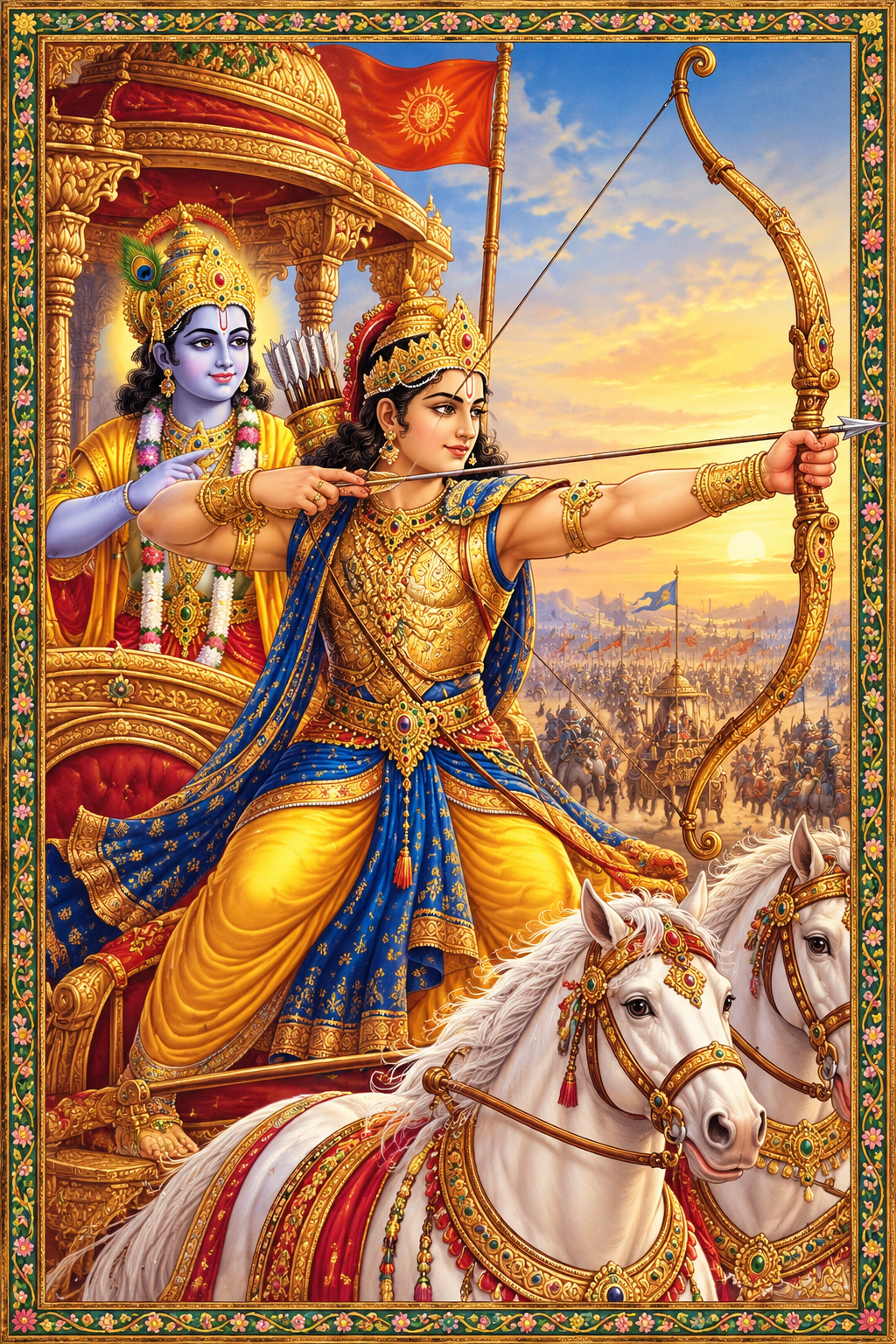
Arjuna in Mahabharata: The Greatest Archer and Hero of Dharma
Arjuna in Mahabharata is one of the most celebrated warriors in Indian history and Hindu mythology. Known for his unmatched archery skills, deep devotion to Lord Krishna, and strong commitment to dharma (righteousness), Arjuna’s life is filled with inspiration, struggle, devotion, and victory. This full-length SEO-optimized blog is specially crafted for Ratnam Strategy in the same format as Uttara and Abhimanyu content.
Introduction to Arjuna in Mahabharata
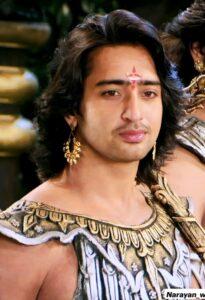
Arjuna is the third of the five Pandava brothers and the son of King Pandu and Queen Kunti. He was born through the blessings of Lord Indra, the king of gods, which is why Arjuna possessed divine strength, courage, and extraordinary skill in warfare. Among all warriors of the Mahabharata, Arjuna is considered the finest archer and a symbol of discipline, focus, and devotion.
The story of Arjuna in the Mahabharata is not just about war, but about life lessons, duty, self-doubt, inner strength, and ultimate spiritual wisdom through the Bhagavad Gita.
Birth and Early Life of Arjuna in Mahabharata
Arjuna was born after Kunti invoked Lord Indra using a divine mantra. From childhood, Arjuna showed exceptional talent in archery. Along with his brothers — Yudhishthira, Bhima, Nakula, and Sahadeva — he was trained under the great teacher Dronacharya.
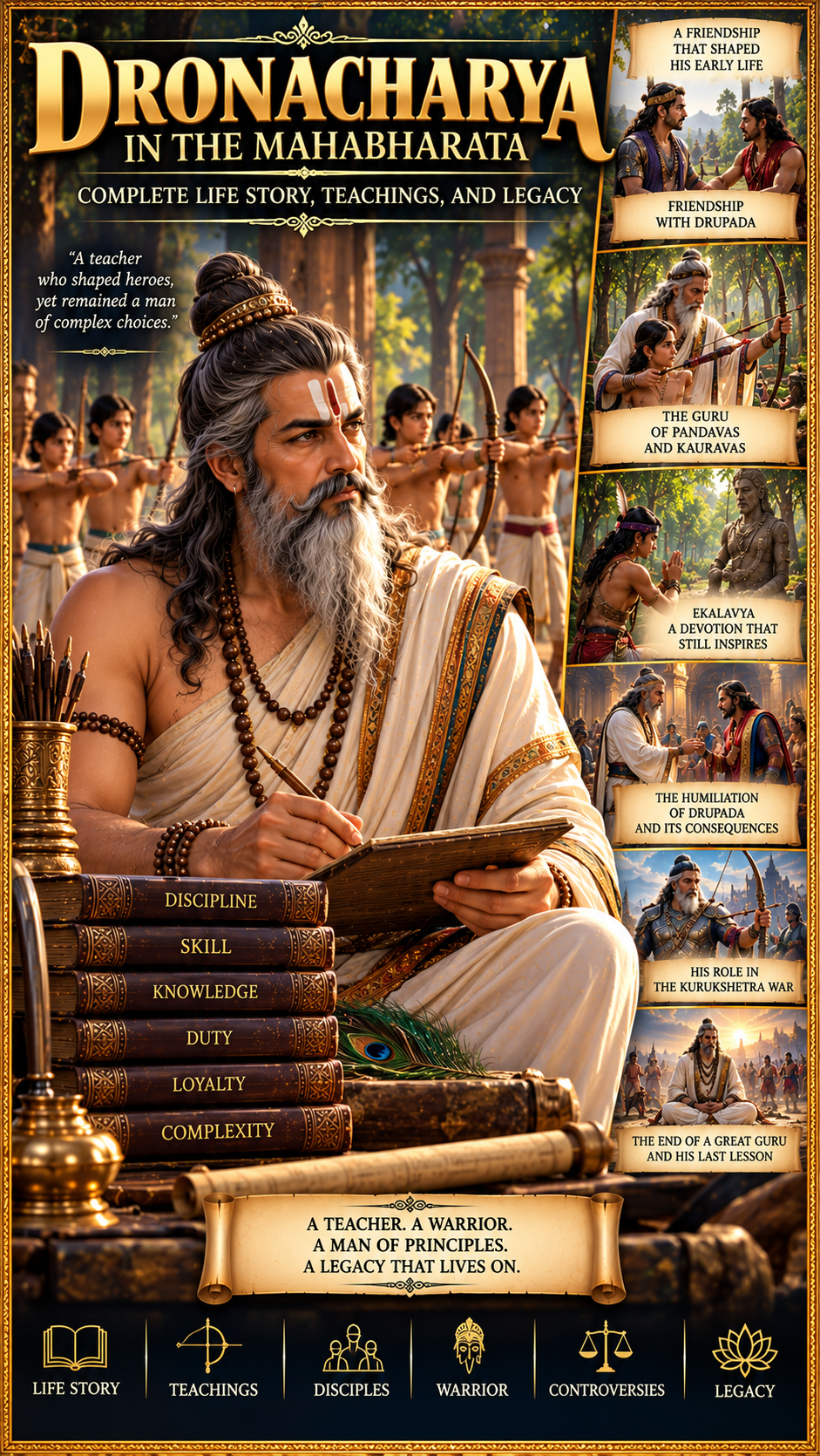
Dronacharya soon realized that Arjuna was not an ordinary student. His dedication, discipline, and sharp focus made him his favorite disciple. The famous story of the bird’s eye test proves Arjuna’s concentration, where he focused only on the eye of the bird while others got distracted.
Arjuna and Dronacharya: The Bond of Guru and Disciple
The relationship between Arjuna and Dronacharya is one of the most powerful teacher-student bonds in Mahabharata. Drona promised Arjuna that he would make him the greatest archer in the world. True to his word, he gave Arjuna special training and divine weapons (astra-vidya).
However, this favoritism also led to the tragic story of Ekalavya, showing that even great teachers and heroes have moral complexities.
Arjuna’s Marriage and Family Life
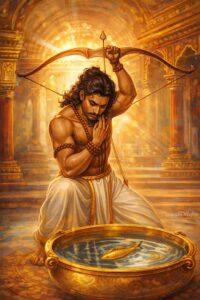
Arjuna’s life was deeply connected with love, alliances, and destiny. He had multiple marriages, each with significant importance in the epic.
Draupadi – The Shared Queen of the Pandavas
Draupadi became the wife of all five Pandavas, and Arjuna won her hand in the swayamvara by successfully completing the difficult archery challenge.
Subhadra – Sister of Lord Krishna
Arjuna married Subhadra, the sister of Lord Krishna. Their son was Abhimanyu, one of the bravest young warriors of Mahabharata.
Chitrangada and Ulupi
Arjuna also married Chitrangada, princess of Manipur, and Ulupi, a Naga princess. These marriages strengthened political and divine alliances.
Arjuna in Mahabharata and His Relationship with Lord Krishna
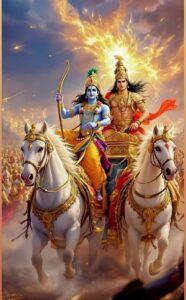
The bond between Arjuna and Krishna is the heart of the Mahabharata. Krishna was Arjuna’s friend, guide, philosopher, and divine charioteer during the Kurukshetra war. Their relationship represents the connection between the human soul and the divine.
Krishna chose not to wield weapons in the war but became Arjuna’s charioteer, guiding him not only in battle but also in life.
Teachings of Arjuna in Mahabharata Through the Bhagavad Gita
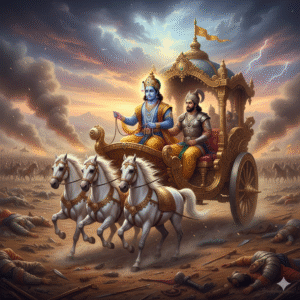
One of the most important moments in the Mahabharata is Arjuna’s emotional breakdown on the battlefield of Kurukshetra. Seeing his own relatives, teachers, and friends on both sides, Arjuna was filled with sorrow and refused to fight.
It was at this moment that Lord Krishna delivered the divine teachings of the Bhagavad Gita. Through these teachings, Krishna explained:
- The importance of duty (dharma)
- The immortality of the soul
- The concept of karma and detachment
- Devotion (bhakti) as the path to liberation
This transformed Arjuna from a confused warrior into a spiritually awakened hero.
Role of Arjuna in Mahabharata War (Kurukshetra)
Arjuna played the most crucial role in the victory of the Pandavas. His archery skills and divine weapons changed the course of the war.
Defeat of Great Warriors
Arjuna defeated or played a major role in the downfall of:
- Bhishma (with Shikhandi’s help)
- Jayadratha (to avenge Abhimanyu’s death)
- Karna (his greatest rival)
- Numerous powerful Kaurava warriors
The Death of Karna
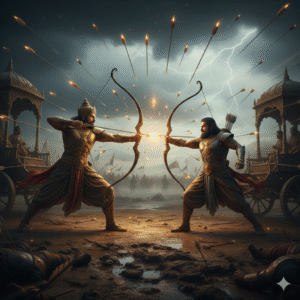
The battle between Arjuna and Karna is one of the most emotional and intense episodes. Guided by Krishna, Arjuna ultimately killed Karna, fulfilling destiny and restoring balance.
It is believed that Arjuna represents discipline and focus
Arjuna in Mahabharata represents the ideal qualities of a warrior:
- Deep concentration
- Respect for teachers
- Devotion to God
- Commitment to righteousness
- Emotional depth and humanity
His life teaches us that even the strongest individuals face doubt, but guidance and faith can lead them to victory.
Life Lessons and Teachings from Arjuna in Mahabharata
After the war, Arjuna lived to see the rise of his grandson Parikshit (son of Abhimanyu and Uttara). Later, when the Pandavas renounced the world and began their final journey to the Himalayas, Arjuna eventually fell along the way due to traces of pride in his heart.
This ending shows that Mahabharata does not portray heroes as perfect beings, but as deeply human characters with virtues and flaws.
Importance of Arjuna in Mahabharata Today
The story of Arjuna in Mahabharata remains relevant even today. His life inspires:
- Students to focus on goals
- Professionals to perform duty honestly
- Spiritual seekers to walk the path of wisdom
- Leaders to make ethical decisions
The Bhagavad Gita, spoken to Arjuna, continues to guide millions across the world.
FAQs – Arjuna in Mahabharata
1. Who is Arjuna in Mahabharata?
Arjuna is the third Pandava prince and the greatest archer, son of Pandu and Kunti.
2. Who was Arjuna’s father?
Arjuna’s divine father was Lord Indra.
3. Who was Arjuna’s guru?
Arjuna was trained by Dronacharya.
4. Why is Arjuna famous?
He is famous for his archery skills and for receiving the Bhagavad Gita teachings.
5. Who was Arjuna’s best friend?
Lord Krishna was Arjuna’s closest friend and guide.
6. Who was Arjuna’s son?
Abhimanyu was Arjuna’s most famous son.
7. Who did Arjuna marry?
Arjuna married Draupadi, Subhadra, Chitrangada, and Ulupi.
8. Why did Arjuna hesitate in the war?
He felt emotional seeing his family on the battlefield.
9. What did Krishna teach Arjuna?
Krishna taught him the Bhagavad Gita.
10. Who killed Karna?
Arjuna killed Karna during the Kurukshetra war.
11. Was Arjuna stronger than Bhima?
Bhima was physically stronger, but Arjuna was superior in skill and strategy.
12. What is Arjuna’s divine weapon?
The Pashupatastra is one of his most powerful weapons.
13. Did Arjuna go to heaven?
Yes, after death, Arjuna attained heavenly realms.
14. Why is Arjuna called Partha?
Because he was the son of Pritha (Kunti).
15. Why is Arjuna called Dhananjaya?
Because he collected wealth during sure journeys.
16. What is Arjuna’s weakness?
At times, pride and emotional attachment.
17. Who was Arjuna’s biggest rival?
Karna.
18. What role did Arjuna play in Mahabharata?
He was the chief warrior of the Pandavas.
19. Why is Arjuna important in Hindu philosophy?
Because the Bhagavad Gita was spoken to him.
20. What is the main lesson from Arjuna’s life?
Perform your duty with faith, discipline, and devotion.
The legacy of Arjuna continued through his son Abhimanyu and daughter-in-law Uttara, whose story is explained in our detailed guide on Uttara in Mahabharata.
Final Thoughts
Arjuna in Mahabharata is not just a warrior, but a timeless symbol of human struggle, growth, and spiritual awakening. His journey from doubt to divine wisdom teaches us that with the right guidance and dedication, anyone can overcome inner battles and achieve greatness.
For readers of Ratnam Strategy who love mythology, inspiration, and culture-based wisdom, the life of Arjuna remains one of the most powerful and meaningful stories ever told.


thanks
Beautifully said! 🙏
Krishna may not have wielded weapons in the Kurukshetra war, but his guidance shaped the destiny of the entire battle. As the charioteer of Arjuna, his wisdom in the Bhagavad Gita continues to inspire and guide humanity even today.
It’s a powerful reminder that true strength often lies in wisdom, clarity, and righteous guidance rather than direct action. 🚀