Admin
Admin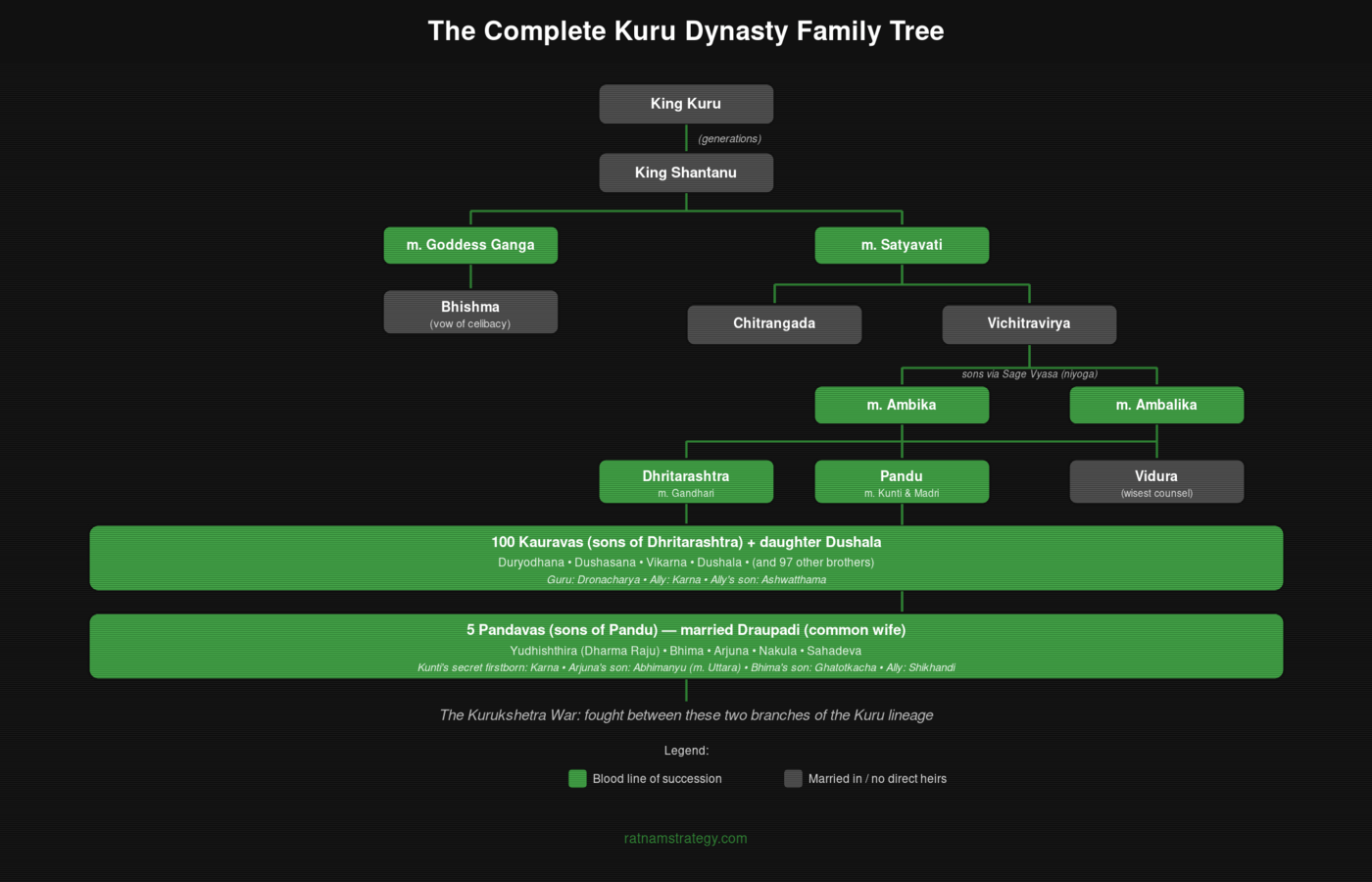
Introduction
The story of Abhimanyu in the Mahabharata stands as one of the most emotional and heroic episodes in the great Indian epic. Though young in age, Abhimanyu displayed extraordinary courage, wisdom, and devotion to dharma. His sacrifice during the Kurukshetra war became a symbol of supreme bravery and righteous struggle.
Who Was Abhimanyu in the Mahabharata?
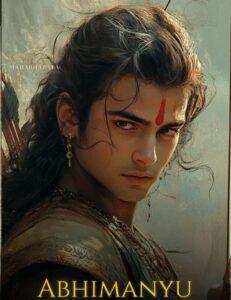
Abhimanyu was the son of Arjuna, the greatest archer among the Pandavas, and Subhadra, the sister of Lord Krishna. From birth, he carried divine qualities and warrior instincts.
Despite his young age, Abhimanyu was regarded as a powerful warrior equal to seasoned kings.
Lineage and Family Background
Abhimanyu was born into the noble Chandravanshi (Lunar Dynasty), one of the most respected royal lineages in the Mahabharata. He was the son of Arjuna, the greatest archer among the Pandavas, known for his courage, discipline, and devotion to dharma.
His mother Subhadra was the sister of Lord Krishna, giving Abhimanyu a divine connection from birth. Through Arjuna’s warrior lineage and Krishna’s guidance, Abhimanyu inherited extraordinary bravery and wisdom.
According to the scriptures, Abhimanyu was also believed to be the incarnation of Varchas, the son of the Moon God, destined to live only sixteen years on earth — a destiny that made his sacrifice in Padmavyooham eternal.
Son of Arjuna and Subhadra
Abhimanyu was the beloved son of Arjuna, the legendary Pandava warrior, and Subhadra, the sister of Lord Krishna. From his father, Abhimanyu inherited exceptional archery skills, courage, and warrior discipline, while from his mother he received grace, compassion, and inner strength.
Being the nephew of Lord Krishna, Abhimanyu grew up under divine guidance and moral values. This rare combination of heroic lineage and spiritual influence shaped him into a fearless yet righteous warrior.
Though young in age, Abhimanyu carried the legacy of both Arjuna’s valor and Krishna’s wisdom, which later shone brightly during his heroic stand in the Padmavyooham.
Birth of Abhimanyu – A Divine Warrior Is Born
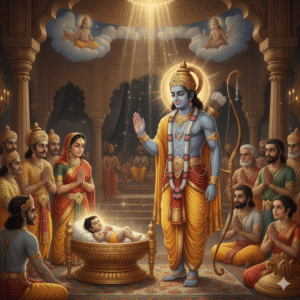
According to the Mahabharata, Abhimanyu was born with celestial blessings. He was believed to be the incarnation of Varchas, the son of Chandra (Moon God), who was destined to live only for sixteen years on earth.
His name “Abhimanyu” means one who is surrounded by enemies yet remains fearless.
Influence of Lord Krishna
Lord Krishna played a significant role in shaping Abhimanyu’s life from his childhood. As the brother of Subhadra, Krishna treated Abhimanyu not merely as a nephew but as a child of divine purpose. His presence filled Abhimanyu’s life with spiritual strength, wisdom, and clarity of dharma.
Under Krishna’s guidance, Abhimanyu learned that true heroism lies not only in physical power but in standing for righteousness. Krishna’s teachings inspired him to face challenges without fear and to accept duty even when the outcome was uncertain.
It was this divine influence that gave Abhimanyu the courage to enter the Padmavyooham — not for victory or fame, but to protect dharma and serve the greater good.
Meaning of the Name Abhimanyu
The name Abhimanyu comes from Sanskrit and carries a deep spiritual meaning. The word “Abhi” means towards or against, and “Manyu” means anger, courage, or determined spirit. Together, Abhimanyu signifies one who moves forward fearlessly against all odds.
Another traditional interpretation describes Abhimanyu as “the warrior who is surrounded by enemies yet remains undeterred.” This meaning perfectly reflects his life, especially during the Padmavyooham battle, where he stood alone inside a deadly formation and continued fighting without fear.
Thus, the name Abhimanyu was not just a name but a prophecy — symbolizing courage, sacrifice, and unwavering commitment to dharma, qualities that made him immortal in the Mahabharata.
Abhimanyu’s Knowledge of Chakravyuha
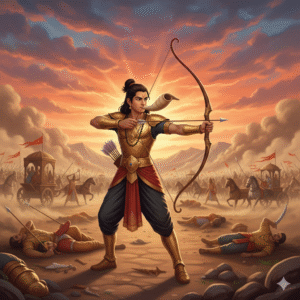
One of the most famous parts of the Abhimanyu Mahabharata story is his knowledge of the deadly Chakravyuha formation.
Subhadra’s womb was the place where Abhimanyu heard Arjuna explain the Chakravyuha to him. However, Subhadra fell asleep before Arjuna could explain how to exit, leaving Abhimanyu with half the knowledge.
This destiny would later shape his heroic end.
How Abhimanyu Learned the Secret Formation
Abhimanyu learned the secret of the deadly Padmavyooham (Chakravyuha) even before he was born. When his mother Subhadra was pregnant, Arjuna once explained to her the complex method of entering this powerful war formation.
While still in his mother’s womb, the unborn Abhimanyu carefully listened to Arjuna’s explanation. The child grasped the strategy with remarkable intelligence, showing his divine nature even before birth.
However, Subhadra fell asleep before Arjuna could explain how to exit the formation. As a result, Abhimanyu learned only the method of entry — a partial knowledge that later shaped his destiny on the battlefield of Kurukshetra.
Why He Knew Only Half the Strategy

Abhimanyu knew only half the strategy of the Padmavyooham because the lesson was never completed. While Arjuna was explaining the method of entering the formation to Subhadra, she slowly fell asleep due to fatigue.
When Subhadra fell asleep, Arjuna stopped his explanation out of respect, unaware that the unborn Abhimanyu was listening attentively from within the womb. As a result, the method of exiting the formation was never explained.
Thus, Abhimanyu learned how to enter Padmavyooham but not how to come out — a tragic twist of destiny that later led to his heroic sacrifice in the Kurukshetra war.
Abhimanyu’s Role in the Kurukshetra War
Though barely in his teens, Abhimanyu fought valiantly on the battlefield. His archery skills, speed, and courage amazed even veteran warriors.
The Pandava army trusted him despite his youth because of his extraordinary abilities.
Youngest Warrior Among the Pandavas
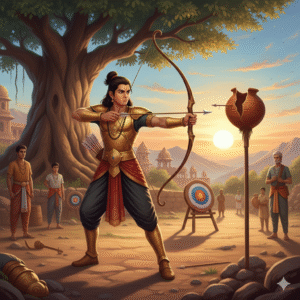
Abhimanyu was the youngest warrior to fight on the battlefield of Kurukshetra among the Pandavas. While most warriors gained experience over many years, Abhimanyu entered the war at a very young age, guided by courage and a strong sense of duty.
Despite his youth, he displayed exceptional skill in archery and remarkable battlefield awareness. Senior warriors were often surprised by his confidence, discipline, and fearless approach to combat.
His presence proved that greatness is not determined by age, but by inner strength and devotion to dharma — qualities that made Abhimanyu stand shoulder to shoulder with legendary heroes.
Fearless Spirit on the Battlefield
Abhimanyu entered the battlefield with a fearless spirit that amazed both allies and enemies. Surrounded by chaos, roaring chariots, and flying weapons, he remained calm and focused, showing no trace of fear.
His courage did not come from pride or aggression, but from confidence rooted in dharma. Even in the most dangerous moments, Abhimanyu fought with clarity and determination, inspiring the Pandava soldiers around him.
This fearless spirit later shone brightest inside the Padmavyooham, where he stood alone against countless warriors — proving that true bravery arises from righteousness, not from strength alone.
The Chakravyuha Battle – Turning Point of the War
On the 13th day of the Kurukshetra war, Dronacharya formed the Chakravyuha to trap Yudhishthira.
The Pandavas knew only Abhimanyu could break it.
With determination and devotion to dharma, Abhimanyu decided to enter the formation, knowing he might not return.
Why the Pandavas Could Not Enter
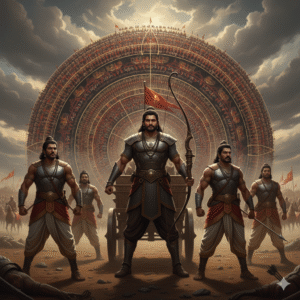
Although Abhimanyu successfully entered the Padmavyooham, the other Pandava warriors were unable to follow him inside. As Abhimanyu moved deeper into the formation, Jayadratha, the king of Sindhu, stood at the entrance and blocked the Pandavas.
Despite their strength, Bhima, Yudhishthira, Nakula, and Sahadeva were held back by Jayadratha and the Kaurava forces. This separation prevented them from protecting Abhimanyu as planned.
As the gates of the Padmavyooham closed, Abhimanyu was left alone inside the deadly formation — a turning point that led to his heroic and tragic fate on the battlefield.
Abhimanyu’s Brave Decision
When the Padmavyooham stood as an unbreakable barrier before the Pandava army, Abhimanyu clearly understood the danger it posed. He knew that he did not possess full knowledge of the formation and that entering it might lead to his death.
Yet, seeing dharma in peril and his elders unable to advance, Abhimanyu made a courageous choice. He decided to step forward not out of pride, but out of responsibility toward his duty as a Kshatriya.
His decision reflected rare inner strength — choosing the path of righteousness even when the outcome was uncertain — a moment that transformed a young warrior into an eternal symbol of sacrifice in the Mahabharata.
Rules of Dharma Yuddha
In the Mahabharata, warfare was governed by strict moral principles known as Dharma Yuddha. These rules ensured that war was fought with honor, fairness, and righteousness, even between enemies.
According to Dharma Yuddha, a warrior should never attack an unarmed opponent, strike from behind, or allow many warriors to fight one person at the same time. Battles were to be fought only between equals and only during daylight hours.
These sacred rules were meant to protect justice in war. The violation of Dharma Yuddha during Abhimanyu’s battle inside the Padmavyooham marked one of the darkest moments of the Kurukshetra war and revealed the fall of righteousness among the Kauravas.
Violations by the Kauravas
During the Padmavyooham battle, the Kauravas openly violated the sacred rules of Dharma Yuddha. Unable to defeat Abhimanyu in fair combat, they abandoned righteousness and chose injustice.
Many warriors attacked Abhimanyu together, even though he was fighting alone. His chariot was destroyed, his weapons were broken, and he was repeatedly struck while unarmed — all of which were strictly forbidden in righteous warfare.
These violations marked a moral downfall of the Kaurava side. The unjust killing of Abhimanyu became one of the greatest acts of adharma in the Mahabharata and ultimately led to their own destruction in the war.
How Abhimanyu Died in the Mahabharata
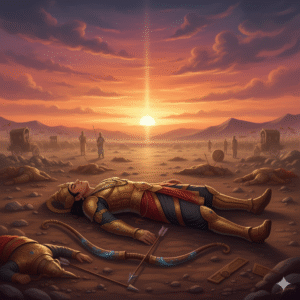
Surrounded by powerful warriors like Drona, Karna, Duryodhana, Ashwatthama, Kripacharya, and Dushasana’s son, Abhimanyu was brutally attacked from all sides.
Finally, exhausted and weaponless, he was struck down unfairly.
The death of Abhimanyu in the Mahabharata is considered one of the greatest violations of dharma in the epic.
Surrounded by Maharathis
Inside the Padmavyooham, Abhimanyu was surrounded by powerful Maharathis such as Dronacharya, Karna, Ashwatthama, Kripacharya, and Duryodhana. Though he stood alone against these seasoned warriors, Abhimanyu fought with extraordinary courage until exhaustion overcame him, proving that his spirit was far greater than the strength of his enemies.
Weapons Broken, Courage Unbroken
As the battle raged inside the Padmavyooham, Abhimanyu’s bow was shattered, his chariot destroyed, and his weapons taken from him one by one. Yet, even when left unarmed, his courage did not waver. Fighting with whatever strength remained, Abhimanyu stood fearless till his final breath, proving that true bravery lives not in weapons, but in an unbroken spirit.
Attack by Multiple Warriors
When Abhimanyu continued to fight fearlessly, several Kaurava warriors attacked him together, ignoring the rules of Dharma Yuddha. Surrounded from all sides, he faced simultaneous strikes from powerful fighters, turning a fair battle into an act of injustice. This cruel assault revealed the moral collapse of the Kauravas and sealed the tragic fate of the young hero.
Unfair Killing of Abhimanyu
Abhimanyu was killed in complete violation of the rules of Dharma Yuddha. While he stood exhausted and unarmed, multiple warriors attacked him together, and he was struck from behind — an act strictly forbidden in righteous warfare. This unjust killing of a lone young warrior became one of the darkest moments of the Mahabharata and forever marked the fall of dharma among the Kauravas.
Age of Abhimanyu at the Time of Death
Abhimanyu was only 16 years old when he attained martyrdom — making his sacrifice even more heart-wrenching.
Arjuna’s Vow After Abhimanyu’s Death
When Arjuna learned about his son’s death, he took a terrifying oath:
“I will kill Jayadratha by sunset tomorrow, or I will enter the fire myself.”
This vow led to one of the most intense days of the war and ultimately the fall of Jayadratha.
The Fierce Oath Against Jayadratha
Why Abhimanyu’s Sacrifice Changed the War
Abhimanyu’s death ignited unstoppable rage among the Pandavas. It exposed the moral downfall of the Kauravas and shifted the war from strategy to divine justice.
His sacrifice ensured that adharma would not prevail.
Moral Collapse of the Kauravas
The killing of Abhimanyu marked the complete moral collapse of the Kauravas. By abandoning the rules of Dharma Yuddha and attacking a lone, unarmed young warrior, they chose victory through injustice rather than honor. This act of adharma not only stained their cause but also sealed their downfall, as righteousness began to turn decisively against them in the Kurukshetra war.
Rise of Pandava Fury
The killing of Abhimanyu marked the complete moral collapse of the Kauravas. By abandoning the rules of Dharma Yuddha and attacking a lone, unarmed young warrior, they chose victory through injustice rather than honor. This act of adharma not only stained their cause but also sealed their downfall, as righteousness began to turn decisively against them in the Kurukshetra war.
Untold Facts About Abhimanyu
- He was the reincarnation of Varchas, son of the Moon God
- His lifespan was predetermined
- Even gods mourned his death
- Lord Krishna silently wept for him
Abhimanyu as Rebirth of Varchas
According to the Mahabharata, Abhimanyu was the rebirth of Varchas, the son of the Moon God (Chandra). Varchas was sent to earth with a divine purpose — to support dharma during the great war — and was granted only sixteen years of human life. This celestial origin explains Abhimanyu’s extraordinary bravery and wisdom at a young age, and his early sacrifice fulfilled the divine destiny assigned to him.
Symbol of Youthful Valor
Abhimanyu stands as a timeless symbol of youthful valor in the Mahabharata. Though young in age, his courage, determination, and willingness to face impossible odds reflected the highest ideals of heroism. His life proves that true bravery is not defined by years or experience, but by the strength of one’s heart and commitment to dharma.
Spiritual Significance of Abhimanyu’s Story
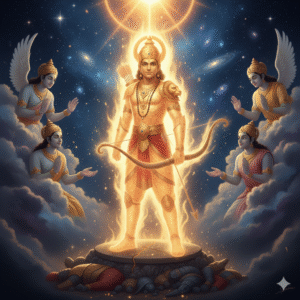
Abhimanyu represents the soul that enters life knowing suffering but still chooses righteousness.
His life teaches that true heroism lies not in victory, but in standing for dharma even when defeat is certain.
Dharma, Sacrifice, and Courage
Abhimanyu’s life beautifully reflects the unity of dharma, sacrifice, and courage. He understood that true righteousness often demands personal loss, yet he never hesitated to walk that difficult path.
Knowing the danger of Padmavyooham, Abhimanyu still chose to fight — not for victory, but for duty. His sacrifice was an offering to dharma, made with a fearless heart and pure intention.
Through his courage and selfless sacrifice, Abhimanyu proved that when dharma is protected, even a short life becomes eternal and meaningful.
Lessons from Abhimanyu’s Life
Courage Over Age
Abhimanyu’s life proves that true courage is not measured by age, but by the strength of one’s heart. Though only sixteen years old, he displayed bravery equal to the greatest warriors of the Mahabharata.
While older and more experienced fighters hesitated before the Padmavyooham, Abhimanyu stepped forward with calm determination. His youth did not weaken him; instead, his purity of purpose made him fearless.
Through his sacrifice, Abhimanyu taught the world that when duty calls, courage must rise above age, fear, and uncertainty — a lesson that continues to inspire generations.
Standing for Dharma
Abhimanyu’s greatest strength was not his weapons, but his unwavering commitment to dharma. Even when he knew that entering the Padmavyooham could lead to his death, he chose righteousness over personal safety.
He did not fight for glory, victory, or revenge. He fought because protecting dharma was his duty as a Kshatriya and as the son of the Pandava lineage.
By standing firm on the path of righteousness till his final breath, Abhimanyu showed that true victory lies not in survival, but in remaining faithful to dharma — even in the face of death.
Conclusion – Story of Abhimanyu
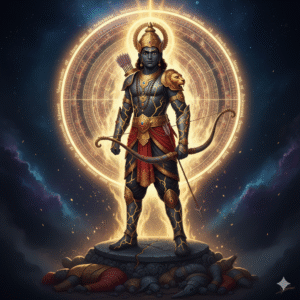
Though Abhimanyu lived only sixteen years, his name remains immortal. The story of Abhimanyu in the Mahabharata reminds humanity that even a short life, when lived with courage and righteousness, can echo through eternity.
FAQs About Story of Abhimanyu
1. Who was Abhimanyu in the Mahabharata?
Abhimanyu was the son of Arjuna and Subhadra and a brave young warrior of the Pandava army in the Kurukshetra war.
2. Why is Abhimanyu famous in the Mahabharata?
He is famous for entering the deadly Padmavyooham (Chakravyuha) alone and sacrificing his life while fighting bravely.
3. Who were Abhimanyu’s parents?
His father was Arjuna, the greatest archer among the Pandavas, and his mother was Subhadra, the sister of Lord Krishna.
4. How did Abhimanyu learn about Padmavyooham?
He learned the method of entering Padmavyooham while in his mother’s womb when Arjuna explained it to Subhadra.
5. Why did Abhimanyu know only half the strategy?
Subhadra fell asleep before Arjuna could explain how to exit the formation, so Abhimanyu learned only how to enter it.
6. What is Padmavyooham or Chakravyuha?
Padmavyooham is a lotus-shaped military formation that is easy to enter but extremely difficult to escape.
7. On which day of the war did Abhimanyu die?
Abhimanyu died on the 13th day of the Kurukshetra war.
8. How old was Abhimanyu when he died?
He was only 16 years old at the time of his death.
9. Why did Abhimanyu decide to enter Padmavyooham?
He entered to protect the Pandava army and uphold dharma when no other warrior could break the formation.
10. Why couldn’t the Pandavas follow Abhimanyu inside?
Jayadratha blocked the Pandavas at the entrance, preventing them from entering the formation.
11. Who attacked Abhimanyu inside Padmavyooham?
Many powerful Kaurava warriors attacked him together, including Karna, Drona, Ashwatthama, and others.
12. Was Abhimanyu killed according to Dharma Yuddha rules?
No, he was killed unfairly, as multiple warriors attacked him while he was unarmed.
13. Who finally killed Abhimanyu?
Dushasana’s son struck the final blow while Abhimanyu was exhausted and weaponless.
14. Why is Abhimanyu’s death considered unjust?
Because he was attacked from behind and by many warriors at once, which violated war ethics.
15. What did Arjuna do after Abhimanyu’s death?
Arjuna took a fierce oath to kill Jayadratha before sunset the next day.
16. Who was Abhimanyu’s wife?
Abhimanyu was married to Uttara, the princess of the Matsya kingdom.
17. Did Abhimanyu have a son?
Yes, his son Parikshit later became the king of Hastinapura.
18. Was Abhimanyu a divine incarnation?
Yes, he was believed to be the incarnation of Varchas, the son of the Moon God.
19. What does Abhimanyu’s story teach us?
His story teaches courage, sacrifice, duty, and standing for dharma even in the face of death.
20. Why is Abhimanyu remembered as an immortal hero?
Though he lived only sixteen years, his bravery and sacrifice made him eternal in Indian history and culture.