Raja Ratnam
Introduction — Mangala (Mars) The Red Flame of the Cosmos
Among the nine celestial forces known as the Navagrahas, Mangala (Mars) stands as the radiant embodiment of courage, discipline, and willpower. His energy burns bright like the red planet that bears his name — fierce yet purifying, fiery yet purposeful.
In the cosmic order, Mangala represents Shakti (divine energy in motion). He governs action, war, vitality, and justice, ensuring that dharma is protected and courage prevails over fear. In every astrological chart, Mars determines the strength of one’s drive, determination, and self-discipline.
Devotees view Mangala Deva not merely as a planet, but as a divine commander, a guardian of righteousness, and a symbol of inner strength. To those who walk the spiritual path, his energy teaches that true courage is not in aggression — but in the calm mastery of the self.
For official cultural and historical archives, visit the Ministry of Culture, Government of India.
Mythological Origin of Mangala
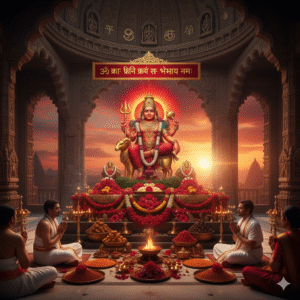
The birth of Mangala Deva is one of the most powerful and symbolic episodes in Hindu cosmology. According to the Skanda Purana and Matsya Purana, he was born from the fiery energy that emanated from Lord Shiva’s third eye — the seat of divine vision and destruction.
When Lord Shiva, immersed in deep meditation, opened his third eye, an intense spark of energy fell upon Bhumi Devi (Mother Earth). This sacred flame entered her womb, and from this union of Shiva’s divine fire and Earth’s nurturing power, a radiant child was born — Mangala.
From the very moment of his birth, Mangala glowed with a reddish hue, reflecting both the fury of divine fire and the stability of the Earth. He was blessed with the traits of valor, leadership, and justice. The Devas, recognizing his strength, appointed him as the Senapati (Commander-in-Chief) of their celestial army.
As Senapati of the Devas, Mangala stood for discipline and action — fighting evil forces, protecting devotees, and ensuring that cosmic balance was maintained. His power was never aimless destruction; it was directed energy, born from divine will, symbolizing the balance between strength and wisdom.
This story conveys a profound truth:
From Shiva’s fire came passion; from Bhumi came patience; and in Mangala, both merged — creating divine strength guided by compassion.
Thus, Mangala became the embodiment of rightful courage, the flame of justice, and the protector of dharma in all three worlds.
Mangala in Hindu Scriptures
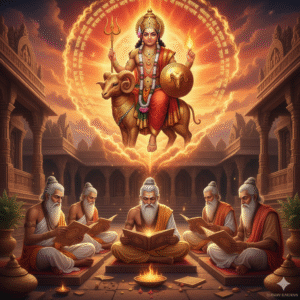
The greatness of Mangala Deva finds expression in many ancient texts — the Skanda Purana, Matsya Purana, Agni Purana, and Brahmanda Purana. These scriptures describe him as the deity who channels divine energy into human action, ensuring that mortals act with purpose and courage.
In the Skanda Purana, Lord Shiva declares that Mangala will reside in the heavens as a Graha (planet) whose fiery presence will guide souls through the karmic cycle. His red light will awaken courage in the fearful, discipline in the restless, and justice in the unjust.
In the Matsya Purana, Mangala is called Lohitānga, meaning one with a red body, signifying his connection with blood, energy, and the life force itself. He is often depicted riding a ram (mesha) — symbol of leadership and initiative — holding weapons that reflect his martial nature and readiness to defend truth.
The Brahmanda Purana reveres him as Bhūmi-putra (Son of Earth), the one who brings stability to human life through perseverance and moral strength. Worshiping Mangala, it is said, grants one the ability to face adversities with confidence and conquer inner battles.
In Vedic astrology, Mangala rules the Tuesday (Mangalavaram) — a day dedicated to discipline, focus, and protection. Devotees observe fasts on Tuesdays and recite his mantras to overcome anger, impatience, and conflicts.
Scriptures remind us that Mars’ energy, though fierce, must be guided by wisdom. Just as fire can destroy or purify, Mangala teaches us to use our inner fire for constructive action, not impulsive aggression.
Mangala (Mars)Astrological Significance
In Vedic astrology, Mangala (Mars) is a planet of action, energy, and self-confidence. He represents our drive to achieve, our inner fire, and our ability to face life’s challenges head-on.
Mangala governs:
Courage and leadership
Discipline and endurance
Physical strength and stamina
Confidence, motivation, and willpower
Passion, ambition, and initiative
He rules the Aries (Mesha) and Scorpio (Vrischika) zodiac signs — both powerful and dynamic energies. Mars is exalted in Capricorn (Makara), where his fiery determination turns into disciplined leadership.
Kuja Dosha (Mangal Dosha)
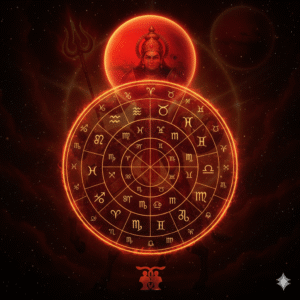
In astrology, when Mars occupies certain houses (1st, 2nd, 4th, 7th, 8th, or 12th) in a horoscope, it is said to create Kuja Dosha, also known as Mangal Dosha. This planetary combination is believed to bring conflicts or challenges in marriage and relationships, as the fiery nature of Mars may lead to dominance or impatience.
However, modern astrologers clarify that Kuja Dosha is not always negative. If Mars is well-aspected or placed in harmony with other benefic planets, it gives passion, strength, and protection in relationships.
Remedies for Kuja Dosha:
Worship Lord Hanuman and Mangala Deva on Tuesdays.
Chant the Mangala Beej Mantra:
“ॐ क्रां क्रीं क्रौं सः भौमाय नमः”
Perform Mangala Graha Shanti rituals under a priest’s guidance.
Offer red flowers and red lentils (Masoor dal) to Mangala on Tuesdays.
Observe Tuesday fasts (Mangalavaram Vratam) with devotion.
Ultimately, Mars teaches us that the fire within can either burn or illuminate — depending on how it’s controlled.
Mars in the Twelve Houses — The Fire’s Journey
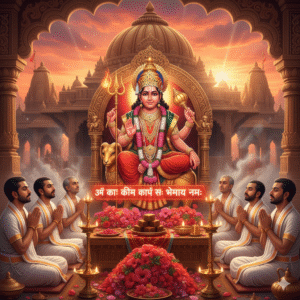
Each placement of Mars in a birth chart reveals how his energy manifests:
Mars in the 1st House (Lagna): Strong will, leadership, confidence — but needs control over anger.
2nd House: Wealth creation through hard work; careful speech is needed.
3rd House: Courageous, adventurous, and excellent in communication.
4th House: Emotional intensity; may face domestic tension.
5th House: Passionate creativity, assertive intelligence.
6th House: Fighter’s spirit; success over enemies and diseases.
7th House: Passionate in relationships; balance needed for peace.
8th House: Deep spiritual energy; must avoid impulsiveness.
9th House: Adventurous spirit, strong moral courage.
10th House: Ambitious; natural leader in career.
11th House: Financial success through risk-taking.
12th House: Hidden energy; ideal for spiritual and foreign pursuits.
Wherever Mars resides, he activates motion and challenge — pushing one to conquer fear and evolve through action.
Scientific Perspective — The Planet Mars
Beyond mythology and astrology, Mars is a fascinating celestial world studied by astronomers for centuries.
Mars is the fourth planet from the Sun and is often called the Red Planet because of its iron oxide-rich surface.
Its day length is almost similar to Earth’s — 24 hours and 37 minutes.
There are two moons orbiting Mars, Phobos and Deimos, which are named after the sons of the Greek god of war.
Temperatures on Mars can drop below –60°C, making it a cold desert world.
Ancient riverbeds and mineral deposits suggest Mars once had water, sparking interest in life beyond Earth.
NASA and ISRO missions (like Mangalyaan) have explored its surface, atmosphere, and potential for human colonization.
From a spiritual lens, science and scripture converge beautifully — both show Mars as a symbol of effort, exploration, and endurance.
Spiritual Symbolism of Mangala
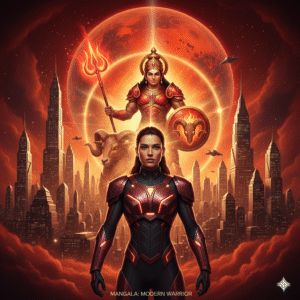
Mangala is not merely a planet — he is discipline in divine form. He represents the spiritual warrior within every human being.
Just as he commands the celestial army, Mars rules the inner army of the soul — our thoughts, emotions, and actions. His energy helps one:
Conquer laziness and doubt.
Transform anger into purpose.
Balance passion with patience.
Spiritually, Mangala teaches “controlled energy is divine energy.” Fire, when harnessed, becomes light — and when misused, it destroys.
He is invoked by those seeking strength to overcome obstacles, focus in meditation, and determination in righteous action (dharma).
In yoga, Mars energy is connected with the Manipura Chakra (solar plexus), the seat of confidence and willpower. When this chakra is balanced, one experiences courage without aggression and action without ego.
Worship, Mantras, and Remedies for Mangala Deva
Worshiping Mangala Deva purifies anger, strengthens willpower, and removes the effects of Kuja Dosha. Tuesdays are sacred for Mars (Mangalavaram). The color red, symbolizing vitality and strength, is especially auspicious.
Puja Vidhanam (Worship Procedure)
- Day: Every Tuesday
- Direction: Face East while performing puja
- Offerings: Red flowers, red sandalwood, jaggery, and red lentils (Masoor dal)
- Ghee lamp with red wick thread (rakta vastra deepam)
- Deity: Mangala Deva or Lord Hanuman (his divine counterpart of strength)
- Mantra Chanting: Chant the Mangala Beej Mantra 108 times
Mangala Beej Mantra
“ॐ क्रां क्रीं क्रौं सः भौमाय नमः”
Om Kraam Kreem Kraum Sah Bhaumaya Namah
This mantra invokes the energy of Mars to burn away laziness and negativity.
Mangala Gayatri Mantra
“Om Angarakaya Vidmahe,
Bhoomiputraya Dhimahi,
Tanno Bhauma Prachodayat.”
Meaning — We meditate upon Bhauma, the son of Bhumi Devi. May that fiery god of courage inspire our minds and guide our actions toward righteousness.
Simple Remedies for Mangala (Mars) Afflictions (Kuja Dosha)
Observe fast on Tuesdays, eating only one meal of red fruits or jaggery.
Recite the Hanuman Chalisa daily for protection and calmness.
Donate red lentils, red cloth, or copper to the needy.
Visit Subramanya Swamy temples or Shiva temples on Tuesdays.
Light a red ghee lamp near Hanuman or Mangala Deva idols.
Maintain patience, humility, and forgiveness — these virtues pacify fiery Mars energy.
Modern Lessons from Mangala (Mars)
In today’s world, the lessons of Mangala (Mars) are more relevant than ever. His energy reminds us that passion without discipline leads to chaos, and power without purpose leads to downfall.
Mangala (Mars) teaches:
Act with intention, not impulse.
Let courage serve compassion.
Use your energy to build, not to burn.
Professionally, Mars symbolizes ambition and success through effort. Spiritually, he inspires seekers to channel inner fire into meditation and karma yoga — to act without ego, with divine focus.
20 Frequently Asked Questions about Mangala (Mars)
- Who is Mangalasymbolising (Mars) in Hindu mythology?
Mangala is the son of Lord Shiva’s fiery energy and Bhumi Devi, symbolizing courage, discipline, and justice. - What does Mangala (Mars) represent in astrology?
He represents energy, courage, leadership, physical strength, and passion. - Which day is dedicated to Mangala?
Tuesday (Mangalavaram) is sacred to Mangala Deva. - What is Kuja Dosha (Mangal Dosha)?
It’s an astrological condition where Mars’ placement in specific houses may cause marital challenges or impatience. - How can Kuja Dosha be cured?
Through Tuesday fasts, chanting Mangala mantras, Hanuman worship, and good deeds. - What color is associated with Mars?
Red — symbolizing energy, confidence, and vitality. - Who are Mangala’s parents?
Lord Shiva (divine energy) and Bhumi Devi (Earth goddess). - Which zodiac signs are ruled by Mars?
Aries (Mesha) and Scorpio (Vrischika). - What gemstone is linked to Mars?
Red Coral (Moonga), worn to strengthen Mars’ positive influence. - What metal represents Mars?
Copper — enhances energy and mental focus. - What is Mangala’s vehicle?
A Ram (Mesha), symbolizing boldness and determination. - What happens when Mars is strong in a horoscope?
The person becomes fearless, ambitious, and dynamic — a natural leader. - What if Mars is weak?
It can cause indecision, fear, or lack of motivation; remedies help balance it. - Can women have Kuja Dosha?
Yes, both men and women can be affected by Kuja Dosha depending on chart placements. - What is the importance of Hanuman worship for Mars?
Hanuman’s calm strength balances Mars’ fiery energy, bringing peace and control. - What is Mars’ role in career success?
He governs ambition, competitive spirit, and physical stamina — key for leadership roles. - What is Mars’ significance in health?
He rules the blood, muscles, and energy levels; imbalance can cause fatigue or anger. - How to strengthen Mars spiritually?
Practice yoga, maintain discipline, control anger, and act righteously. - Is Mars related to Manipura Chakra?
Yes — it’s connected with the solar plexus, seat of willpower and confidence. - What is the essence of Mangala’s teaching?
To channel your energy with purpose — use strength for dharma, not destruction.
Related Sacred Topics & Cultural Heritage: For further spiritual exploration, read about Lord Rama’s ideal life story.
Conclusion Mangala (Mars) — Igniting Inner Fire with Divine Discipline
Mangala (Mars) Deva, born from Lord Shiva’s third-eye energy and Bhumi Devi’s compassion, reminds us that true power lies in control, not aggression. His flame symbolizes the courage to act, the discipline to persevere, and the wisdom to use strength for good.
Whether as the fiery red planet in the sky or the inner warrior within our soul, Mars teaches us to transform struggle into strength and passion into purpose.
When invoked with devotion, Mangala’s fire purifies the heart — burning away fear and doubt, leaving behind only clarity, focus, and fearless action in the service of dharma.
✨ May Mangala Deva bless you with courage, wisdom, and righteous energy.
🔴 Om Kraam Kreem Kraum Sah Bhaumaya Namah!